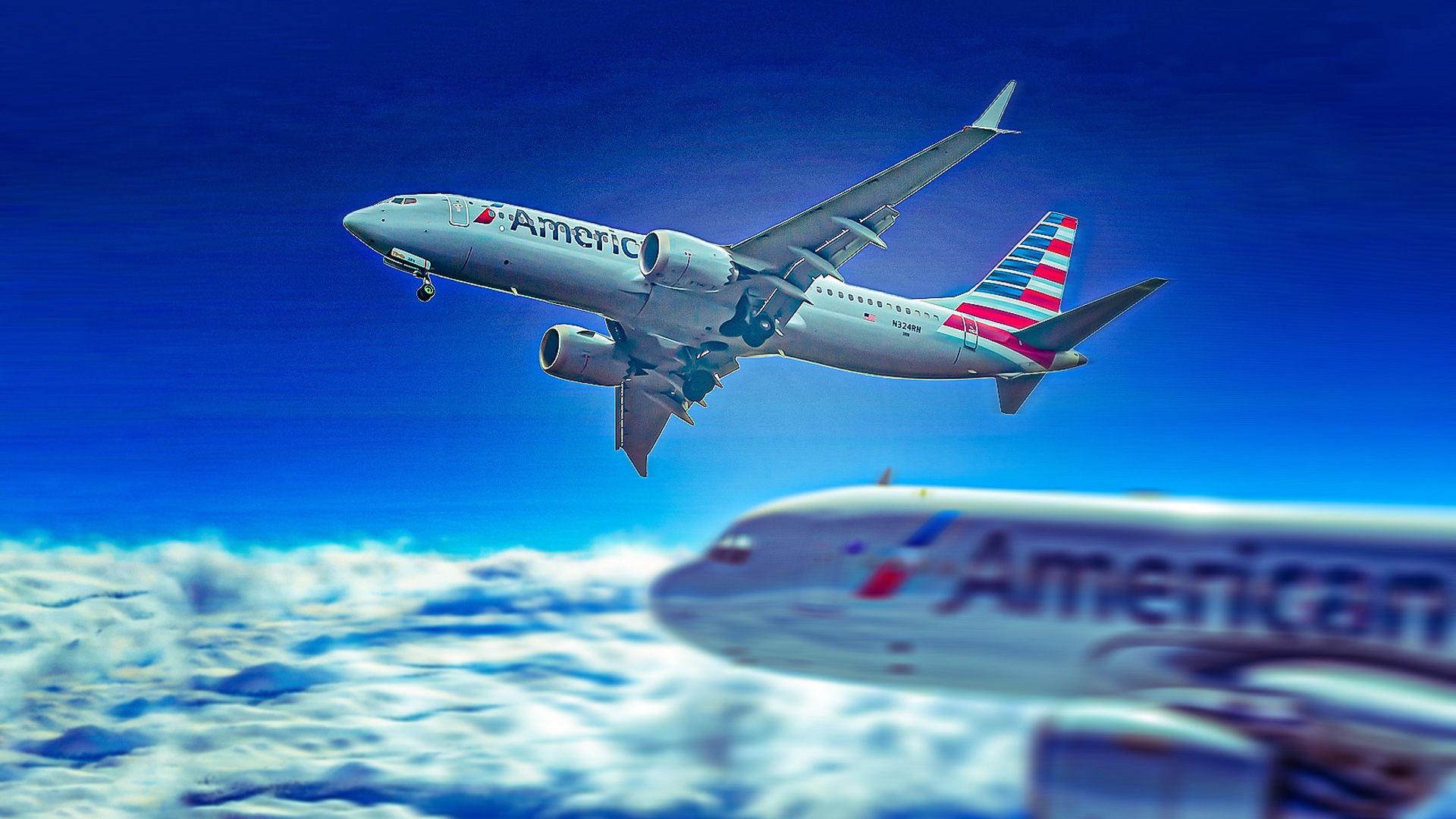
American Airlines is on track to expand its fleet of Boeing 737 MAX 8 aircraft to a total of 88 by the end of 2023. The airline has steadily increased its narrowbody fleet since it acquired its first MAX 8 in September 2017. With the recent delivery of its latest aircraft, registered as N316UV, American Airlines now operates 85 of these planes.
If all goes as planned, the carrier expects to receive three more MAX 8s in December, reaching the projected total of 88 by year-end. As of now, American Airlines has 15 additional Boeing 737 MAX 8s on order, which are expected to be delivered by December 4, 2025. This would bring the total to 100 aircraft of this model in its fleet. Currently, the average age of the airline’s 737 MAX 8 fleet stands at 4.1 years, reflecting a commitment to modernizing its operations.
Fleet Configuration and Operations
American Airlines has configured its Boeing 737 MAX 8s to accommodate 172 passengers, with a layout of 16 seats in First Class and 156 in the Main Cabin. The airline deploys these aircraft on numerous domestic and international routes, contributing to its extensive service network. In addition to the MAX 8, American Airlines operates 303 Boeing 737-800s, which have an average age of 16.1 years.
The airline’s strategy focuses on refreshing its narrowbody fleet with newer aircraft, as evidenced by its orders for the larger Boeing 737 MAX 10. In 2024, American Airlines placed an order for 115 MAX 10s, with options for an additional 75. The airline highlighted that the MAX 10 would complement its current fleet and enhance operational efficiency to meet increasing travel demand.
Future Developments and Industry Context
The Boeing 737 MAX 10 is designed to carry up to 230 passengers and offers a range of 3,100 nautical miles (5,740 kilometers). Boeing expects that both the MAX 7 and MAX 10 will receive certification from the Federal Aviation Administration (FAA) in 2026. This comes after the manufacturer faced challenges with design modifications that led to delays in the certification process. Issues related to the aircraft’s engine anti-ice system have been particularly concerning, as unresolved problems could lead to overheating and potential engine failure.
Boeing has already produced over 1,700 aircraft in its next-generation narrowbody series. While awaiting the MAX 10’s service entry, several airlines, including United Airlines and Delta Air Lines, have adjusted their orders due to ongoing delays. United Airlines has 167 MAX 10s on order, while Delta Air Lines is set to receive 100 of these aircraft.
The delivery timelines for the MAX 10 have prompted other carriers to rethink their strategies. For instance, Southwest Airlines has postponed its launch of the MAX 7, and WestJet has modified its backlog to include different MAX models. Delta Air Lines plans to introduce the MAX 10 in 2026 for mid-range flights that require greater passenger capacity compared to the MAX 8 or MAX 9.
As American Airlines continues to modernize its fleet, the focus remains on meeting passenger demand and enhancing operational efficiency through strategic investments in newer aircraft.