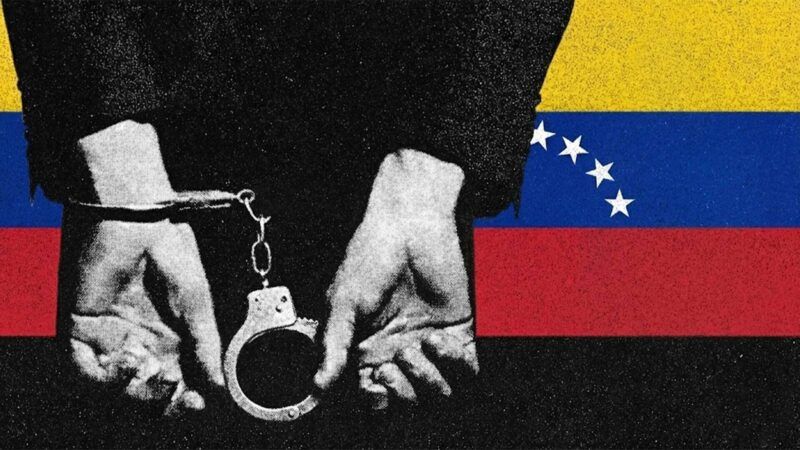
UPDATE: The Venezuelan socialist regime has just announced a significant release of political prisoners, stirring immediate reactions across the country. Jorge Rodríguez, president of Venezuela’s National Assembly, confirmed that a “number of important Venezuelan people and foreigners” will be freed as a “gesture” to promote peace.
While Rodríguez has not disclosed the full list of those to be released, human rights lawyer Rocío San Miguel has already been confirmed free by her family. San Miguel was arrested in February at Caracas’ main airport alongside five relatives and accused of plotting against dictator Nicolás Maduro. Her detention, which drew widespread public condemnation, resulted in her imprisonment at the notorious El Helicoide on charges of treason and conspiracy.
Another key figure, María Oropeza, a young Venezuelan libertarian activist, remains in custody after her arrest last year for denouncing the regime’s political repression. Oropeza livestreamed her arrest on Instagram, but a chilling video released by military counterintelligence showed her being held in an armored vehicle, raising questions about her current status.
The situation escalated recently when Pablo and Lubin Montilva were arrested for allegedly celebrating Maduro’s capture by firing a revolver into the air. They face severe charges, including terrorism and treason, with potential sentences up to 30 years. It remains unclear whether they have been released alongside San Miguel.
According to Provea, a Venezuelan human rights organization, over 53,000 people have been victims of political imprisonment under Maduro’s regime. The government is known for its “revolving door” tactic—periodically releasing political prisoners while simultaneously arresting new ones.
Reports of torture and inhumane treatment in Venezuelan prisons are rampant. Notably, Fernando Albán, an opposition councilman, died in custody after suffering severe abuse. His tragic case highlights the regime’s brutal approach to dissent.
The timing of this announcement comes in the wake of increased political repression following Maduro’s recent capture. Rodríguez declared a state of emergency, intensifying police actions against individuals promoting dissent. Video footage has surfaced of an arrest involving a woman named Marioxis Martínez, who was apprehended for allegedly celebrating Maduro’s capture on social media.
In a shocking move, the regime also detained 14 journalists covering the swearing-in of the newly elected National Assembly. Most were released after several hours, but CNN correspondent Steffano Pozzebon was deported, illustrating the regime’s crackdown on the press.
As the regime seeks to navigate mounting U.S. pressure, the implications of releasing political prisoners remain uncertain. Is this a genuine attempt at reform, or a strategic maneuver to quell international criticism? The global community is watching closely.
What happens next? Observers anticipate further developments as the regime continues to balance international relations with internal dissent. The world awaits clarity on the fate of other political prisoners and the potential for meaningful change in Venezuela.