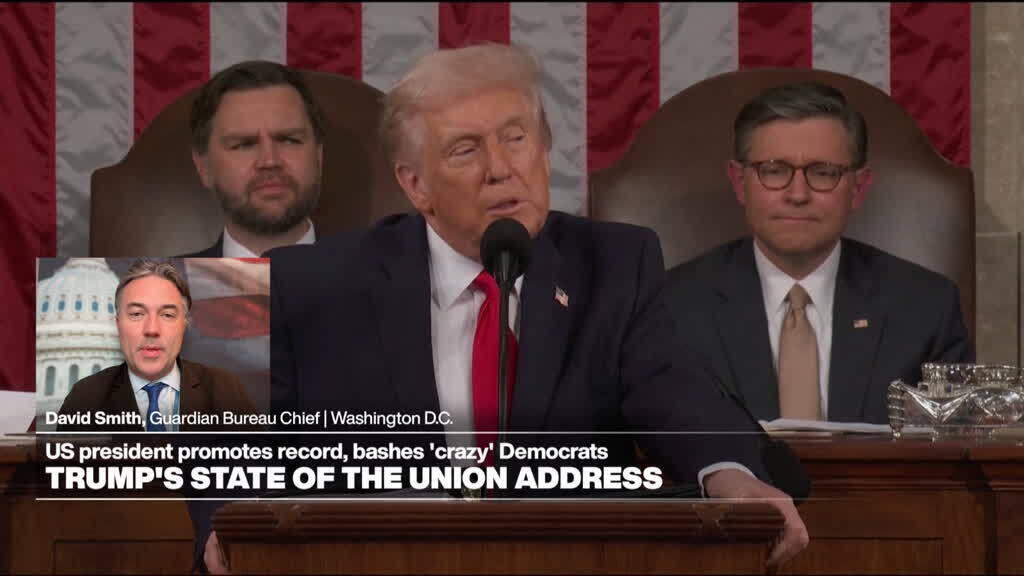
URGENT UPDATE: President Donald Trump delivered a polarizing State of the Union address on January 31, 2026, showcasing a deeply divided political landscape in the United States. The speech, which is now recognized as the longest in U.S. history, has drawn sharp criticism for its lack of bipartisan outreach.
During the address, Trump focused heavily on his signature issue of immigration, inciting heckles from Democratic lawmakers. David Smith, the Washington D.C. bureau chief for FRANCE 24, reported that the speech failed to resonate across party lines, with Trump making “very little effort to reach across the aisle to Democrats.”
The atmosphere in the House chamber was charged, with frequent interruptions from opposition members, highlighting the ongoing tension in U.S. politics. This moment underscores an urgent reality: the nation remains as politically fragmented as ever, impacting legislative progress on key issues.
As the political climate intensifies, observers are left questioning the implications of Trump’s rhetoric. His focus on immigration is seen as a move to rally his base, but it risks deepening divisions with Democrats and moderates. The address has sparked immediate discussion among political analysts, with many emphasizing the need for cooperation in governance.
What happens next remains critical. With the 2026 elections approaching, the fallout from this address could shape the strategies of both parties. Key issues of national importance, including healthcare and economic recovery, hang in the balance as political leaders navigate this complex environment.
As the nation watches closely, the implications of Trump’s address will likely reverberate through upcoming legislative sessions. Citizens are encouraged to engage in discussions about the future of bipartisanship and the potential consequences of continued division.
Stay tuned for further updates as analysis continues to unfold in the coming days.