UPDATE: President Donald Trump has just unveiled a bold new security strategy demanding that Europe be fully equipped to defend itself by 2027. This urgent directive signals a significant shift in U.S. foreign policy, with Trump stating, “The days of the United States propping up the entire world order like Atlas are over.”
In a 33-page strategy document released yesterday, Trump emphasizes the need for the European Union to take primary responsibility for its own security, a move that could dramatically reshape the trans-Atlantic alliance. With NATO set to celebrate its 80th anniversary on April 4, 2029, this strategy represents a pivotal moment in international relations.
The urgency of this announcement comes as the European Union had previously aimed for a 2030 readiness target. However, major shortfalls in air defense, cyber warfare, and intelligence capabilities cast doubt on meeting that timeline. Analysts warn that Trump’s accelerated goal may be overly ambitious.
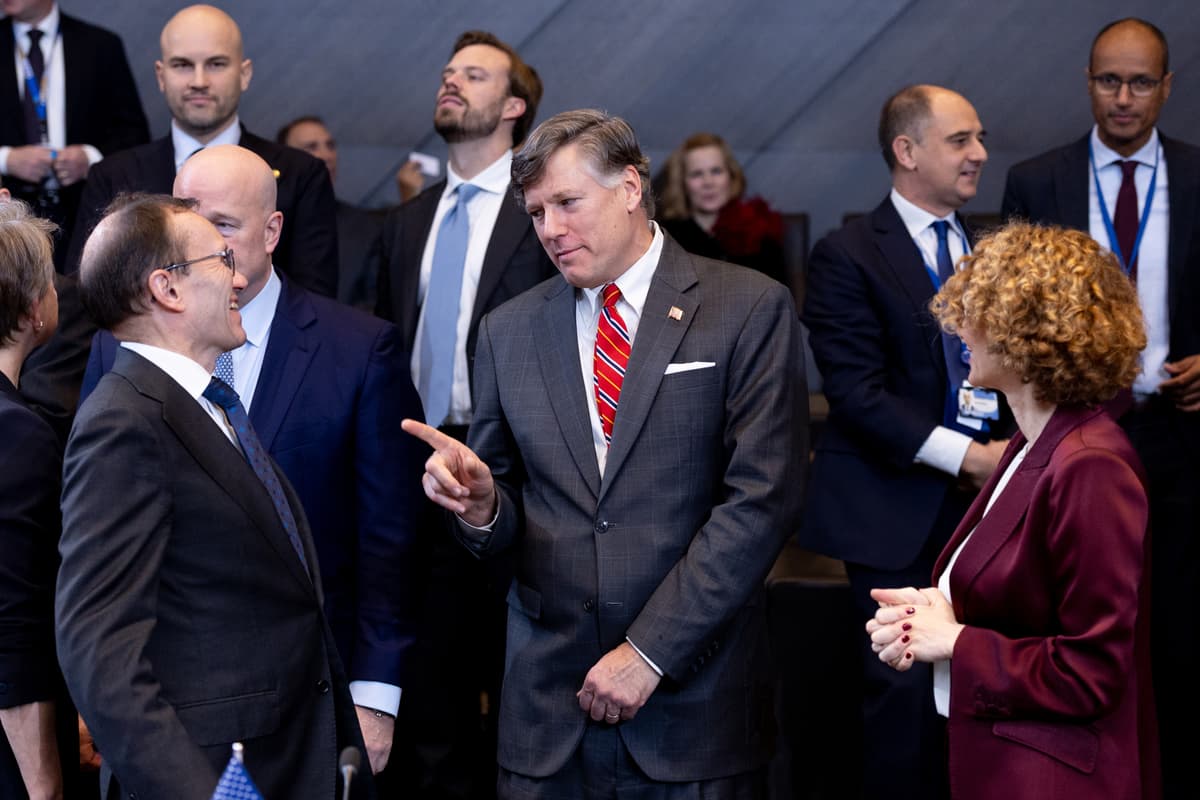
“Europe must take primary responsibility for its own security,” tweeted Christopher Landau, the U.S. Deputy Secretary of State, shortly after the NATO foreign ministers’ meeting in Brussels. Notably, this marks the first time in over two decades that the U.S. was not represented by a Secretary of State at the NATO summit.
According to Reuters, the U.S. is pushing for Europe to assume the majority of NATO’s conventional defense capabilities, including intelligence and missile systems, by 2027. This move could fundamentally alter how the U.S. collaborates with its key military partners.
The strategy document also includes stark criticism of European leaders, blaming them for allowing significant Muslim and African immigration, which, according to Trump’s administration, threatens the continent’s cultural identity. “We want Europe to remain European, to regain its civilizational self-confidence,” the report warns.
As anti-immigration sentiments rise in countries like Britain, France, Germany, and Italy, centrist leaders have voiced concerns that the U.S. strategy interferes with domestic politics. Former Swedish Prime Minister Carl Bildt described the report’s language as reminiscent of extremist rhetoric, asserting that it is “to the right of the extreme right in Europe.”
Germany’s Foreign Minister Johann Wadephul reaffirmed the importance of the U.S. as an ally, stating that Germany does not need advice from foreign governments on freedom of speech. Conversely, the far-right Alternative for Germany party praised the U.S. strategy as a necessary wake-up call for Europe.
On the contentious issue of Russia, the report calls for an immediate cessation of NATO expansion and addresses the need for a swift resolution to the ongoing conflict in Ukraine. The document criticizes European governments for not translating public desire for peace into actionable policy, attributing this gap to “subversion of democratic processes.”
This strategy release coincides with Steve Witkoff, Trump’s special envoy, engaging in shuttle diplomacy between the Kremlin and Ukrainian officials. Analysts like Timothy Ash warn that Trump’s push for a quick peace could jeopardize European stability, potentially leaving Ukraine vulnerable to future aggression.
As Europe grapples with the implications of this urgent strategy, it faces a critical juncture in its security and defense policies. The coming months will be crucial as nations respond to this call for greater self-sufficiency and navigate the complex geopolitical landscape shaped by these developments.