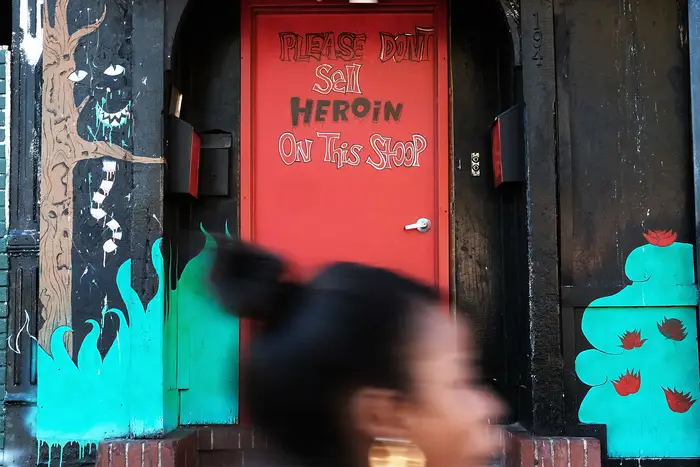
UPDATE: Staten Island’s innovative “hotspotting” program is making waves by significantly reducing drug overdose deaths, with recent reports showing a staggering 50% drop in fatalities. As of last year, only 81 people died from overdoses on the island, down from 157 in 2023. This remarkable decline is part of a broader trend that positions Staten Island as a leader in combating the overdose crisis, outperforming the rest of New York City.
Launched in 2022, the hotspotting initiative employs a unique mix of data analytics, artificial intelligence, and personal outreach to identify and assist individuals at the highest risk of overdosing. Matt Germoso, a peer recovery advocate at Staten Island University Hospital and a former addict, emphasizes the program’s approach: “We won’t necessarily lead with, you know, ‘Hey, I’m calling you about substance use.’” This human-centered strategy helps build trust and opens the door to essential support services.
The latest data, released by the city health department, reveals a dramatic 28% decrease in overdose deaths citywide, contrasting sharply with Staten Island’s achievement. The borough, which once held the title for the highest overdose rate, now has the second lowest in the city. With a population of just under 500,000, Staten Island is navigating a smaller pool of drug users compared to other boroughs.
The hotspotting program is a collaboration between MIT and local healthcare providers, utilizing an AI-driven algorithm to pinpoint individuals most at risk based on factors such as medical history and justice involvement. Referrals from the district attorney’s office and local health organizations further expand its reach.
Since its inception, over 600 drug users have engaged with hotspotting. Reports indicate that between April 2022 and April 2024, only four clients died of overdoses, a stark contrast to 25 individuals in a control group. Additionally, there has been a significant reduction in emergency room visits among participants, highlighting the program’s effectiveness.
Joseph Conte, executive director of the Staten Island Performing Provider System, describes the proactive outreach as a “paradigm shift” in the fight against overdoses. This initiative not only fills critical gaps in care but also fosters collaboration among various health agencies on the island.
Despite the progress, challenges persist. Donna Demarest, director of harm reduction at Community Health Action of Staten Island, notes that many residents face isolation from services, complicating their access to help. However, the island’s close-knit community also allows for effective coordination around initiatives like hotspotting.
The program is set to expand further. NYC Health and Hospitals announced plans to implement a pilot program at Lincoln Hospital in the Bronx, which currently has the highest overdose death rate in the city. This expansion is supported by $600,000 in funding from the Robin Hood Foundation, aiming to replicate Staten Island’s success in other areas struggling with overdose crises.
As Staten Island continues to lead the way in overdose prevention, the hotspotting program serves as a hopeful model for other communities facing similar challenges. The combination of technology and compassionate outreach is proving vital in saving lives and reshaping the narrative around addiction and recovery.
Stay tuned for more updates as this developing story unfolds.