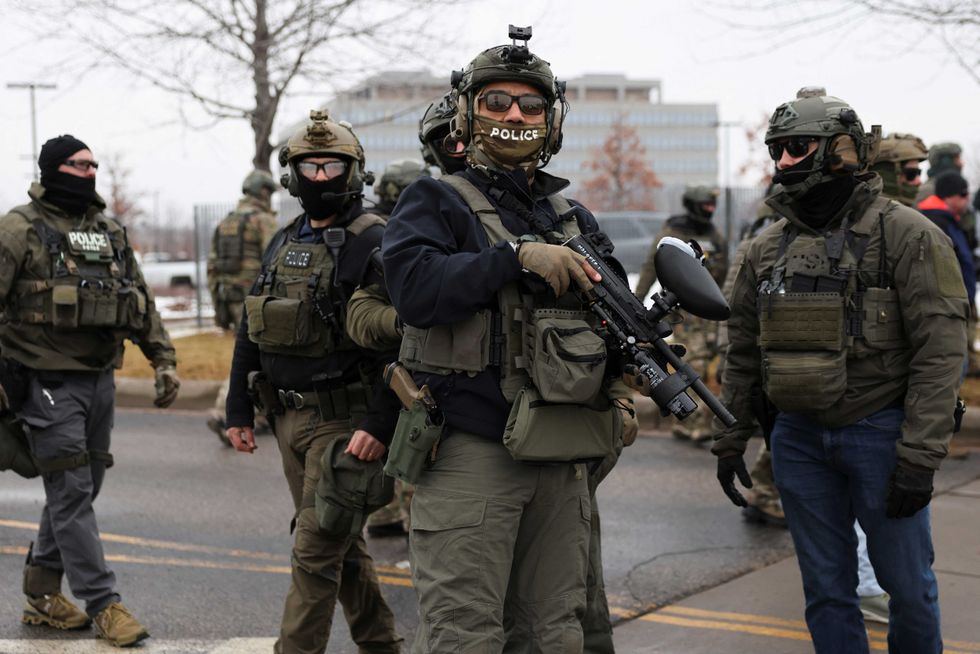
UPDATE: Senate Republicans are moving forward with plans to allocate an additional $10 billion to Immigration and Customs Enforcement (ICE) this week, amid national outrage following the fatal shooting of intensive-care nurse Alex Pretti in Minneapolis. This horrifying incident, captured on video, has intensified calls for accountability and reform within federal law enforcement.
“My support for funding ICE remains the same,” declared Sen. Pete Ricketts (R-NE) on Sunday, reflecting a sentiment echoed by several GOP lawmakers. As the Senate prepares to vote on a package of six government appropriations bills approved by the House last week, Republican leaders are firm on their stance. “We’re not defunding ICE,” stated Sen. Mike Lee (R-UT) in a defiant message. “Live with it.”
As urgency mounts, an unnamed Senate Republican aide confirmed to Punchbowl that “government funding expires at the end of the week.” The aide emphasized that Republicans are determined to avoid a government shutdown, stating they will proceed as planned and hope for bipartisan cooperation.
The proposed funding bill includes a staggering $64.4 billion for the Department of Homeland Security (DHS), which encompasses the controversial ICE budget. Critics are raising alarms about this funding, noting that ICE’s budget already surpasses that of many national militaries.
Senate Minority Leader Chuck Schumer (D-NY) has signaled that he possesses the votes to block the DHS funding bill. Senate Democrats are advocating for the separation of the DHS legislation from other appropriations bills to prevent a looming shutdown on January 30 and to facilitate discussions on ICE reforms.
Democrats are demanding “real investigations into the murders” and an end to ICE’s arrest quotas, according to reports from the American Prospect. “Federal agents cannot murder people in broad daylight and face zero consequences,” said Sen. Patty Murray (D-Wash.), the Democrats’ lead appropriator in the Senate. She firmly stated her refusal to support the DHS bill in its current form, insisting that it must be revised to ensure accountability.
Murray also pointed out that “blocking the DHS funding bill will not shut down ICE,” highlighting that the agency has access to substantial funds regardless of the outcome. “We all saw another American shot and killed in broad daylight. There must be accountability,” she stressed.
The urgency of these developments is compounded by the recent rise in violent incidents involving federal agents. Activists and lawmakers alike are calling for immediate action to address these growing concerns. “The Senate must immediately take out any additional funding for the Department of Homeland Security,” stated Murray. “Congressional Republicans must answer for these killings.”
While Sen. Susan Collins (R-ME), a leading Republican appropriator, did not address ICE funding directly in her statement regarding Pretti’s death, she underscored the necessity for a thorough investigation into the tragic shooting.
To secure passage of the funding package, Senate Republicans will require at least seven Democratic votes, following a precedent where seven House Democrats sided with Republicans last week on DHS funding. The political landscape is increasingly fraught as pressure builds on lawmakers to take decisive action.
Advocates for reform are vocal in their criticism. Lisa Gilbert, co-president of the watchdog organization Public Citizen, condemned the excessive budget allocated to ICE, stating, “This federal enforcement agency is running rampant with an outrageous budget that dwarfs most countries’ militaries.” She urged immediate action to rein in ICE.
Amy Fischer, director of refugee and migrant rights at Amnesty International USA, called for urgent reforms. “How many more people must die before US leaders act?” she asked, emphasizing that the Senate faces a critical choice: continue funding an agency that has shown a lack of accountability or take meaningful steps to address its abuses.
The clock is ticking as the Senate prepares for a pivotal week in government funding negotiations. The outcome could have significant implications for ICE’s future and the broader landscape of law enforcement practices across the nation. Stay tuned for more updates as this story develops.