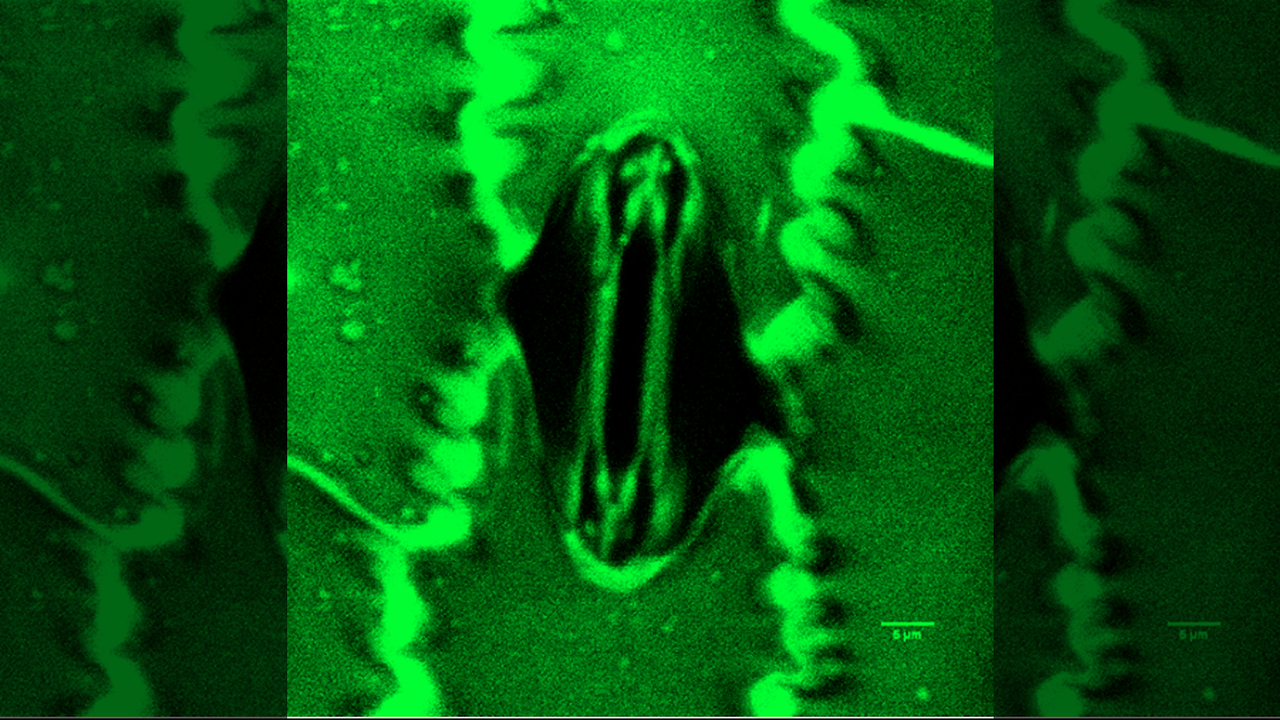
Researchers have developed a groundbreaking tool that allows scientists to observe plant stomata—the microscopic pores responsible for gas exchange—in real time. The device, named Stomata In-Sight, has the potential to enhance understanding of how plants adapt to climate change, which is critical for improving crop resilience.
Stomata play a vital role in regulating the intake of carbon dioxide and the release of oxygen and water vapor. Understanding how these tiny openings function can inform better agricultural practices, particularly in reducing water usage in crops. According to Andrew Leakey, a plant biologist at the University of Illinois Urbana-Champaign and co-author of the study, “It’s very important for us to understand stomata better.” He emphasized the urgency of finding methods, either through breeding or biotechnology, to enhance stomatal performance.
The Stomata In-Sight tool combines a microscope with a gas exchange system and machine-learning image analysis. This innovative design allows researchers to measure the collective activity of thousands of stomata simultaneously, providing insights into their function under varying environmental conditions. The study detailing this technology was published on November 17, 2025, in the journal Plant Physiology.
Technical Innovations in Plant Research
To utilize the Stomata In-Sight, researchers place small leaf samples in a climate-controlled chamber, which is about the size of a human palm. This chamber is connected to a gas exchange system that can be adjusted to simulate different temperatures, water availability, and other environmental variables. The microscope, positioned outside the chamber, captures images of the stomata, while machine-learning algorithms process the data for analysis.
The development of this tool was not without challenges. The team encountered issues with vibrations from the gas exchange system that resulted in blurry images. Leakey noted, “This actually took us about five years, and we had probably three prototypes that failed before we reached the final solution.”
The research team has already applied the Stomata In-Sight to observe the stomata of various crops, including Zea mays (maize) and Sorghum bicolor (a grain crop). They successfully identified genes that determine stomatal density in sorghum and engineered variants with more widely spaced stomata, which use less water.
While the University of Illinois Urbana-Champaign has patented this technology, it is not yet commercially available. Leakey expressed optimism that companies may show interest in producing the tool for broader research applications.
Challenges and Future Directions
Despite the advancements, not all experts are convinced of the tool’s revolutionary potential. Alistair Hetherington, an emeritus professor of botany at the University of Bristol, questioned whether the Stomata In-Sight would significantly change the landscape of stomatal research. He stated, “We have been able to use conventional microscopy to measure changes in stomatal aperture for well over a hundred years.” He believes that researchers may continue to rely on established techniques that have proven effective over time.
Leakey acknowledges that the current method of observing stomatal behavior is labor-intensive, as researchers often need to measure 40 or 50 stomata to capture sufficient variation. This process is time-consuming, as the response time for stomata can take several minutes. He envisions the potential for automation through robotics and artificial intelligence to streamline this research, making it more efficient.
As this field of study progresses, the Stomata In-Sight tool may play a crucial role in accelerating biological research and enhancing our understanding of plant resilience in the face of climate change. The excitement within the scientific community regarding these possibilities reflects a growing commitment to improving agricultural practices and ensuring food security in an era of environmental uncertainty.