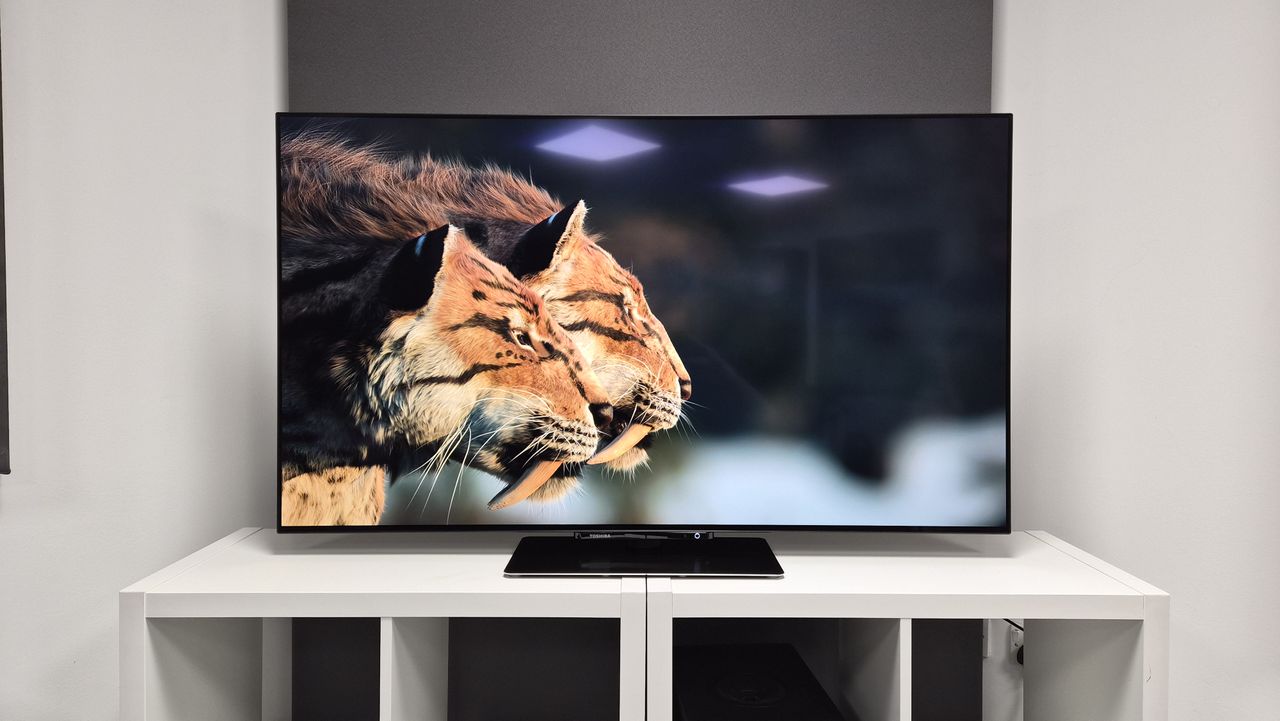
BREAKING: A potential price drop for OLED TVs could reshape the market in 2026, but experts raise concerns about performance and competition. Analysts predict that OLEDs may soon be available for under £500 (about $500), making this advanced technology more accessible to consumers.
Despite the excitement, the journey to affordability is fraught with challenges. Currently, even entry-level OLED models start around £800, a significant barrier for average buyers. The recent release of the Toshiba XF9F53DB has sparked interest; during Black Friday, a 55-inch model dropped to just £699, marking a notable, albeit still high, price point for a current generation OLED.
However, reviews indicate that the Toshiba XF9F53DB may not meet performance expectations, as its picture processing fails to fully utilize the OLED panel’s capabilities. This raises doubts about the viability of OLEDs entering the lower price brackets while maintaining quality.
Meanwhile, the competition is heating up. Mini LED technology is gaining traction in the budget market, with models like the TCL 6KS delivering exceptional performance at around £350. This model has outperformed many OLEDs in its price range, showcasing the potential for high-quality visuals without the steep price tag.
The disparity in production costs is a crucial factor. OLED technology is notorious for its higher failure rates during manufacturing, which contributes to the elevated prices. Furthermore, the intricate tuning required for optimal performance demands more advanced processors, complicating the path to affordable models.
While some industry experts remain hopeful that a sub-£500 OLED could emerge, there are significant doubts about whether it can compete with current Mini LED offerings. The need for superior performance will be paramount if OLEDs are to attract budget-conscious consumers.
As the tech landscape evolves, brands like Panasonic are already establishing standards with their Master OLED Pro certification, ensuring that only the highest quality OLEDs reach consumers. Unless manufacturers can find a way to balance quality with cost, the anticipated affordable OLED might not meet expectations, leaving buyers with a choice between price and performance.
The outcome of this pricing shift could significantly impact consumer choices and the overall market dynamics. As we approach 2026, all eyes will be on these developments to see how the OLED landscape unfolds. Will OLED TVs finally become a reality for everyday consumers, or will they remain out of reach?
Stay tuned for updates as this story develops!