President Donald Trump is scheduled to meet with top executives from major oil companies today to discuss potential investments in Venezuela’s oil sector. This meeting is part of a broader initiative aiming to encourage American energy firms to return to a country rich in oil reserves but plagued by instability and economic challenges.
Despite the prospect of tapping into Venezuela’s vast resources, industry leaders are hesitant to commit to substantial financial investments, citing concerns over the nation’s current volatility. According to individuals familiar with the preparations for the meeting, executives are prepared to express their reluctance to make any firm pledges during the discussions.
The skepticism stems from a lack of a clear strategy from the Trump administration on how to restore Venezuela’s energy infrastructure and maintain long-term stability. One participant remarked, “They’re making this up as they go along,” highlighting the uncertainty surrounding the administration’s plans.
Challenges to Investment
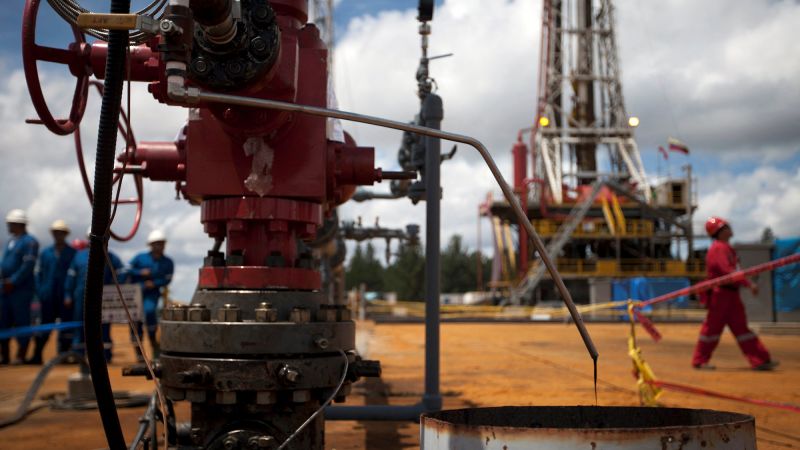
Oil companies have identified several critical factors that must be addressed before considering significant investments in Venezuela. Among these is the need for a stable rule of law, as the country’s military has increasingly influenced its state-run oil company, Petróleos de Venezuela, SA (PDVSA). The industry has previously pointed out the risks associated with theft and potential violence against foreign companies.
Mike Summers, CEO of the American Petroleum Institute, emphasized in a recent interview that there must be clear parameters set to ensure safety for employees and equipment. He stated, “One, we have to establish the rule of law.” The administration’s responses to these concerns have reportedly been inadequate, with Energy Secretary Chris Wright acknowledging the challenges ahead.
To restore production to pre-socialism levels, industry experts estimate that Venezuela would require over $10 billion annually and a commitment of more than a decade. This extensive investment would entail significant infrastructure development, including pipelines, drilling rigs, and port facilities.
Regulatory and Financial Hurdles
The oil executives are also cautious due to Venezuela’s strict regulations governing foreign investment. The country mandates that foreign companies engage in joint ventures with local firms, which come with hefty financial obligations, such as a 30% royalty fee and a 60% income tax. Luisa Palacios, former chairwoman of Citgo and current managing director at Columbia University’s Center on Global Energy Policy, noted, “Venezuela has a very unfavorable fiscal regime – why would you go to a place like that?”
Many foreign companies, including Eni, Repsol, ConocoPhillips, and ExxonMobil, have previously faced asset seizures by the Venezuelan government. They are now collectively seeking tens of billions of dollars in compensation from PDVSA. Ryan Kellogg, deputy dean of the University of Chicago’s Harris School of Public Policy, stated that companies would need assurances that their investments would be protected from future political changes.
The Trump administration has indicated a willingness to lift certain sanctions as a precursor to inviting U.S. oil companies back into Venezuela. Nonetheless, industry leaders remain cautious, particularly about the sustainability of any guarantees provided by the administration.
Despite the challenges, there is a recognition that under the right conditions, Venezuela could attract significant long-term investments from oil companies. Chris Wright mentioned that he has been “barraged” by interest from firms keen on exploring opportunities in the country’s oil sector.
As the meeting unfolds, it remains to be seen whether any tangible commitments will arise from the discussions, or if the oil executives will continue to hold back until assured of a more stable and favorable investment environment.