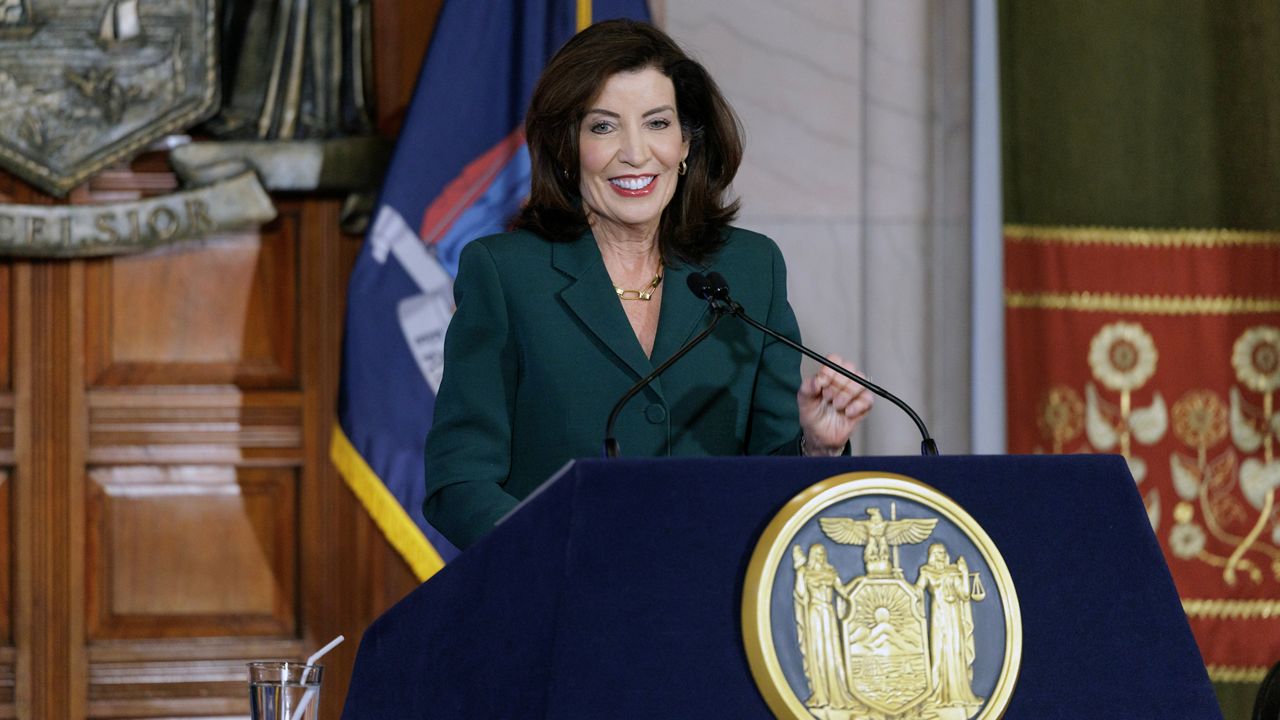
UPDATE: New York Governor Kathy Hochul just announced her ambitious $260 billion spending plan for 2026, pledging no new taxes despite mounting pressure from Mayor Zohran Mamdani for increased taxation on the wealthy. This announcement comes as Hochul seeks reelection, aiming to balance fiscal responsibility with the needs of New Yorkers.
During her speech in Albany on Tuesday, Hochul emphasized, “This is not an austerity budget, but it is a disciplined one.” She insists her plans to fund essential services like child care, education, and health care can be achieved without raising taxes this year. Hochul highlighted the state’s projected revenue boost of over $17 billion from high-income earners and robust Wall Street performance, particularly in the tech sector.
Critically, Hochul called out former President Donald Trump for cuts to health insurance, stating, “President Trump declared war on states.” She noted that federal funding has decreased by approximately $10.3 billion, which has had a direct impact on New Yorkers reliant on Medicaid.
Hochul’s budget proposal includes funding for a pilot program supporting two-year-olds, although she has not committed to future funding for this initiative. While she champions her budget as taxpayer-friendly, critics warn that taxes may still be on the table.
Mamdani responded swiftly, blaming former Mayor Eric Adams for leaving behind a budget gap of $12 billion. He stated, “We reject austerity politics. Working New Yorkers should not have to pay the price for the failures of the Adams administration.” Mamdani argues that it’s time for New York City’s wealthiest and large corporations to contribute their fair share to alleviate the fiscal burden on everyday citizens.
Hochul acknowledged Mamdani’s concerns, saying, “He’s doing his job as a mayor, who is supposed to advocate for their community.” However, she maintained her stance, underlining that her budget will not shift costs onto families or leave vulnerable communities without support.
Lawmakers reacted to the budget announcement with skepticism. Robert Ortt, the Republican State Senate minority leader, expressed doubts, stating, “I don’t see a whole lot that’s going to make New Yorkers feel like their lives are going to be more affordable.” Meanwhile, Michael Gianaris, the Democratic State Senate deputy majority leader, called for solutions that improve affordability without raising taxes.
As the political landscape in New York evolves ahead of the election season, the implications of Hochul’s budget proposal will be closely monitored. The debate over tax policy and funding priorities is expected to heat up in the coming weeks, making it crucial for New Yorkers to stay informed about these developments.
With Hochul standing firm against new taxes, the pressure from city officials like Mamdani may intensify, drawing more scrutiny on the state’s fiscal strategies and their impact on everyday citizens.