UPDATE: Former South Korean President Yoon Suk Yeol has just been sentenced to life in prison for his controversial imposition of martial law in December 2024. The ruling, delivered by Judge Jee Kui-youn, found Yoon guilty of rebellion for his illegal attempt to seize power, mobilizing military and police forces against the liberal-led National Assembly.
This urgent development comes amid heightened tensions in South Korea, where Yoon’s actions have been deemed a significant threat to democracy. The judge emphasized the severity of Yoon’s rebellion, which aimed to arrest politicians and establish unchecked authority during a critical time. While a special prosecutor sought the death penalty, analysts anticipated a life sentence, given that the poorly executed power grab did not lead to casualties.
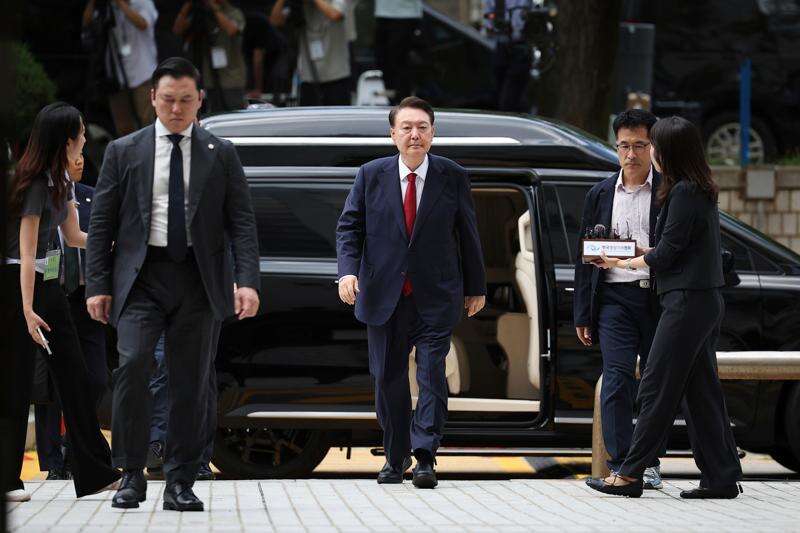
As Yoon arrived in court, hundreds of police officers stood guard, closely monitoring a scene charged with emotion. Supporters rallied outside the judicial complex, their cries echoing as the prison bus transporting Yoon passed. Critics, however, gathered nearby, demanding the maximum punishment for the former leader.
In addition to Yoon’s life sentence, several former military and police officials were also convicted for their roles in enforcing the martial law decree. Among them, ex-Defense Minister Kim Yong Hyun received a 30-year prison term for his central involvement in planning and executing the illegal measures.
Yoon defended his actions as necessary to prevent what he labeled as “anti-state” forces from obstructing his agenda, underscoring the deep political divides within the nation. His martial law decree lasted approximately six hours before lawmakers broke through a military blockade and unanimously voted to lift the measure.
Following his impeachment on December 14, 2024, Yoon was formally removed from office by the Constitutional Court in April 2025. He has been under arrest since July while facing multiple trials, with the rebellion charge carrying the most severe penalties.
Last month, he was also sentenced to five years for resisting arrest and fabricating the martial law proclamation. The Seoul Central Court has convicted two of Yoon’s Cabinet members in related cases, including Prime Minister Han Duck-soo, who received a 23-year prison sentence for attempting to legitimize the decree through deception.
The implications of this verdict extend beyond Yoon’s personal fate, reflecting ongoing struggles within South Korea’s political landscape. As the nation grapples with its democratic principles, the future of leadership remains uncertain.
As developments unfold, many are closely watching Yoon’s potential appeal against his life sentence. This case serves as a pivotal moment in South Korean history, marking a significant chapter in the fight for democracy amidst political turmoil.