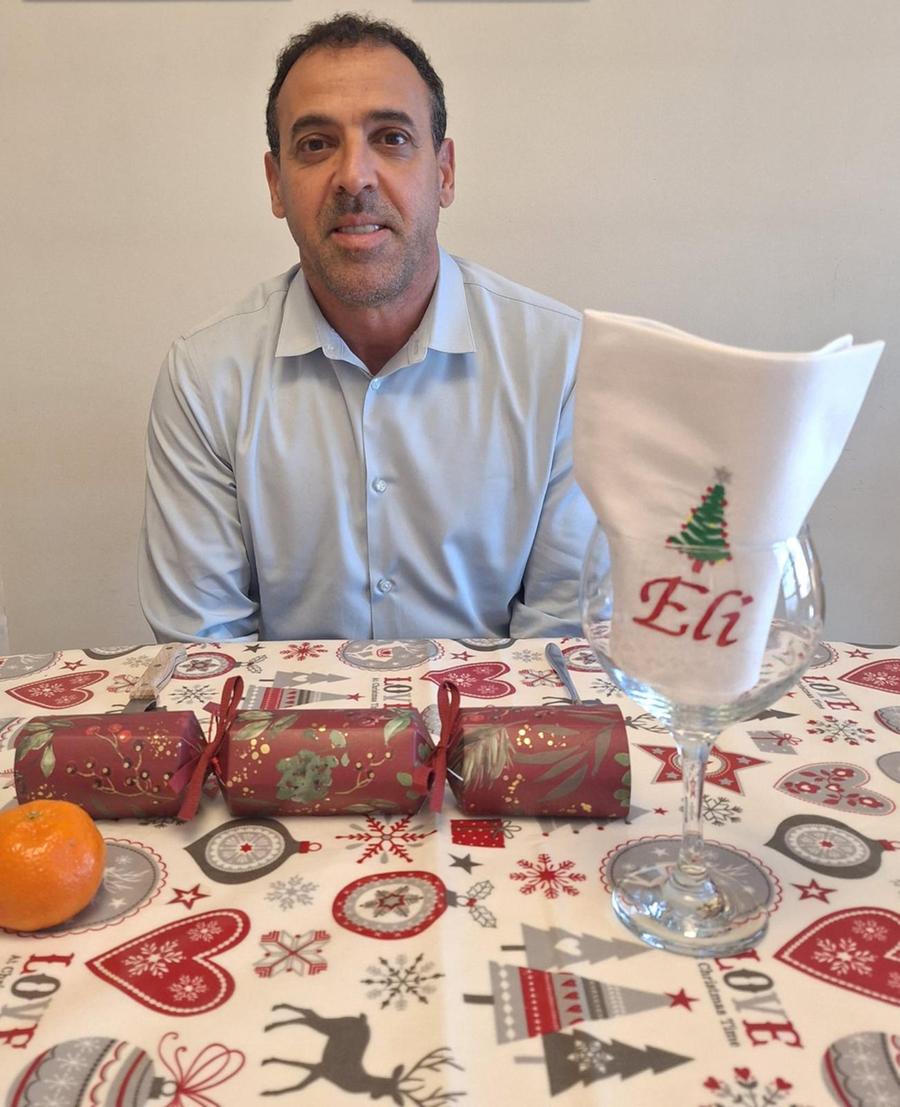
UPDATE: Eli Sharabi celebrated Christmas in Wales last week, marking his first holiday since being released from Hamas captivity after 491 days. This emotional reunion took place at the home of his brother-in-law, Steve Brisley, who had kept an empty seat at his Christmas table for Sharabi during the previous year.
The poignant moment occurred as Brisley set a napkin with Sharabi’s name on it, symbolizing the hope for his return. Sharabi had faced unimaginable hardship, having lost his wife and daughters, Noiya and Yahel, in the October 7 attacks this year. His presence at the table signifies not only his survival but also the resilience of families impacted by conflict.
During a session at Limmud, a Jewish cultural festival, lawyers Adam Rose and Adam Wagner shared a photograph of Sharabi sitting in the once-empty seat, a stark reminder of the challenges faced by hostages. Rose highlighted the emotional weight of this year’s gathering, contrasting it with the previous year when he presented the image of the empty chair.
Brisley, an ardent advocate for Sharabi’s release, criticized the British government’s lack of support for hostages. Just hours after his remarks, David Cameron, the then Foreign Secretary, announced increased aid for families affected by hostage situations, including a dedicated support group within the Foreign Office.
Rose emphasized the importance of public pressure in securing governmental action, citing advice from activist Richard Ratcliffe, who campaigned for his wife’s release from Iranian imprisonment. “The British government and foreign office will only do something if you publicly embarrass them,” Ratcliffe’s words resonated deeply during the discussion.
Following Brisley’s passionate speech, which underscored the urgent need for governmental accountability, Rose announced that the Prime Minister had committed to enhancing sanctions against Hamas and similar organizations, a significant step in addressing the ongoing crisis in the region.
Despite these advancements, challenges remain. Wagner pointed out that the British government had not granted citizenship to the elderly parents of Sharone Lifschitz, another British-Israeli hostage, while other nations had been more accommodating. Instead, a compromise was reached, whereby non-British hostages would be treated “as if they were British.”
Lifschitz, whose father was killed during the conflict, expressed gratitude towards Brisley and the legal team for their relentless efforts, stating, “You were always a few steps in front of us.” Her acknowledgment highlights the critical role these advocates play in navigating complex political landscapes.
The emotional weight of Sharabi’s return and the ongoing plight of hostages are reminders of the human cost of conflict. The families impacted by these events continue to advocate for justice and support, striving to ensure that their loved ones are not forgotten.
As the situation develops, attention remains focused on the government’s commitment to address the needs of hostages and their families. The community’s resilience shines through in the face of adversity, with ongoing efforts to provide support and solidarity for those affected by violence and loss.
Stay tuned for further updates on this evolving story and the continued advocacy for hostages in Gaza.