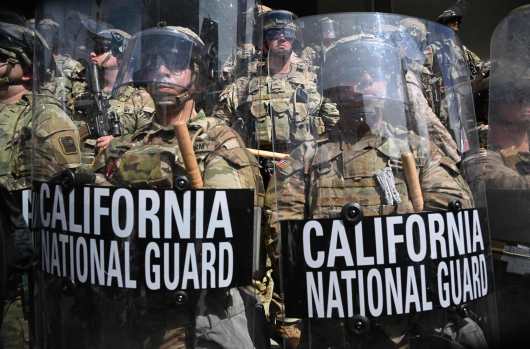
UPDATE: The U.S. Department of Justice (DOJ) has just announced it is backing down from its fight over the deployment of California National Guard troops in Los Angeles, returning control to Governor Gavin Newsom. This significant development comes as the DOJ filed a brief with the U.S. 9th Circuit Court of Appeals today, officially withdrawing its request to maintain federal control over the approximately 300 troops sent to the city.
In a swift legal move earlier this month, a federal judge ordered President Donald Trump to relinquish control of the troops, who were originally deployed on June 7, 2023, to protect federal facilities amid protests against immigration enforcement. The DOJ’s decision to withdraw comes after a partial stay that allowed the troops to remain under federal authority was not fully granted, prompting a re-evaluation of their status.
The ongoing situation has raised serious questions about the use of National Guard troops for federal enforcement, with Newsom’s administration arguing that the deployment violated constitutional rights. California Attorney General Rob Bonta previously criticized the Trump administration, stating, “For more than five months, the Trump administration has held California National Guard troops hostage as part of its political games.” Bonta emphasized, “The president is not king,” highlighting the importance of state sovereignty in this matter.
The troops were initially deployed after federal raids to combat illegal immigration were met with large-scale protests in Los Angeles. Trump justified the action by claiming local authorities could not ensure the safety of federal officials and properties. However, critics argue that the National Guard’s presence did little to address civil unrest, as crowd control was primarily managed by the Los Angeles Police Department and California Highway Patrol.
With the DOJ’s recent withdrawal, control of the National Guard troops is now firmly in the hands of the state. This decision marks a pivotal moment in the ongoing debate over the federal government’s role in state matters, particularly concerning law enforcement and public safety.
As the situation develops, observers are urged to keep an eye on further legal proceedings and statements from both state and federal officials. The implications of this ruling could resonate beyond California, impacting how similar deployments are handled across the United States.
The public will be watching closely as Los Angeles officials reaffirm their commitment to managing local safety without federal interference. This decision not only empowers state leadership but also underscores the importance of maintaining checks and balances within federal and state governance.