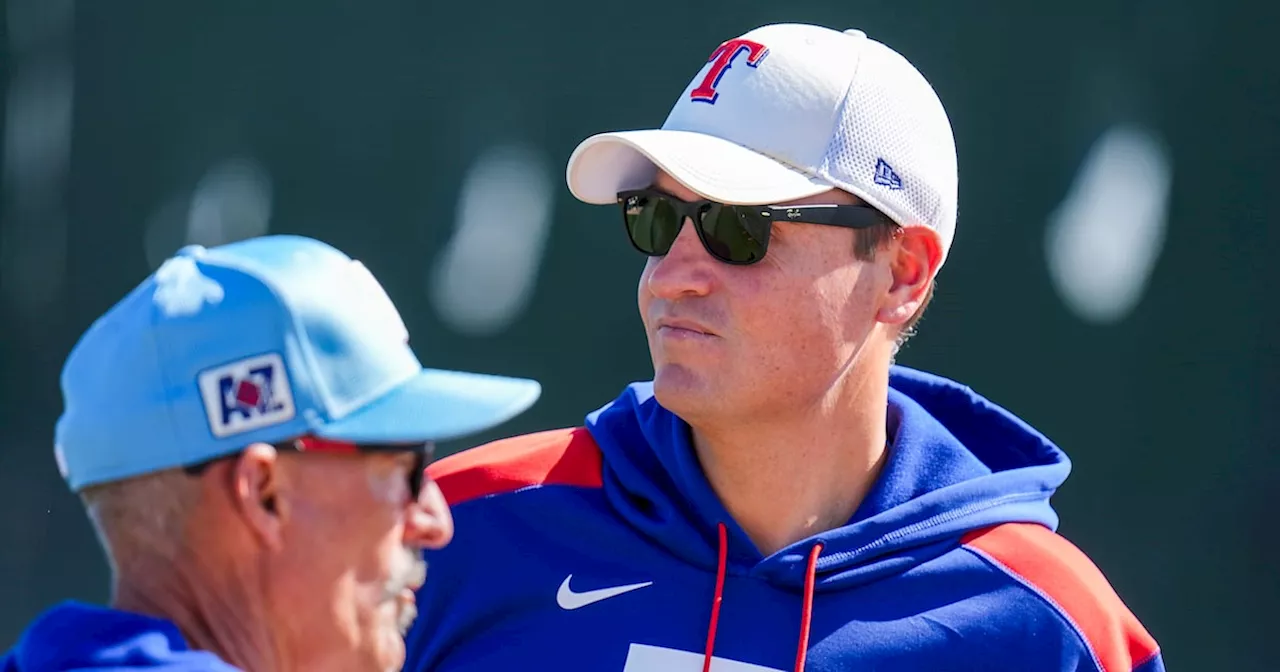
UPDATE: Texas Rangers President of Baseball Operations Chris Young delivered a passionate address regarding the team’s payroll challenges and internal performance issues during an offseason press briefing earlier today. Young emphasized the urgency of addressing the Rangers’ underperformance as they navigate a $241.45 million payroll for the 2025 season, which escalates to $241.45 million when factoring in a 50% luxury tax penalty.
Young noted that while the team has exceeded the luxury tax threshold for three consecutive years, the return on investment has been disappointing. “It’s my regret that we did not make the playoffs the last two seasons,” Young stated, acknowledging that the Rangers spent approximately $3 million per win over the past two years without postseason success.
The pressing question remains: why is the payroll so high without corresponding performance? Analysts suggest several factors, including lower-than-expected revenues from the Rangers Sports Network and looming uncertainties around MLB’s local broadcasting rights. In his address, Young admitted, “I can’t perfectly answer that,” but emphasized that the focus should shift from payroll to enhancing internal performance.
Young challenged the notion that spending guarantees success, pointing out that many playoff teams in 2025 operated on significantly lower budgets. “Spending does not necessarily guarantee success,” he remarked. “There are teams that spent hundreds of millions and didn’t make the playoffs. We were one of them. I believe in the talent of this team.”
Moving forward, Young outlined a strategy focused on improving internal dynamics rather than merely adding high-cost players. He expressed confidence in the coaching staff and called for a “hunger and fire” from players that could drive the team back to postseason contention.
The Rangers plan to address specific roster needs, including bolstering the bullpen and improving offensive production. Young acknowledged that past acquisitions did not meet expectations, stating, “We whiffed on some areas,” and hinted at a more efficient approach to future spending.
As the offseason progresses, the team’s direction under Young’s leadership will be closely scrutinized by fans and analysts alike. He remains optimistic that a commitment to internal improvement and a drive for excellence can revitalize the Rangers’ performance in 2026.
In conclusion, the urgency around the Rangers’ payroll situation highlights a critical juncture for the organization. Young’s passionate commitment to performance over spending may reshape the team’s future as they seek to reclaim their status in Major League Baseball.