UPDATE: Latest Australian inflation data has just been released, intensifying speculation about a potential interest rate hike from the Reserve Bank of Australia (RBA) in February. The annual inflation rate eased slightly from 3.8% in October to 3.4% in November, yet experts warn that this may not alleviate the RBA’s concerns over persistent price pressures.
The RBA closely monitors the trimmed mean inflation rate, which dropped marginally from 3.3% in October to 3.2% in November. This core inflation measure remains above the RBA’s target range of 2% to 3%, keeping market participants on high alert. The latest figures indicate a 0.3% month-on-month increase in trimmed mean inflation, underscoring ongoing challenges in managing inflation.
Key contributors to rising prices include new dwelling costs, which surged by 2.8%, and rents, which rose by 4.0%. Food price inflation has remained stubbornly high at 3.3%, persisting since June. These factors suggest that the RBA has a formidable task ahead in controlling inflation.
As the RBA prepares for its next policy meeting on February 3, 2024, market analysts are pricing in a 35% probability of an interest rate hike. The outlook among analysts is split: Commonwealth Bank of Australia (CBA) and National Australia Bank (NAB) anticipate a rate increase, while Westpac and Australia and New Zealand Banking Group (ANZ) expect rates to remain stable for an extended period. Westpac has also noted potential risks on both sides of the equation, highlighting the uncertainty facing the central bank.
With the crucial December quarter inflation report set to be released on January 28, all eyes will be on this data to determine the RBA’s next move. There is a growing consensus that inflation in Australia is proving to be stickier than previously anticipated, prompting the RBA to adopt a more vigilant stance.
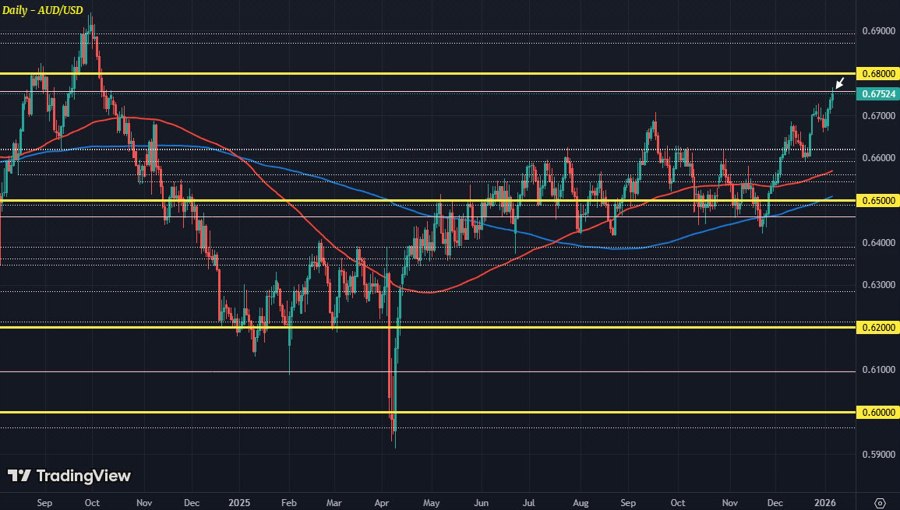
In the currency markets, the Australian dollar (AUD) has shown resilience, remaining bullish against the US dollar (USD) despite a slight setback following the inflation data release. Currently trading at its highest levels since October 2024, AUD/USD may face some resistance near 0.6800, but analysts suggest that if the RBA signals a willingness to act in February, the pair could target the September 2024 highs around 0.6915 to 0.6940.
As the situation develops, the RBA’s approach will be crucial to shaping market expectations and influencing the Australian dollar. Investors and consumers alike are keenly awaiting the January inflation report, which could determine whether the RBA must take immediate action to combat persistent inflationary pressures.
Stay tuned for more updates on this evolving economic landscape.