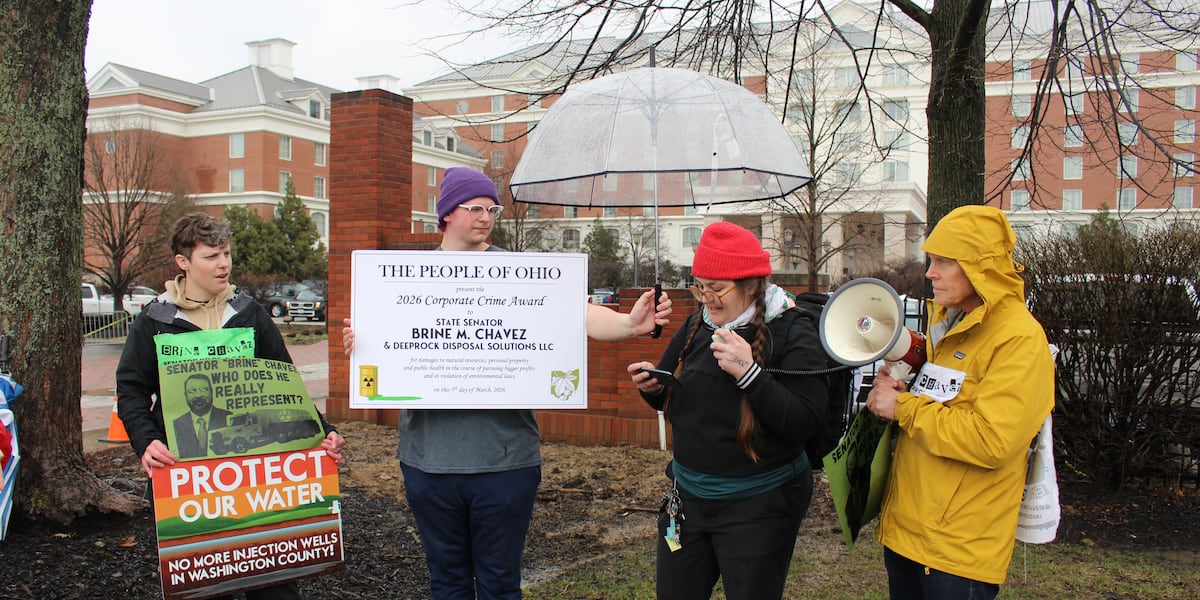
BREAKING: Activists are rallying outside the Easton Hilton Hotel in Columbus, Ohio, as the 79th annual meeting of the Ohio Oil and Gas Association unfolds today. The protest specifically targets Ohio State Senator Brian Chavez (R – Dist. 30), who is receiving the association’s Oilfield Patriot Award for his ties to the oil and gas industry.
The demonstration, organized by residents of Washington County and groups like Washington County for Safe Drinking Water and the Buckeye Environmental Network, comes amidst a heated debate over injection wells in the region. Chavez, a former CEO of DeepRock Disposal Solutions, faces backlash for alleged ongoing connections to the company, which operates injection wells in Southeastern Ohio.
Activists accuse Chavez of using his position as chair of the Senate energy committee to promote the interests of the oil and gas sectors. They presented an ironic “Corporate Crime Award” to Chavez and DeepRock, highlighting their concerns over environmental safety. “We deliver this award for writing laws to shield the injection well industry from liability,” stated Kat Finneran, co-chair of the Buckeye Environmental Network. She warned that “brine is migrating miles underground, threatening our neighbors in Noble County and the drinking water of 32,000 people in Marietta, Ohio.”
As tensions rise, local governments and water boards are uniting in a call for a moratorium on injection wells, further intensifying the debate. The protest reflects growing concern for public health and environmental safety in the face of industrial pressures.
In response to the protest, John Fortney, Communications Director for the Ohio Senate Majority Caucus, dismissed the activists, labeling them as “radical organizations” attempting to undermine the oil and gas industry with what he described as “junk science.” He accused the groups of being funded by “California special interests,” referencing 2024 tax records that suggest some funding comes from outside Ohio.
However, organizer Bev Reed from the Buckeye Environmental Network firmly rebutted these claims, asserting, “We are an Ohio-based organization. We’re Ohioans. We’re Appalachians. We’re all over the state.” Reed emphasized that the fight against injection wells is rooted in local concerns for health and safety.
The ongoing protest underscores the urgent need for policymakers to address the potential risks associated with injection wells, as communities rally for their rights to safe drinking water.
What happens next will be critical. Activists vow to continue their efforts, demanding accountability and transparency from elected officials like Chavez. The situation remains fluid as community members and environmental groups remain vigilant.
Stay tuned for further updates on this developing story and its implications for Ohio residents and the broader environmental landscape.