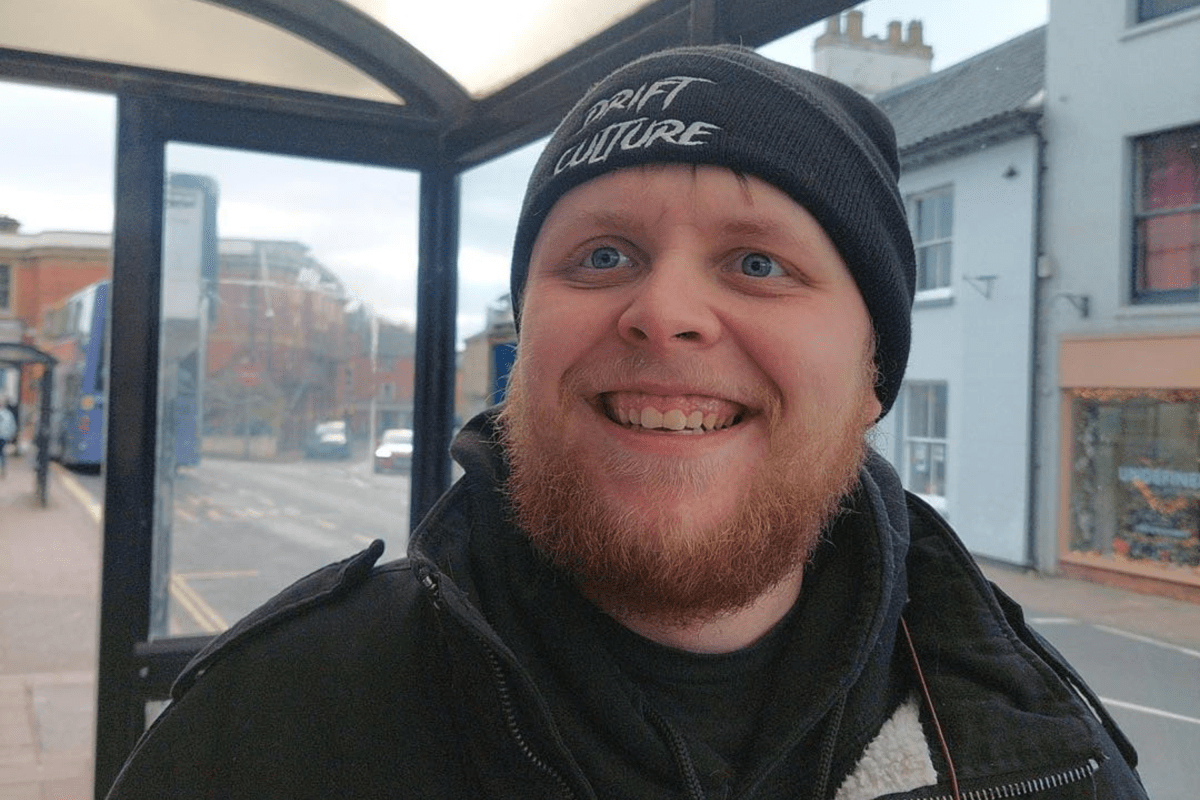
URGENT UPDATE: A 24-year-old man, Andre Yarham, has tragically died from a rare form of dementia, leaving his brain to researchers in hopes of advancing treatment options. This heartbreaking news comes from Norfolk, England, where his mother, Sam Fairbairn, confirmed his passing on December 27, 2023.
Yarham, diagnosed with frontotemporal dementia just weeks before his 23rd birthday in June 2022, succumbed to the rapid progression of this devastating condition, which is typically diagnosed in older adults. Fairbairn described her son’s personality as that of a “very cheeky boy with a brilliant sense of humor.” She added, “If he could help someone, then he would.”
The family’s ordeal began in November 2022 when Fairbairn noticed alarming changes in Andre’s behavior. Initially misdiagnosed with autism, Andre began to forget simple tasks, leading to increasing concerns. Fairbairn recalled, “He would say he was going to the shop, and an hour later he would be in the city with no idea how to get home.”
According to Dementia UK, frontotemporal dementia affects about one in 20 dementia patients and is particularly rare in individuals under 45 years old. Kirsty Dallison-Perry, head of the consultant admiral nurse and health inequality service at the organization, noted, “As it develops, it can present with drastic changes in personality.”
A magnetic resonance imaging (MRI) scan revealed the shocking deterioration of Andre’s brain, with doctors stating, “If I hadn’t known Andre’s age, I would have thought I was looking at the brain scan of a 70-year-old dementia patient.” This stark reality underscored the unique challenges faced by Andre and his family.
In June 2023, Andre officially received his diagnosis, revealing the condition was caused by a mutation in a gene controlling the protein tau. As his condition worsened, Fairbairn left her job as a coach driver to care for him full-time, noting that his decline was unusually swift, with changes occurring within days.
By September 2023, Andre’s mobility had significantly deteriorated, leading to his admission to a care home. His final days were spent in a hospice in Norwich, where he passed away peacefully. Although he could not consent to donate his brain, his mother believes he would have supported the decision, stating, “He was such a giving boy.”
Currently, there are no specific treatments for frontotemporal dementia. While existing medications may alleviate some symptoms, they do not slow disease progression. The family hopes that Andre’s donation will assist researchers in understanding this condition better, potentially preventing similar tragedies for others.
The emotional impact of this story resonates deeply, highlighting the urgent need for advancements in dementia research. Fairbairn’s heartfelt decision to donate her son’s brain aims to foster hope and knowledge in the fight against such a debilitating disease.
For anyone seeking to learn more about dementia or share insights, you can reach out via [email protected].