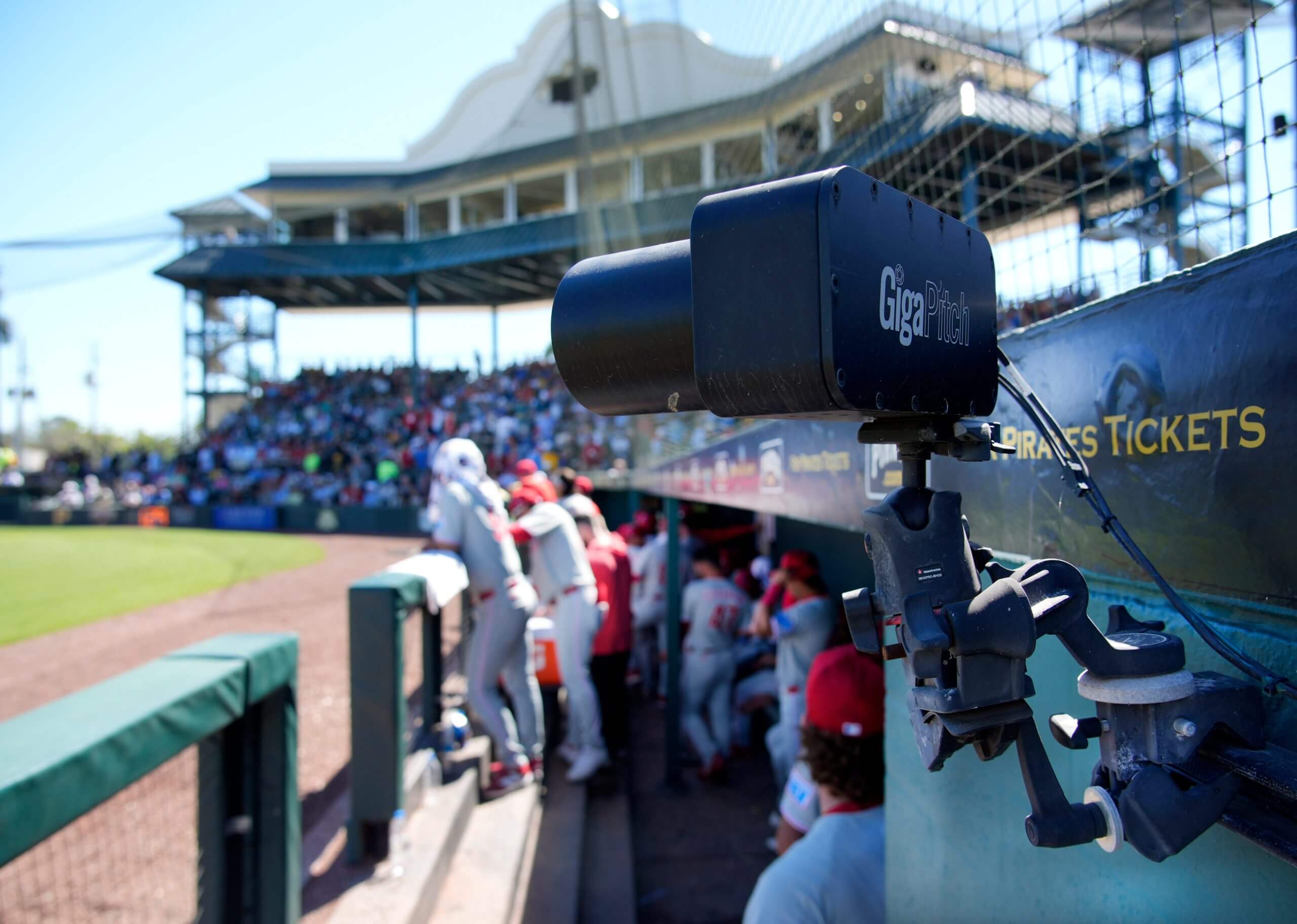
The Major League Baseball (MLB) has announced a significant policy change aimed at creating a level playing field across its minor leagues. Starting in the 2024 season, the league will regulate the use of in-game technology and data vendors, a move designed to address disparities that have emerged due to financial advantages held by wealthier teams.
Over recent years, affluent organizations have leveraged their financial resources to invest in advanced technologies, such as high-speed cameras and motion capture systems. This enabled them to gather extensive data during games, widening the information gap over their less-funded competitors. According to multiple league and team sources, as reported by The Athletic, the upcoming regulation seeks to standardize access to in-game technology across all minor-league parks.
“We are taking this step to ensure that all 30 Clubs are working with the same set of information as they make Baseball Operations decisions,” an MLB spokesperson stated. “Each Club can use the information however they see fit, but it is important that we provide a level playing field on access to information.”
New Regulations Aim for Parity
The newly established guidelines will allow the MLB to approve the data and technology vendors that teams can utilize. This change could provide minor-league teams with access to technology they previously could not afford. However, for teams that have already invested heavily in technology not approved by the league, the rule change may necessitate the removal of such systems from their stadiums.
Critics of the policy argue that it may inhibit innovation and render previous investments obsolete. “That’s definitely a concern,” noted one research and development executive. “There has been a vocal subset of owners that have wanted to limit front office spending for a while.”
Information regarding the new regulations was shared with executives during the General Manager (GM) meetings in November, and discussions continued to escalate during the Winter Meetings held last week.
The primary objective of the revised rules is clear: to equip all minor-league teams with the same data and video resources, similar to the structure already implemented in the major leagues. The current system has resulted in significant disparities; for instance, some organizations have invested in installing Hawk-Eye tracking technology at their minor-league facilities, while others have not.
Concerns Over Innovation and Data Quality
MLB has indicated that it may facilitate the installation of new technology where necessary, potentially leading to a more centralized approach. Although the league has not yet clarified which technology and data vendors will be approved, it acknowledged that some teams might need to scale back their current setups. “The effect will be different by ballpark, as some facilities will see additional tech installations while others will be unchanged or reduced,” the spokesperson added.
Historically, wealthy teams could meet with various technology providers and invest according to their perceived value. This approach allowed them to accumulate vast amounts of data, even if the practical application was not immediately clear. The new regulations, however, will restrict this ability to gather data freely and analyze it at a later stage.
Several technology vendors expressed disappointment over the decision, fearing it may stifle innovation. “We won’t know what sort of innovation we’ll miss because of this,” commented one high-level research and development analyst. “But we’ll probably miss out on something.”
The potential impact on data quality in the minors also raises questions. For example, Kinetrax, a marker-less motion capture technology provider, is favored by several teams for its ability to produce significant biomechanical data. Its parent company, Sony, also owns Hawk-Eye, leading to speculation about whether Kinetrax will be among the approved vendors.
As teams navigate these changes, issues regarding the future of other technologies come into play. Technologies like Edgertronic high-frame-rate cameras, which enhance in-stadium movement analysis, and Catapult, a wearable technology that tracks player movement, face uncertainty regarding their continued use in minor-league games.
As the MLB works to finalize the details of these regulations, further clarification is expected through an all-team memo. This communication will likely address questions regarding definitions of data versus technology, the specifics of which technologies may be removed, and how minor-league complexes will be regulated in comparison to stadiums.
While the league is committed to creating a fair environment, the eventual outcomes will depend on how these regulations are implemented and received by teams. Whether the changes will meet the approval of all stakeholders remains to be seen.