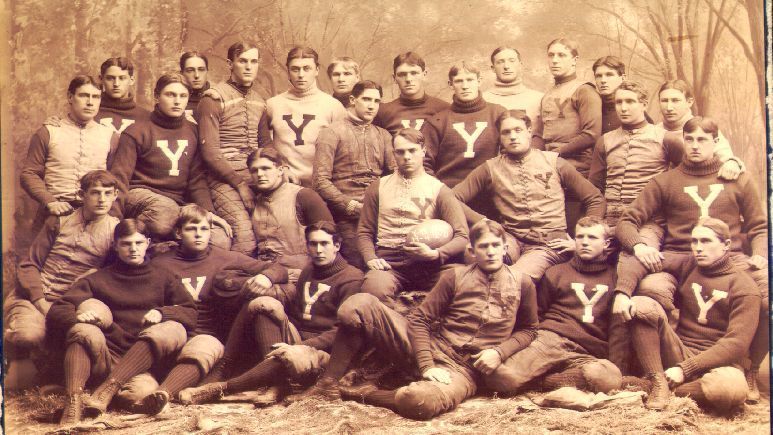
On Monday, the Indiana Hoosiers will compete for the national championship, seeking a perfect season with a 16-0 record. This accomplishment would place them in elite company, as only the 1894 Yale Bulldogs share a similarly flawless mark in the history of major college football. While Indiana’s pursuit is remarkable, Yale’s achievement came in a vastly different era of the sport.
The Bulldogs completed their historic season with a staggering aggregate score of Yale 485, Opponents 13. This dominance was facilitated by a team rich in talent, featuring seven players who would eventually earn All-American honors. Yet, the style of play and structure of college football in the 19th century bore little resemblance to today’s game.
The Context of Yale’s 16-0 Season
Yale’s unbeaten run occurred in a time when the sport lacked a formal playoff system or standardized scheduling. Teams could freely design their schedules, resulting in a disparity in the number of games played. While Yale competed in 16 matches, other prominent schools had fewer games; for instance, Harvard played just 13, and Princeton participated in 10. The flexibility of scheduling allowed Yale to maximize their season, often playing two games per week, including contests against local athletic clubs.
According to Denis Crawford, a historian at the College Football Hall of Fame, the 1890s were characterized by the “Wild West” of college football. Teams could play as many or as few games as they desired, without any regulatory oversight. Yale capitalized on this environment by assembling a robust roster under the guidance of influential figures like Walter Camp, who had a significant impact on the development of the program.
Game Structure and Evolution
Football in the 19th century was a brutal and chaotic sport, still evolving from its rugby origins. The forward pass was nonexistent, and matches featured a mass of players converging at the line of scrimmage. The 1894 rules allowed for only three players to move before the snap, a measure aimed at curbing particularly dangerous plays.
Despite the physical nature of the game, Yale’s players demonstrated exceptional skill. The team was recognized for its strength, with five Bulldogs named as All-Americans that year, according to selections made by Caspar Whitney in collaboration with Camp. Yale’s formidable fullback Frank Butterworth was noted for his superior kicking and running compared to his contemporaries.
The Bulldogs’ defense was equally impressive. They allowed points in only three games, a feat that underscores their dominance during the season. In contrast, Indiana’s current season has also showcased impressive statistics, including victories over several ranked teams.
As Indiana prepares for their championship match, they face a complex legacy. Their potential to achieve a perfect season in a more competitive and regulated environment may place their accomplishment in a different light than Yale’s historic feat.
Bill Connelly, a sports analyst, highlights that while Yale’s 1894 season was remarkable, Indiana’s path to a 16-0 record includes victories against a higher caliber of opponents. Currently, Indiana holds a 99.4% strength rating, suggesting a level of performance comparable to some of the all-time great teams.
In the years following their 1894 triumph, Yale continued to excel, claiming nine national championships over the next decade and a half. However, as college football evolved and more schools entered the fray, Yale’s dominance gradually waned. The establishment of the NCAA in 1906 marked a significant turning point, diminishing the influence of early powerhouses like Yale.
As the Hoosiers aim for their own place in history, they do so with the understanding that the landscape of college football has transformed dramatically since Yale’s storied season. Should Indiana secure their championship victory, they will not only celebrate a perfect record but will also contribute to the ongoing narrative of college football’s rich and varied history.