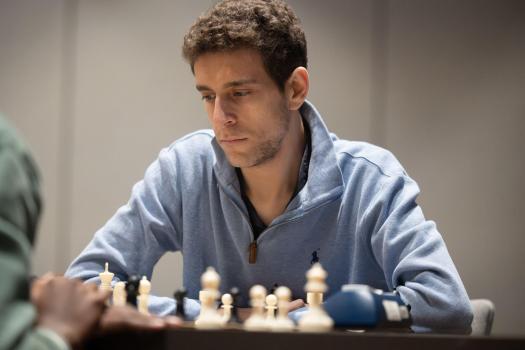
A tragic incident has shaken the chess community with the death of renowned grandmaster Daniel Naroditsky, who passed away on October 19, 2023, at his home in North Carolina. Authorities have determined that Naroditsky’s death was likely due to a cardiac arrhythmia, complicated by the presence of methamphetamine and kratom in his system at the time.
The findings emerged from an investigation by the North Carolina Office of the Chief Medical Examiner. According to documents from the office, Naroditsky was found unresponsive on his couch after missing a flight to Colorado. Friends discovered him after last confirming his well-being around 15:00 on October 18, when they noticed a partially eaten meal on his dining table.
Investigators reported that Naroditsky did not have any known medical history and had not reached out for help prior to his death. The medical examiner noted that the circumstances suggested he died suddenly without acute distress. A toxicology report conducted shortly after his passing revealed various substances, including methamphetamine, amphetamine, and the active ingredients of kratom: mitragynine and 7-hydroxymitragynine. Although these substances were detected, they were at levels considered non-lethal.
Investigation Findings and Community Impact
The medical examiner classified Naroditsky’s death as accidental, citing a combination of cardiac issues and the presence of drugs as contributing factors. In an official statement, the medical examiner clarified, “There is no evidence for intentional or unintentional overdose,” while also acknowledging that the substances found can increase the risk of cardiac arrhythmia.
Initially, concerns arose among friends and viewers about Naroditsky’s altered mental state during a live-streamed chess session preceding his death. In the days leading up to his passing, friends reportedly confiscated 40 pills they believed to be Adderall after expressing concern for his wellbeing. However, law enforcement found no illicit substances or drug paraphernalia at his residence, though bags of kratom powder and over-the-counter medications were located.
Naroditsky’s untimely death also led to significant scrutiny within the chess community. Just days after his passing, the International Chess Federation (FIDE) announced an investigation into fellow grandmaster Vladimir Kramnik, who had accused Naroditsky of cheating through the use of artificial intelligence. Kramnik’s allegations were met with strong denials from Naroditsky, who enjoyed support from peers who deemed the accusations unfounded. Following Naroditsky’s death, Kramnik called for a police investigation but positioned himself as a whistleblower.
FIDE responded to the controversy by filing an official complaint against Kramnik to its Ethics and Disciplinary Commission for a pattern of harassment directed at Naroditsky and another player.
Legacy of a Rising Star in Chess
Born in Foster City, California, in 1994, Naroditsky first captured the chess world’s attention when he won a children’s world championship title in 2007 as a sixth grader. He earned the title of grandmaster at the age of 18 and competed in various prestigious tournaments around the globe. Naroditsky graduated from Stanford University, where he studied history, and was actively involved in coaching at the Charlotte Chess Center at the time of his death.
With a ranking among the top 200 traditional chess players worldwide and a position in the top 25 for blitz chess, Naroditsky was a notable figure in the sport. His latest achievement came in August 2023, when he won the U.S. National Blitz Championship, further solidifying his legacy as a talented and influential player.
The chess world mourns the loss of a promising talent taken too soon. As investigations continue, Naroditsky’s impact on the game remains evident, reminding many of the challenges faced by athletes in high-pressure environments.