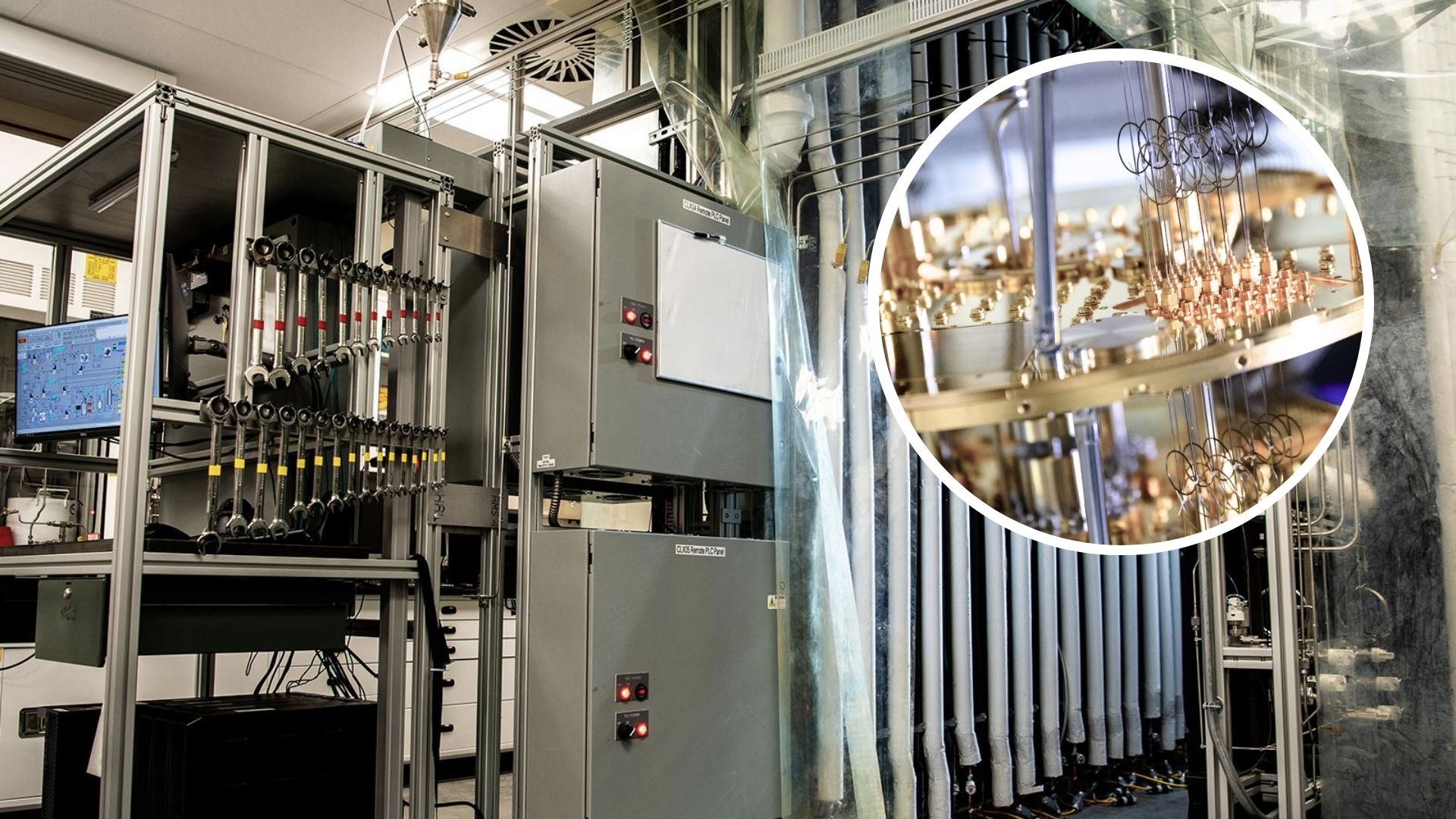
A laboratory in Washington has made significant strides in enhancing the production of quantum materials. The Pacific Northwest National Laboratory (PNNL) has successfully designed and constructed high-purity gas conversion and purification systems for two critical gases: silane and germane. These gases are vital for research and development in the field of quantum information science and other advanced technologies, particularly in the semiconductor industry where they are used to deposit thin films of silicon and germanium for cutting-edge computing chips.
The laboratory’s advancement is not merely a scientific accomplishment; it is viewed as a strategic necessity. Christopher Landers, Director of the Office of Isotope R&D and Production, emphasized the importance of this initiative, stating, “Our investment to strengthen the supply chain for these specialized materials is more than just a scientific achievement; it’s a strategic imperative for the Genesis Mission.” He further elaborated that the work at PNNL is directly addressing the need for high-purity materials essential for breakthroughs in quantum information science and other national priorities.
Advancements in Isotopic Enrichment Techniques
PNNL’s research efforts continue to evolve with a focus on further isotopically enriching silane and germane through enhanced thermal diffusion isotope separation (TDIS) technologies. The laboratory previously developed similar systems for enriching gases like argon and chlorine. However, additional research is necessary to safely design and operate TDIS systems that can enrich silane and germane effectively.
Mike Powell, the principal investigator for the project, acknowledged the challenges associated with isotopic dilution of enriched silicon. He stated, “Isotopic dilution of enriched silicon is a challenging problem. But we carefully designed our systems and handling procedures to maintain the starting feedstock isotopic purity through to the final silane and germane products.” This meticulous approach ensures the integrity of the materials throughout the process.
PNNL’s ongoing research and development efforts are aimed at creating specialized systems that will facilitate a reliable pathway from commercially available enriched starting compounds to device-compatible precursor gases. This innovation is expected to enhance the supply chain and improve the efficiency of producing these essential gases.
Strengthening the Supply Chain for Advanced Technologies
The Office of Isotope R&D and Production is funding PNNL’s initiatives to explore a technique known as thermal diffusion isotopic separation. This method directly enriches silane and germane, simplifying the production process and minimizing the risk of impurities. By ensuring a stable supply for researchers and manufacturers, PNNL aims to bolster advancements in enriched silicon and germanium, which are crucial for next-generation semiconductor devices and other precision materials.
The initiative underscores the commitment of the Office of Isotope R&D and Production to build a robust infrastructure for specialized materials. Furthermore, the office is dedicated to pursuing additional research and development opportunities, as well as collaborating with industry partners to enhance the purity and specifications of these materials, which are currently not available commercially.
As the demand for advanced technologies continues to rise, PNNL’s innovations in high-purity gas systems position the United States at the forefront of quantum material production, reinforcing its technological capabilities in an increasingly competitive global landscape.