The robotics industry is on the cusp of a transformation, with predictions indicating significant advancements in artificial intelligence (AI) over the next few years. According to Anders Billesø Beck, vice president of AI robotics products at Universal Robots, four key trends are set to redefine the value that robots bring to various sectors by 2026 and beyond.
Emerging Trends in Robotics
As automation continues to evolve, it is crucial to identify the trends that will shape the future landscape. Beck emphasizes the importance of smarter mathematical models in AI development. These models will enhance robots’ ability to analyze data and make real-time decisions, increasing efficiency across industries. This advancement will not only improve operational capabilities but also reduce the margin for error in critical tasks.
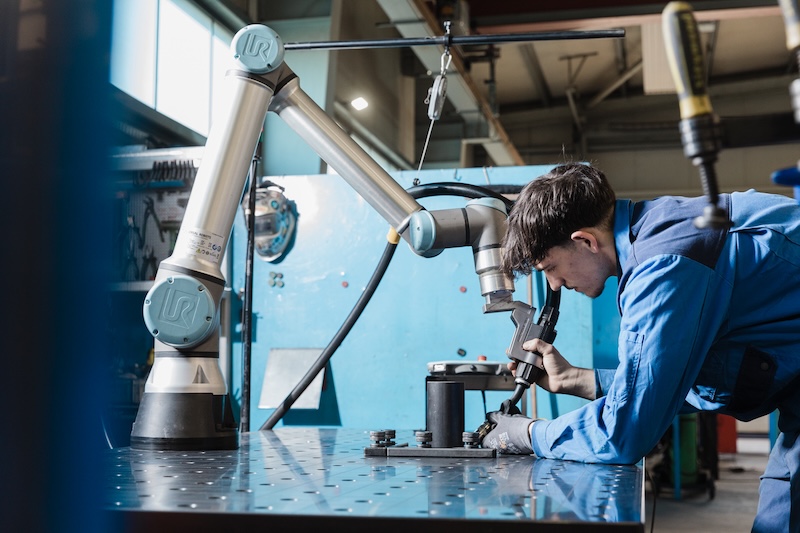
Another significant trend is the rise of cooperative behaviors in robotics. Beck notes that future robots will increasingly work alongside humans, enhancing collaboration in workplaces. This shift will require a re-evaluation of how humans and robots interact, ensuring that they complement each other’s strengths. As robots become more adept at understanding human actions and intentions, their integration into various processes will become more seamless.
Value Creation Through AI
The potential for value creation through AI-driven robotics is immense. Beck highlights that the next generation of robots will be equipped with advanced algorithms that allow them to learn from their environments. This capability will enable robots to adapt to different tasks more efficiently, leading to significant productivity gains. Companies that invest in these technologies can expect to see a substantial return on investment as operational costs decrease and output increases.
Furthermore, the role of AI in predictive maintenance is set to grow. By utilizing data analytics, robots will be able to foresee equipment failures before they occur, allowing for timely interventions. This proactive approach not only extends the lifespan of machinery but also minimizes downtime, which is a critical factor in manufacturing and logistics sectors.
The continuous advancement of AI technologies will also present new opportunities for workforce development. Beck suggests that as robots take on more complex tasks, there will be a growing need for skilled workers to oversee these operations. This shift will necessitate new training programs and educational initiatives to equip the workforce with the necessary skills to thrive in an increasingly automated environment.
In summary, the insights shared by Anders Billesø Beck from Universal Robots provide a forward-looking perspective on the robotics industry. The interplay of smarter mathematics, cooperative behaviors, predictive maintenance, and workforce development will fundamentally reshape how businesses leverage automation. As we approach 2026, these trends will not only redefine operational practices but also present new avenues for innovation and growth in the robotics sector.