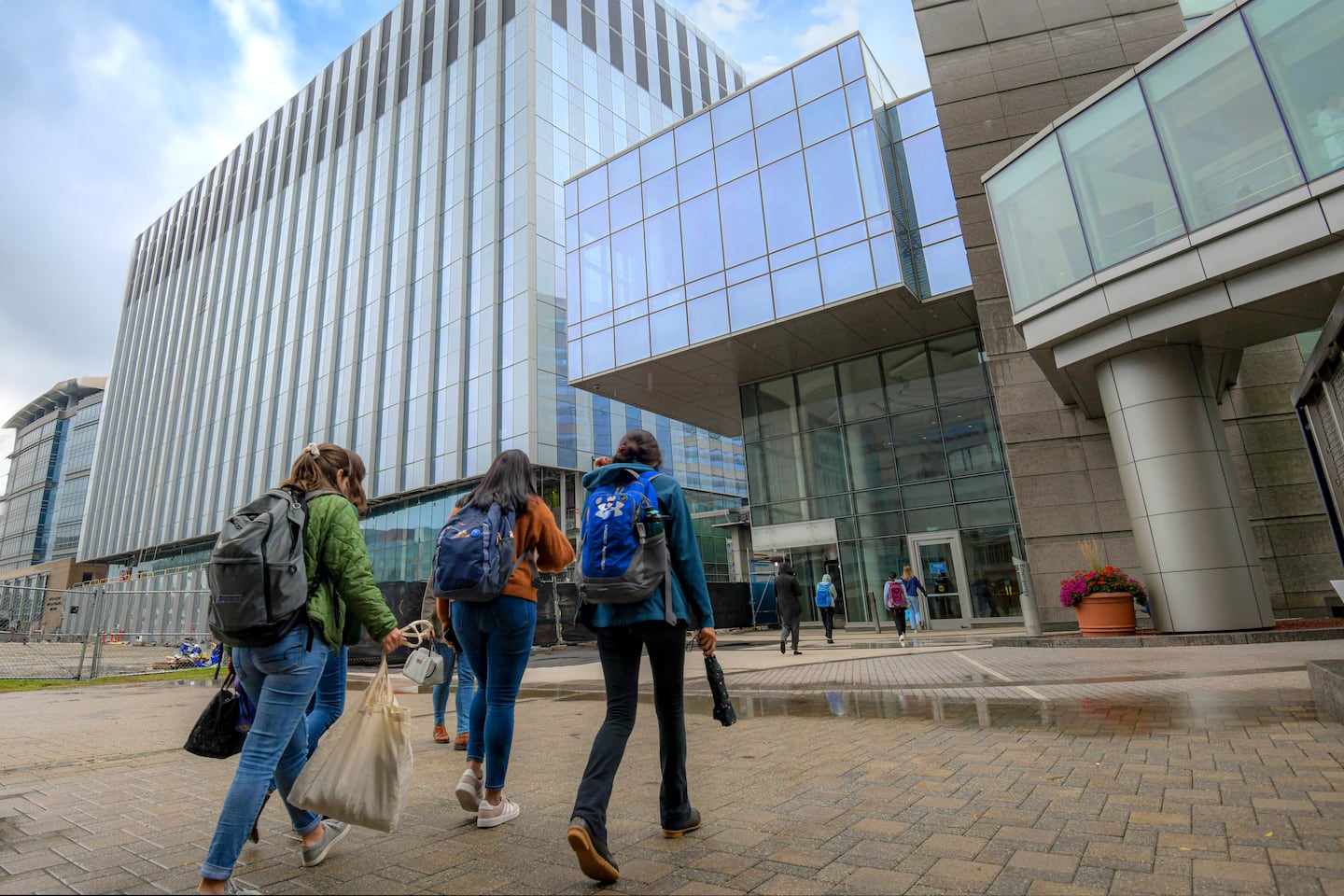
The UMass Chan Medical School has experienced a drastic decrease in PhD admissions, accepting only 13 students this academic year compared to 73 students last year. This significant reduction raises concerns about the future of scientific research and innovation in the United States. The decrease is especially alarming given that these students typically represent the next generation of researchers who will contribute to advancements in critical fields like cancer biology, immunology, and neuroscience.
Michael Nietzel, president emeritus of Missouri State University, expressed concerns about this trend, stating, “It’s your future talent in science, engineering, and for the academic workforce.” The cutbacks at UMass Chan might signal potential challenges for other institutions across the country. With fewer opportunities available for young researchers, many may seek avenues for their ambitions outside the United States.
Initially, UMass Chan made offers to between 60 and 80 PhD students for the upcoming 2025 academic year. However, the school withdrew nearly all offers due to fears of impending federal funding cuts. The upcoming admissions figures will serve as a crucial indicator of the broader impact of these cuts on graduate education.
In a recent development, Congress passed a spending bill that rejected proposed cuts to the National Institutes of Health, but the overall effects of this legislation on individual institutions remain uncertain. Chancellor Michael Collins of UMass Chan anticipates that next year’s PhD class will see more students than this year but still fewer than in a typical year, primarily due to declining federal grant allocations.
In fiscal 2025, UMass Chan secured 345 awards from the NIH, the lowest in five years, totaling $190.4 million. This amount is only slightly less than the previous year’s funding; however, a change in the distribution of multiyear grants means that $13.2 million of that funding cannot be utilized this year. The recent legislation has limited, but not eliminated, this funding system. University officials now predict a continued decline in federal funding, which could exacerbate the situation.
“If fewer labs are funded, there are fewer opportunities for graduate students,” Collins noted. He expressed dissatisfaction with the current funding landscape, stating, “I hope we can get to a point of more steady funding, but I don’t see it in the next short period of time.”
Nationally, data from the National Student Clearinghouse Research Center indicates a decline of 2,122 doctoral students in fall 2025 compared to fall 2024, marking a 0.3 percent decrease and the first significant drop since 2020. Although Massachusetts reported a 1.4 percent increase in graduate student enrollment, the overall impact on doctoral programs remains unclear.
The situation looks mixed among institutions in the Boston area. Harvard University reported a drop in doctoral students from 4,166 to 4,061 this year. The Faculty of Arts and Sciences at Harvard announced plans to admit PhD students at “significantly reduced levels” due to funding pressures. Meanwhile, MIT noted an increase in doctoral students from 4,083 to 4,107, although they admitted 96 fewer graduate students overall.
Conversely, Brown University has declared intentions to reduce PhD student enrollment by 20 percent next year as a cost-cutting measure. The institution has paused admissions for six departments, including classics and anthropology.
While it may be beneficial for universities to assess and possibly reduce programs that produce an oversupply of graduates in certain fields, the dilemma arises when funding cuts force institutions to limit admissions in areas like science and engineering, where career opportunities exist. Richard Larson, a professor at MIT, noted that the increase in PhD graduates is outpacing the available academic positions.
It can be politically difficult for universities to implement targeted reductions rather than broad cuts, as Phillip Levine, an economics professor at Wellesley College, highlighted. Nevertheless, universities must make challenging decisions, as diminishing opportunities for doctoral students could lead many talented individuals to pursue careers abroad.
In contrast, the Canadian government is proactively attracting international researchers with a substantial investment of $1.7 billion over 12 years, including $133.6 million allocated for recruiting doctoral students and post-doctoral researchers.
While the path to resolving these funding issues is complex, American institutions must strive to retain emerging talent. The ramifications of reduced PhD programs in critical research fields could hinder the United States’ long-term innovation capabilities. The editorial board of the Boston Globe emphasizes that the current funding climate necessitates urgent attention to ensure a promising future for scientific research and education.