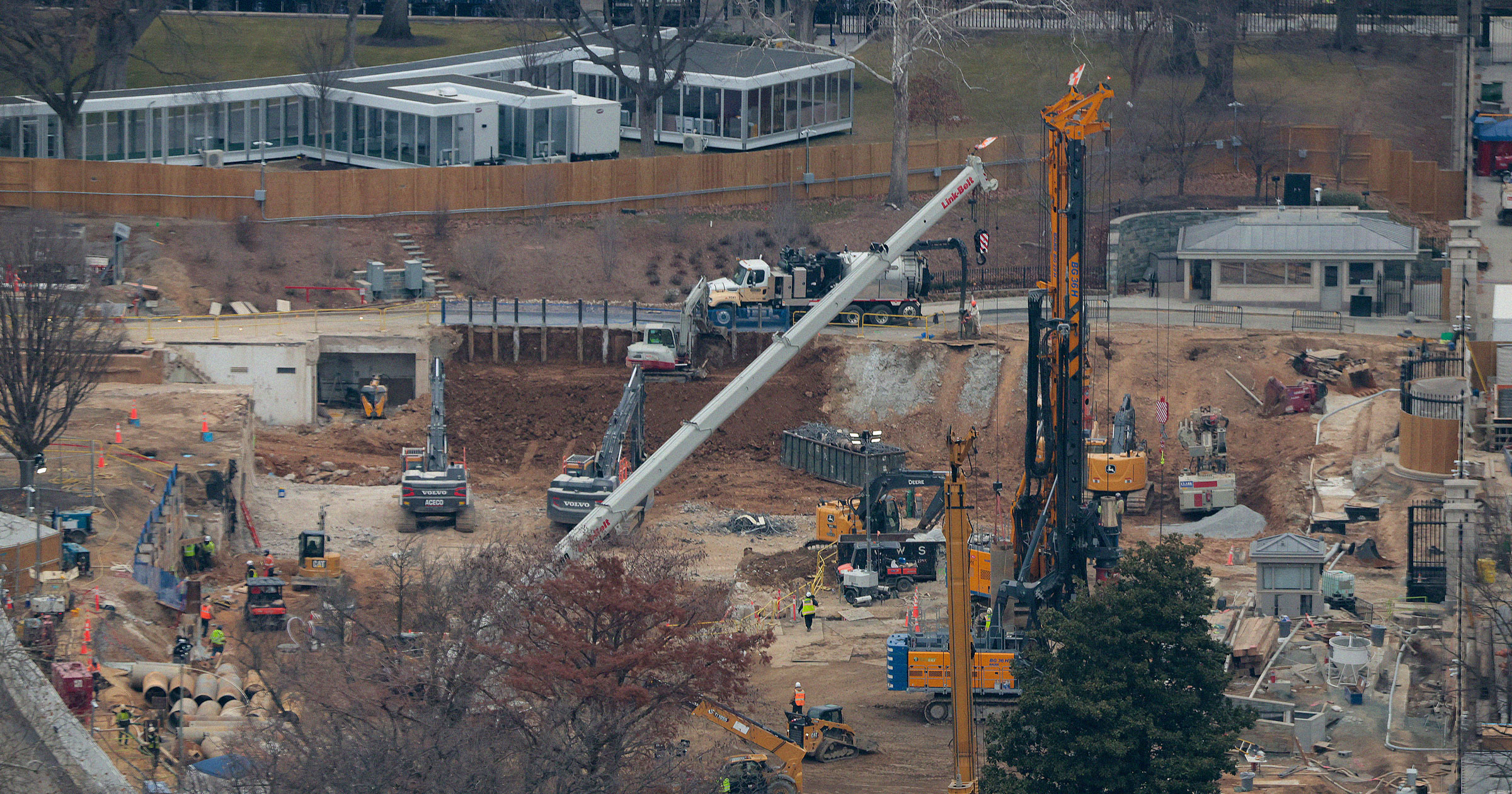
The Trump administration is proceeding with plans for a new underground facility beneath the East Wing of the White House, raising concerns about transparency and security. The initiative follows the administration’s controversial decision to build a large ballroom, funded by the State Department, which has faced significant scrutiny from congressional inquiries, lawsuits, and media coverage.
A U.S. District judge is currently reviewing a request from a preservation group aimed at halting the ballroom project, which has an estimated cost of $400 million. In the meantime, reports from CNN indicate that plans for a new bunker, designed to replace the existing Presidential Emergency Operations Center, are being developed discreetly. This facility, originally established after the December 1941 attack on Pearl Harbor, is crucial for the protection of White House officials during major incidents.
According to sources familiar with the situation, the new bunker will incorporate advanced technology to address evolving threats. White House Director of Management and Administration Joshua Fisher assured reporters that the administration is committed to implementing “necessary security enhancements” and creating “resilient, adaptive infrastructure aligned with future mission needs.” Fisher emphasized that some aspects of the project are classified, stating, “There are some things regarding this project that are, frankly, of top-secret nature that we are currently working on.”
Presidential Emergency Operations Center History
The existing Presidential Emergency Operations Center has a storied history, having been designed to safeguard officials from major threats, including potential nuclear attacks. Notably, former Vice President Dick Cheney utilized the facility just before the September 11, 2001, attacks on the Pentagon. The bunker was also reportedly used by Trump during the protests following the death of George Floyd in May 2020.
The structure, described as a “very complicated submarine” built in the 1940s, is equipped with distinct power, water, and air filtration systems. However, sources report that all subterranean structures, including the bunker itself, have been gutted in preparation for the new plans.
Financial Implications and Future Outlook
While the Trump administration has indicated that private donors may cover the costs associated with the bunker and ballroom projects, the full extent of these expenses remains uncertain. Risk management executive and former U.S. Secret Service agent Jonathan Wackrow highlighted the challenges in estimating costs for modernizing facilities to mitigate current and future threats, stating, “We’re never going to get the line of sight on how much that costs.”
As the administration continues to navigate the complexities of national security and infrastructure development, the implications of these secretive plans will likely remain a point of contention in political and public discourse.