Three astronauts aboard China’s Tiangong space station are currently without a reliable means of returning to Earth. The crew, part of the Shenzhou 21 mission, arrived at the station on October 31, 2023, for a planned six-month stay. Their return vehicle became unavailable when the Shenzhou 20 spacecraft, which was recently used by a different crew, was deemed unfit for the return journey due to damage sustained from a space debris strike.
The astronauts aboard Shenzhou 21 now find themselves in a precarious situation. On the night of November 13, 2023, the Shenzhou 20 spacecraft departed with its crew, leaving the Shenzhou 21 astronauts without a backup for their safe return. This has raised concerns about their safety in the event of an emergency.
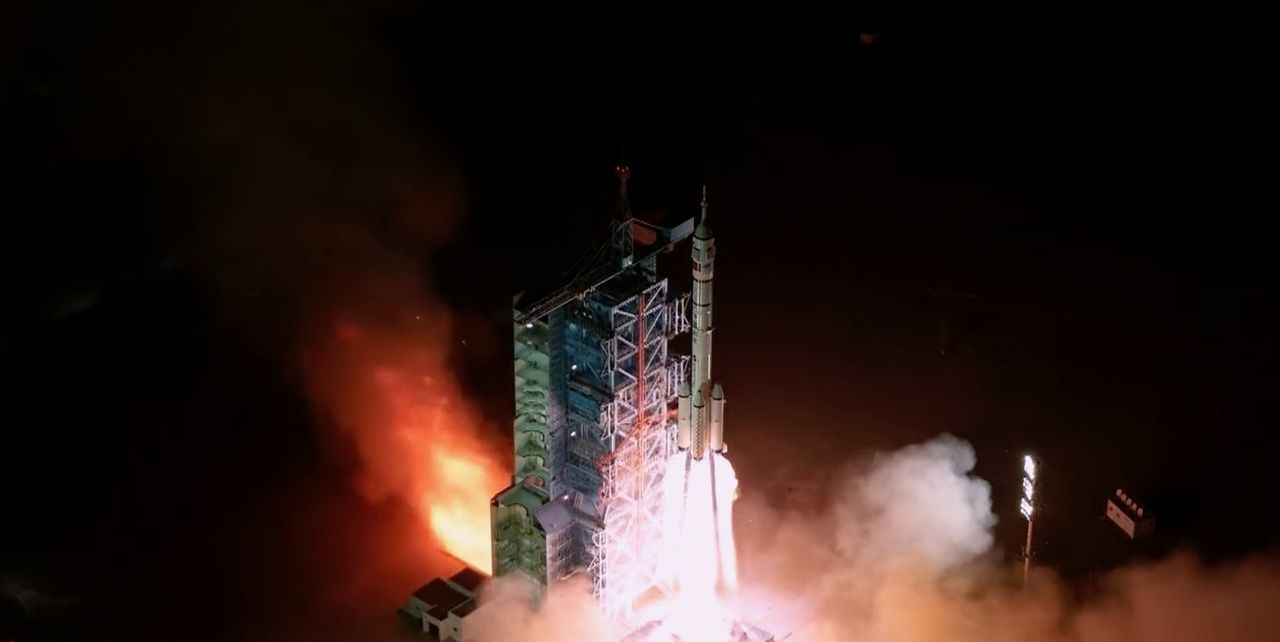
China’s space program maintains a Long March 2F rocket and Shenzhou spacecraft in a state of near readiness during crewed missions, as reported by SpaceNews journalist Andrew Jones. This means that if a situation arises aboard the Tiangong, a rescue vehicle can be launched within approximately 8.5 days. The countdown to readiness has likely already begun for the Shenzhou 21 team, given their current lack of a safe escape option.
Chinese space officials have indicated plans to launch the Shenzhou 22 spacecraft to the Tiangong, although no specific timeline has been provided. They described the upcoming launch as occurring “at an appropriate time in the future,” reflecting the urgency of ensuring the safety of the astronauts aboard Tiangong, where every day spent without a lifeboat increases risk.
The situation faced by the Shenzhou 21 astronauts evokes comparisons to past incidents involving NASA astronauts. Notably, Butch Wilmore and Suni Williams experienced a similar scenario during their mission to the International Space Station (ISS) in June 2024. When their spacecraft, Boeing’s Starliner, encountered helium leaks and thruster issues on ascent, NASA opted to return the capsule uncrewed. Wilmore and Williams remained aboard the ISS for nearly nine months, eventually returning via a SpaceX Crew Dragon capsule.
Unlike the ISS, which had several non-Starliner lifeboats available for emergency situations, the current circumstances at Tiangong are less favorable. The only crew-capable vehicle docked at the station, the Shenzhou 20 spacecraft, is compromised due to cracks in one of its windows from the debris incident. The China Manned Space Agency confirmed that the Shenzhou 20 does not meet safety requirements for astronaut return and will remain in orbit for ongoing experiments, according to the state-run Xinhua news outlet.
The Shenzhou 21 mission is significant as it marks the tenth crewed operation to the Tiangong space station, which is approximately 20% the size of the ISS. The crew includes commander Zhang Lu, 48, who previously flew on Shenzhou 15 in 2022, alongside spaceflight rookies Zhang Hongzhang and Wu Fei. Notably, Wu is the youngest member of China’s astronaut corps.
As the situation unfolds, the focus remains on ensuring the safety of the Shenzhou 21 astronauts and preparing for a timely launch of the Shenzhou 22 spacecraft. The international space community watches closely, recognizing the inherent risks associated with human spaceflight and the need for robust contingency plans.