Astronomers have identified a vast lava tube beneath the surface of Venus, marking a significant advancement in our understanding of the planet’s geological features. This discovery, detailed in a recent study published in Nature Communications, provides strong evidence that Venus is traversed by extensive lava tubes, known as pyroducts.
The study coauthor, Lorenzo Bruzzone from the University of Trento, emphasized the importance of this finding. “Our knowledge of Venus is still limited, and until now we have never had the opportunity to directly observe processes occurring beneath the surface of Earth’s twin planet,” he stated. The identification of a volcanic cavity is crucial for validating long-held theories regarding the planet’s volcanic history.
For decades, scientists have suspected the existence of lava tubes on Venus, given its surface dotted with tens of thousands of volcanoes and characterized by extensive volcanic plains and lava channels. Previous studies have pointed to signs of recent volcanic activity, suggesting that volcanism has played a dominant role in shaping the planet’s history. Yet, direct evidence of these lava tubes remained elusive, particularly due to the planet’s thick atmosphere, which is composed primarily of sulfuric acid and carbon dioxide.
Radar Technology Unlocks Subsurface Insights
The challenge of observing what lies beneath Venus’ surface is compounded by its dense cloud cover, which traps heat and raises surface temperatures to over 870 degrees Fahrenheit. Optical observations are virtually impossible. Instead, researchers utilized data collected by NASA’s Magellan spacecraft between 1990 and 1992. The spacecraft employed Synthetic Aperture Radar (SAR), which can penetrate the planet’s thick cloud layer.
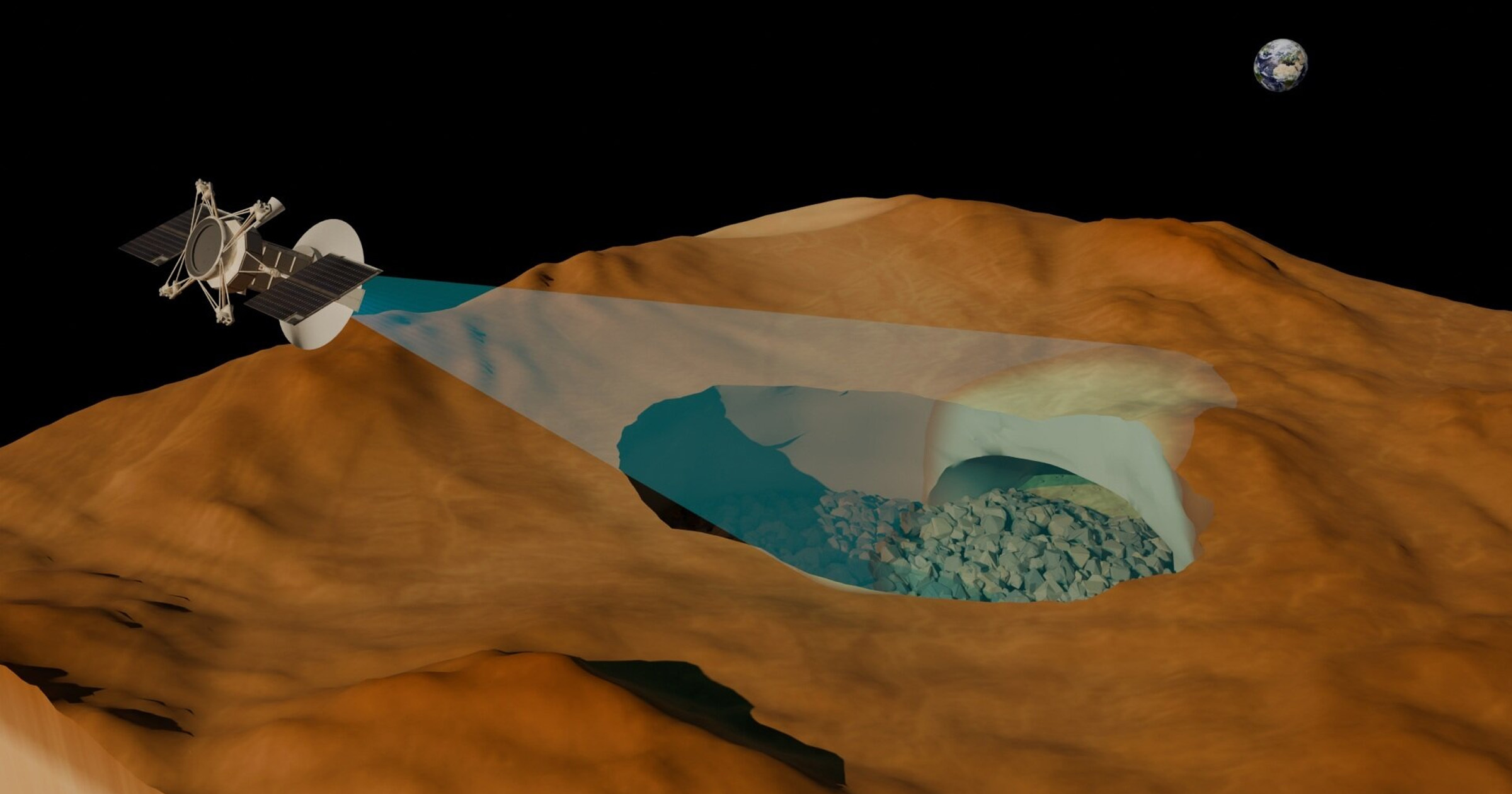
The researchers analyzed radar images where signs of localized surface collapses were detected, employing a specialized imaging technique to locate and characterize underground conduits near skylights, which are holes formed by the collapse of a lava tube’s roof. Their analysis revealed a substantial subsurface conduit in the region of Nyx Mons, a shield volcano approximately 225 miles in diameter.
According to Bruzzone, this conduit is believed to be a lava tube, estimated to have a diameter of around 1 kilometer, surpassing the size of similar structures found on Earth and Mars. He noted, “The available data allow us to confirm and measure only the portion of the cavity close to the skylight. However, analysis of the morphology and elevation of the surrounding terrain, together with the presence of other pits similar to the one studied, supports the hypothesis that the subsurface conduits may extend for at least 45 kilometers.”
Future Exploration Needs Enhanced Technology
While this discovery is groundbreaking, Bruzzone cautioned that further testing is necessary to fully understand the extent of these lava tubes. “To test this hypothesis and identify additional lava tubes, new higher-resolution images and data acquired by radar systems capable of penetrating the surface will be required,” he explained.
This research not only deepens our understanding of Venus but also paves the way for future studies that could provide insights into the planet’s volcanic processes. As scientists continue to explore these hidden features, they hope to unravel the complex geological history of Venus, which remains one of the most enigmatic planets in our solar system.