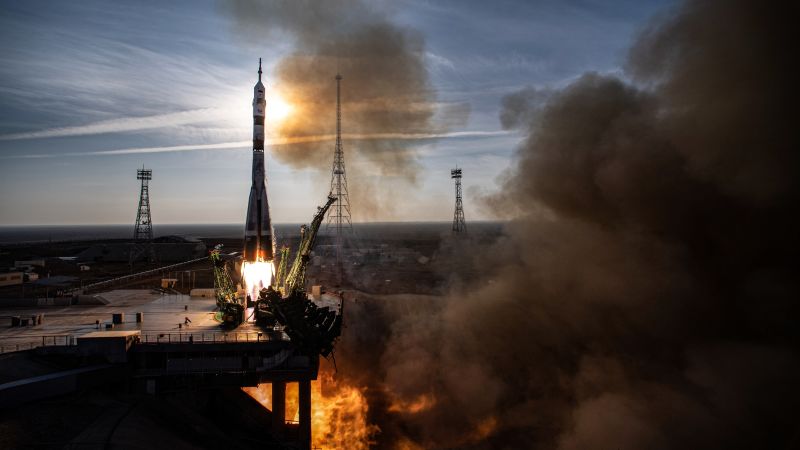
A launch pad at the Baikonur Cosmodrome in Kazakhstan sustained damage during the launch of the Soyuz MS-28 spacecraft, which successfully transported two Russian cosmonauts and one American astronaut to the International Space Station (ISS). The mission took place on Thursday, with the spacecraft docking at the ISS shortly after liftoff, according to Russia’s space agency, Roscosmos.
Following the launch, a post-flight inspection revealed “damage to several elements of the launch pad.” This facility, a crucial part of Russia’s space operations, remains under assessment. Roscosmos stated that all necessary materials to conduct repairs are available, emphasizing that “the damage will be repaired in the near future.”
Potential Impacts on Future Launches
The launch pad’s support systems are essential for ensuring the rocket’s structural integrity during flight. These systems must endure extreme heat, air pressure, and vibrations as a rocket ascends. Analysts suggest that repairs could extend over a week or more, potentially disrupting future missions to the ISS.
Georgy Trishkin, an analyst, expressed concerns on Telegram, stating, “In the worst case, this could seriously affect the rotation of crewed missions and cargo flights to the ISS.” Typically, crew missions to the ISS are launched approximately every six months from Baikonur.
Vitaliy Egorov, another commentator, remarked, “This is the only launch pad Roscosmos uses for the ISS program, and it was supposed to be used for launches to the Russian Orbital Station.” He noted, “From this day, Russia has lost the ability to launch humans into space, something that has not happened since 1961.” Egorov emphasized the urgency for either swift repairs or the modernization of another launch pad.
Current Crew Status and Future Plans
The three crew members aboard the Soyuz MS-28 now join seven astronauts already stationed on the ISS. Three of these crew members are scheduled to return to Earth by December 8, according to NASA.
In addition to Russia’s Soyuz spacecraft, NASA has been utilizing SpaceX’s Dragon spacecraft for crew transport to the ISS. The ongoing situation highlights the importance of maintaining operational launch facilities for international space collaboration and the implications of any interruptions in launch capabilities.
As repairs commence, the global space community will be watching closely, aware that any delays could affect not just Russian missions but also international operations at the ISS.