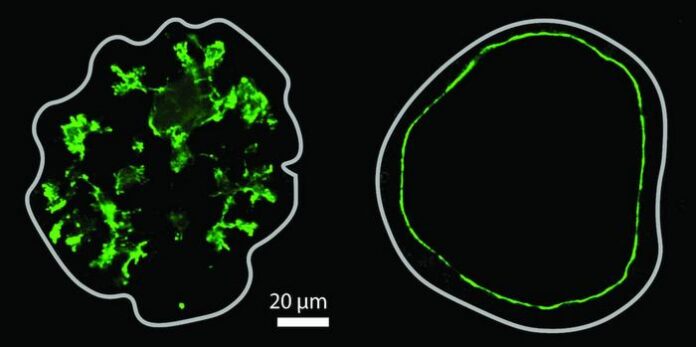
Researchers at the Max Planck Institute of Molecular Cell Biology and Genetics in Dresden, Germany, have made significant strides in understanding how the shape of pancreatic lumens, which are fluid-filled cavities essential for organ function, is formed during development. Their recent study, published in Nature Cell Biology, identifies three primary factors that influence lumen morphology: the rate of cell proliferation, the internal pressure within the lumen, and the permeability of surrounding cells.
Key Findings on Lumen Morphogenesis
Using organoids derived from mouse cells, the team discovered that low internal pressure combined with high cell proliferation leads to more complex, star-shaped lumens. This contrasts with conditions of higher pressure which tend to produce simpler, spherical shapes. The research indicates that the permeability of the surrounding pancreatic tissue plays a crucial role in maintaining low pressure within the lumens, thereby contributing to their structural complexity.
“By manipulating the proliferation rate and the pressure in the lumen, we were able to alter the shape of the lumens significantly,” stated Byung Ho Lee, PhD, a postdoctoral researcher involved in the study. He emphasized that the epithelial cells surrounding the lumen can be made more permeable, which reduces pressure and allows for changes in lumen shape.
Implications for Medical Research
The implications of this research extend beyond the pancreas. The mechanisms identified could be relevant to other organs featuring complex ductal systems and may offer insights into common cystic diseases. “Understanding how these processes work could lead to new therapeutic approaches,” said Anne Grapin-Botton, PhD, the director of the research group. The findings could facilitate the development of new strategies for testing the effects of drugs on various diseases, potentially leading to improved treatments.
“Our model system could further research in the field of organ development and tissue engineering,” Grapin-Botton noted. “This could help us better understand and treat diseases affecting the pancreas and other organs with branching ducts.”
The study emphasizes the importance of understanding lumen formation during embryonic development, which is critical not only for normal organ formation but also for diagnosing and treating pancreatic disorders. While previous studies have primarily focused on the formation of single, spherical lumens, this research showcases the ability of organoid models to represent a diverse range of lumen shapes, including intricate networks of narrow tubes.
As researchers continue to explore the intricate processes governing organ development, the findings from this study are poised to contribute significantly to the fields of developmental biology and regenerative medicine.