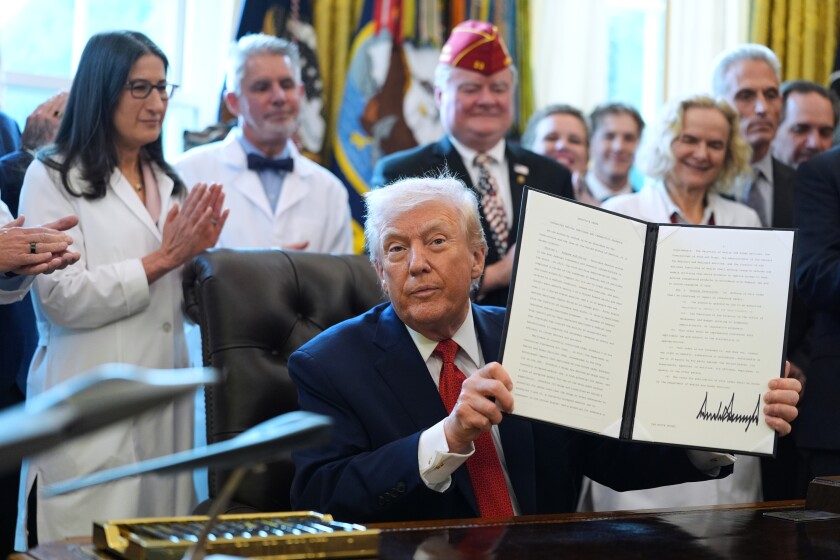
President Donald Trump has ordered the reclassification of marijuana from Schedule I to Schedule III under the Controlled Substances Act. This significant change, mandated through an executive order, aims to streamline medical research and acknowledges the therapeutic potential of marijuana. The move marks a pivotal shift in federal policy, especially considering that marijuana has been classified as a Schedule I substance since 1970, a category reserved for drugs deemed to have a high potential for abuse and no accepted medical use.
The decision to reclassify marijuana aligns with a long-standing argument made by advocates, including Francis Young, who in 1988 concluded that marijuana should not be placed in Schedule I. Young, the chief administrative law judge at the Drug Enforcement Administration (DEA), asserted that marijuana is “one of the safest therapeutically active substances known to man.” Despite his findings, the DEA maintained the drug’s status for decades, even rejecting petitions for reevaluation.
In recent developments, the U.S. Department of Health and Human Services (HHS) completed a review in early 2023, which was initiated by President Joe Biden. The review identified “credible scientific support” for marijuana’s medical uses, including its effectiveness in treating pain, nausea from chemotherapy, and appetite loss in patients with severe medical conditions. HHS concluded that the risks associated with marijuana do not warrant its continued classification as a Schedule I substance.
Implications of Reclassification
The reclassification to Schedule III, which includes drugs like ketamine and anabolic steroids, allows for easier access to medical research on marijuana. However, it does not equate to legalization for medical use. The Food and Drug Administration (FDA) must approve specific cannabis-based products as prescription medications before they can be legally prescribed. Additionally, the reclassification does not change the legal status of state-licensed marijuana businesses, which will remain illegal under federal law but may face less severe penalties.
Despite the limitations, the new designation will enable these businesses to claim standard tax deductions on their income, which could significantly alleviate the financial burden caused by the current tax code. Many marijuana businesses have faced extraordinarily high effective tax rates due to limitations on deductions.
Trump’s executive order is seen as beneficial for “American patients suffering from extreme pain, incurable diseases, aggressive cancers, seizure disorders, and neurological problems.” This sentiment echoes a growing acceptance of marijuana’s medical benefits, particularly as public opinion has shifted in favor of legalization over the past few decades.
As of now, 40 states have legalized marijuana for medical purposes, with 24 states permitting recreational use. This patchwork of state laws has created a conflict with federal prohibition, a stance that has become increasingly unpopular among the American public.
While Trump emphasized that his order “doesn’t legalize marijuana in any way, shape or form,” the change in classification represents a critical acknowledgment of marijuana’s potential and could pave the way for further reforms in drug policy. The timelines for implementing these changes remain uncertain, but Attorney General Merrick Garland expressed intentions to finalize the proposed rule swiftly.
The implications of this reclassification resonate beyond the realm of legality, touching on medical practices, taxation, and ongoing debates surrounding drug policy in the United States. As research into marijuana’s effects and benefits expands, the federal government’s stance may continue to evolve, reflecting changing societal attitudes towards this once-stigmatized substance.