Research published on March 4, 2026, in the *Astrophysical Journal* offers new insights into how planetary rotation affects cloud formation on exoplanets. The study utilizes the Community Aerosol and Radiation Model for Atmospheres (CARMA), a sophisticated cloud microphysics model, integrated with the Community Atmosphere Model (CAM6). This approach aims to address the significant uncertainties surrounding cloud representation in climate simulations, especially for celestial bodies outside our solar system.
Clouds are critical components in climate models, yet they remain one of the most challenging aspects to simulate accurately. For exoplanets, the lack of observational data complicates the tuning of these parameterized models. The research led by Huanzhou Yang and colleagues investigates various planetary rotation rates to assess their impact on cloud dynamics.
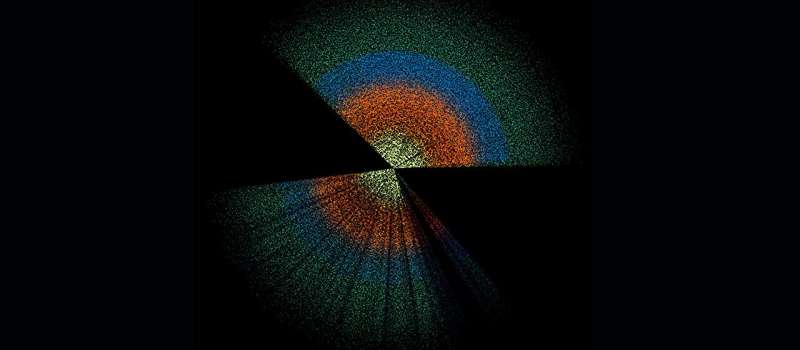
The findings reveal that CARMA produces a markedly different cloud profile compared to the native CAM6 parameterized microphysics scheme, specifically the Morrison-Gettelman two-moment microphysics (MG). In particular, CARMA generates fewer liquid clouds and a higher proportion of ice clouds, alongside a distinct ice cloud size distribution. This variation results in a reduction of the net cloud radiative effect (CRE) by approximately 4-10 W/m².
While this decrease in CRE could alter certain climate characteristics, the research suggests it is unlikely to significantly affect the determination of habitability for most exoplanets. The differences in ice cloud size distribution are particularly noteworthy, as they may influence transmission spectral retrievals, which are crucial for understanding the atmospheric composition of distant worlds.
This study confirms that the MG parameterized cloud microphysics scheme can yield reasonable climate simulations when applied to specific exoplanetary contexts. The authors emphasize the importance of resolved cloud microphysics in evaluating and refining parameterized schemes. Such advancements not only enhance the accuracy of climate models but also aid in interpreting observational data from exoplanets.
The research team, which includes Eric T. Wolf, Cheng-Cheng Liu, Yunqian Zhu, Owen B. Toon, and Dorian S. Abbot, underscores the significance of their findings for both theoretical climate science and practical applications in astrobiology.
In conclusion, this innovative approach to modeling clouds on exoplanets may pave the way for more precise assessments of habitability and atmospheric conditions, enriching our understanding of worlds beyond our own. As research continues to evolve, the collaboration between advanced modeling techniques and observational studies will likely yield deeper insights into the diverse climates of the universe.