NASA’s mission to explore the cosmos took a significant turn as its Spectro-Photometer for the History of the Universe, Epoch of Reionization and Ices Explorer (SPHEREx) successfully captured detailed images of the interstellar object known as 3I/ATLAS. This remarkable event occurred in December 2022 when 3I/ATLAS, the third interstellar object to be detected in our Solar System, became visible after passing behind the Sun. SPHEREx’s observations will contribute to our understanding of the origins and evolution of the Universe.
The SPHEREx mission is designed to conduct an all-sky survey over a two-year period, collecting data from more than 450 million galaxies and 100 million stars within the Milky Way. The wealth of information gathered will provide insights into the formation of the Universe and its ongoing development. Despite its primary focus on deep cosmological research, the SPHEREx team occasionally shifts their attention to intriguing interstellar phenomena.
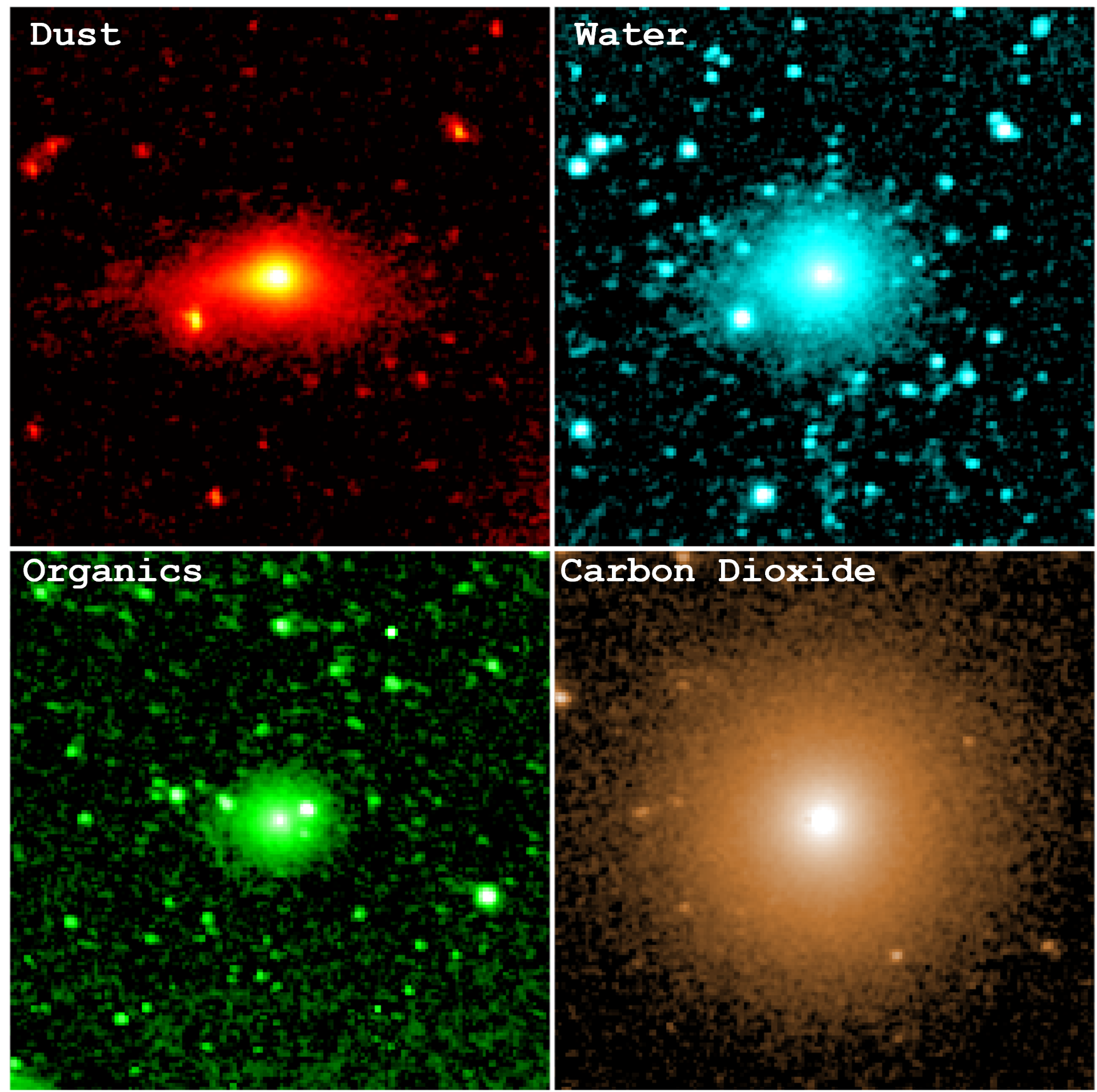
As 3I/ATLAS approached the outer Solar System, scientists took the opportunity to observe its coma—a bright, gaseous envelope surrounding the object. This envelope forms as a comet nears the Sun, causing frozen volatiles, such as water, to sublimate and release a variety of materials, including dust and metals. The advanced triple-mirror telescope aboard SPHEREx, capable of observing the sky in 102 colors, allowed scientists to analyze the infrared (IR) wavelengths emitted by 3I/ATLAS.
The data collected revealed critical elements within the coma, such as water vapor, carbon dioxide, dust, and organic molecules. These findings will help researchers understand the composition of 3I/ATLAS and how its ices react as it travels through the Solar System. The mission team was particularly eager to gather observations following the object’s closest approach since it had disappeared behind the Sun in late October 2022.
Insights from SPHEREx Observations
The observations made by SPHEREx, alongside other missions, will provide invaluable information regarding 3I/ATLAS’s origin. Scientists anticipate that the increased outgassing observed during this period will unveil more about the object’s internal structure and the materials it carries. The data is expected to enhance our understanding of complex organic molecules (COMs) and their role in the formation of celestial bodies.
NASA’s commitment to unveiling the mysteries of the Universe is exemplified through the SPHEREx mission. As the spacecraft continues its survey, the insights gained from 3I/ATLAS will contribute to a broader comprehension of interstellar objects and their significance in the cosmic landscape. The mission stands as a testament to the power of modern science and technology in expanding our knowledge of the Universe and its myriad wonders.
With the SPHEREx mission set to continue gathering data over the next two years, astronomers and researchers remain optimistic about the discoveries that lie ahead. The observations of 3I/ATLAS mark just one of many exciting endeavors as we strive to unlock the secrets of the cosmos.