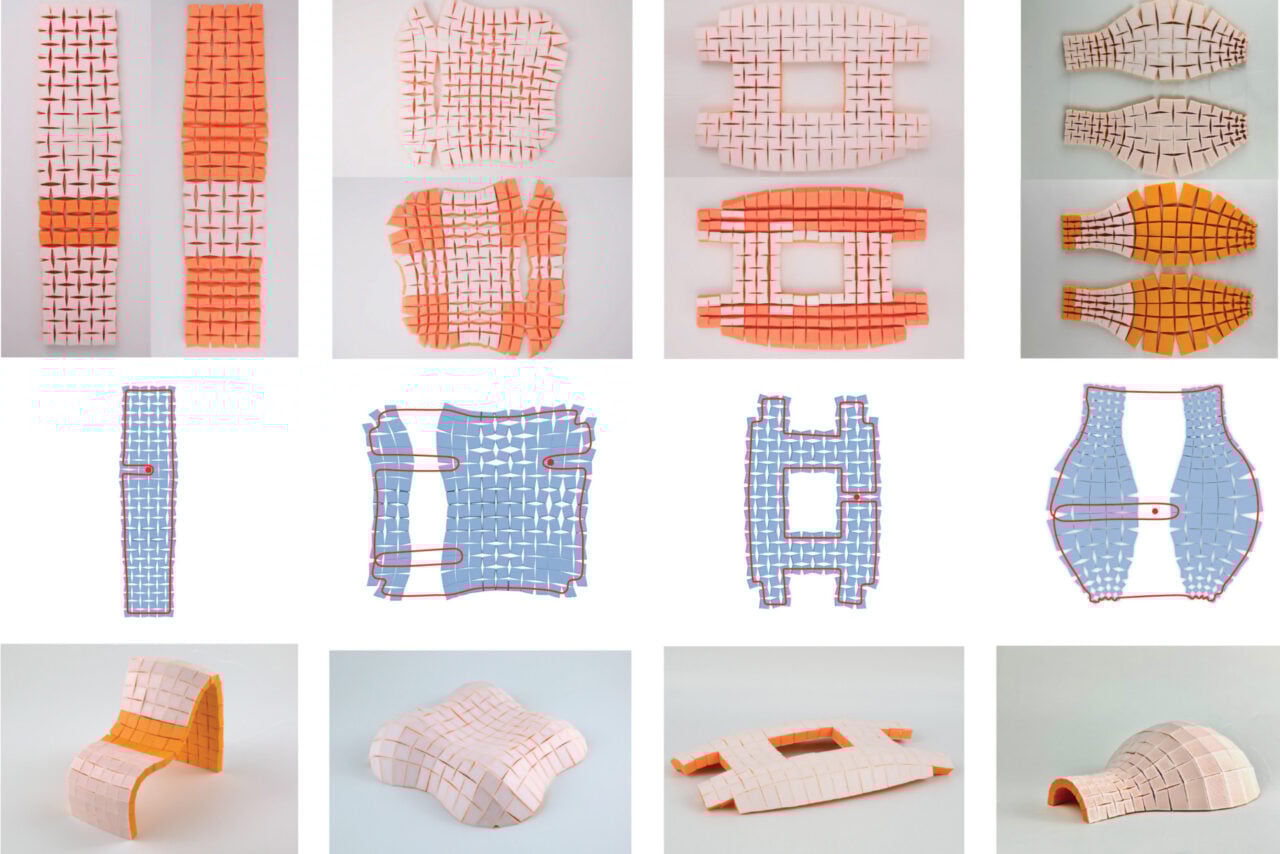
Researchers from the Massachusetts Institute of Technology (MIT) have developed an innovative material that can change its shape into various three-dimensional structures with just the pull of a string. This breakthrough, inspired by the Japanese art of kirigami, has the potential to revolutionize fields such as medical devices and robotics, as well as enhance modular living conditions in space.
The newly designed material, detailed in a recent paper published in ACM Transactions on Graphics, employs a unique algorithm that translates user-defined 3D structures into a flat grid of quadrilateral tiles. This design process mirrors the techniques used by kirigami artists who cut and fold paper to achieve specific shapes and functions. The research team, led by graduate student Akib Zaman from MIT’s Computer Science and Artificial Intelligence Laboratory, emphasizes the significance of this algorithm in allowing users to create complex designs easily.
How the Technology Works
The core mechanism behind this transformative material is known as an auxetic mechanism. This means that the structure expands in thickness when stretched and contracts when compressed, enabling it to take on the desired shape efficiently. The algorithm also calculates the optimal path for the pull string, minimizing friction and ensuring a smooth transformation into the intended 3D form with a single pull.
Zaman noted the simplicity and accessibility of this actuation mechanism, stating, “All they have to do is input their design, and our algorithm automatically takes care of the rest.” This user-friendly approach makes the technology widely applicable, potentially allowing for a range of uses, from medical tools like splints and posture correctors to larger structures.
Real-World Applications and Future Potential
After extensive simulations, the research team successfully applied their method to design various real-life objects, including human-sized chairs made from laser-cut plywood. Impressively, the chair held up during practical use, demonstrating the material’s robustness. Nonetheless, the researchers acknowledged that there may be “scale-specific engineering challenges” when applying this technology to larger architectural projects.
The versatility of this new material opens the door to numerous possibilities in different fields. Zaman expressed hope that this method could inspire the creation of a wide variety of deployable structures, paving the way for innovative solutions in both terrestrial and extraterrestrial environments.
As the team continues to refine their technique, they are also exploring the development of smaller structures, pushing the boundaries of what this transformative material can achieve. The convergence of art and science in this research not only highlights the potential of advanced materials but also the importance of interdisciplinary collaboration in driving technological advancements.