Understanding how opinions form and evolve within large groups is a complex challenge that intersects mathematics and sociology. On November 19, 2025, Ph.D. candidate Federico Capannoli defended his thesis at Leiden University, focusing on the dynamics of opinion formation through mathematical modeling.
Capannoli’s research emphasizes that while real-world processes can be intricate, they can be effectively represented using mathematical frameworks. His work in opinion dynamics examines how individual views shift and spread in social networks, drawing parallels with other phenomena, such as the movement of cells in biological systems and the spread of diseases.
Modeling Social Interactions as Networks
Capannoli’s academic journey began with a Master’s degree from Padova before he arrived at Leiden for his doctoral studies. His decision was influenced by recommendations from his supervisor, who highlighted the university’s expertise in probabilistic research. Capannoli has developed mathematical models that simplify the understanding of opinion evolution in groups.
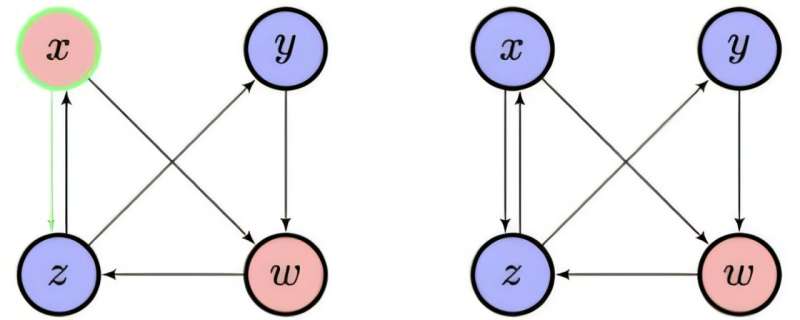
In his models, individuals are represented as dots, with their opinions depicted by colors. Connections between these dots symbolize friendships. This visual representation forms the foundation of what is known as a complex network.
The Impact of Elections on Opinion Dynamics
Recent elections serve as a pertinent example of opinion dynamics at play. Capannoli notes, “Everyone has a preferred political party, that’s the color of their dot. But in the weeks leading up to the elections, people talk and influence each other.” As conversations occur, the colors—representing opinions—shift.
In Capannoli’s theoretical framework, there comes a point where consensus is reached within the group. His research explores the time it takes to achieve this consensus and the factors influencing it. He discovered that the time required to reach agreement is related to the group size and the density of connections within the network. If one individual has a broad reach, such as through social media, they can significantly sway the opinions of others.
Capannoli also investigated the role of bias in shaping opinions, particularly during political campaigns. “We can model this. If two people in the network talk, there is a chance that one of them blindly adopts a biased opinion,” he explains. High levels of bias can drastically reduce the time it takes to reach consensus, whereas minimal bias has little effect on this timeline.
Exploring Polarization and Friendship Dynamics
The complexities of human interactions add layers to Capannoli’s research. He acknowledges that friendships can dissolve when individuals hold differing opinions, or new connections can form through dialogue. This co-evolution of opinions and social ties presents a significant challenge for study.
Leiden University is recognized for its leading research in this field, particularly within the group led by Frank den Hollander and Rajat Subhra Hazra. The phenomenon of polarization can occur when networks fragment into isolated groups that cease communication with one another.
Reflecting on the implications of his findings, Capannoli remarks, “It’s quite scary if you think about it. And also a good reminder of why social media can be so dangerous. It keeps you in your bubble. It’s important to interact with other points of view.”
This research not only sheds light on the mathematical underpinnings of opinion dynamics but also serves as a cautionary tale about the social consequences of polarized environments. Through rigorous modeling and analysis, Capannoli contributes valuable insights into the ways opinions can evolve, shift, and ultimately shape societal discourse.