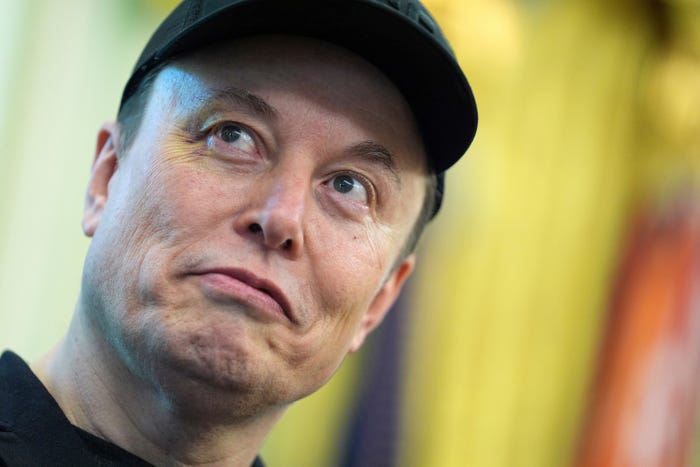
Elon Musk has stirred debate with his assertion that saving for retirement will become “irrelevant” within the next two decades. Speaking on the “Moonshots with Peter Diamandis” podcast, the CEO of Tesla and SpaceX shared his vision for a future shaped by artificial intelligence (AI) and technological advancements, which he believes will create an “abundance” of resources accessible to everyone.
Musk, whose net worth exceeds $600 billion, envisions a world where individuals have access to quality healthcare, education, and material goods without the constraints of scarcity. He stated, “One side recommendation I have is: Don’t worry about squirreling money away for retirement in 10 or 20 years. It won’t matter.” This bold prediction challenges traditional financial wisdom that has emphasized the importance of retirement savings for generations.
According to Musk, the transformative power of AI, energy innovations, and robotics will lead to a significant increase in productivity. He described a future where “the good future is anyone can have whatever stuff they want,” highlighting the potential for improved medical care and educational opportunities available to all within five years.
Despite the optimistic outlook, Musk acknowledged that the transition to this envisioned utopia could be fraught with challenges. He warned of a “bumpy” journey marked by substantial societal changes and the risk of social unrest. Furthermore, Musk raised a philosophical question: “Now, if you actually get all the stuff you want, is that actually the future you want?” He suggested that the realization of such abundance could lead to a loss of purpose, as traditional job roles may become less relevant.
Musk’s predictions align with his track record of disrupting industries. His companies are at the forefront of technological innovations, including self-driving vehicles, humanoid robots, and brain-computer interfaces. As he continues to push boundaries, Musk aims to pave the way toward becoming the world’s first trillionaire.
However, Musk’s optimistic vision contrasts sharply with the current reality faced by many Americans. Persistent inflation, high interest rates, and stagnant wage growth have exacerbated an affordability crisis. Millions are struggling to afford higher education, quality healthcare, and homeownership, leaving retirement savings feeling increasingly out of reach. Surveys indicate that a significant portion of the population is not saving adequately for retirement, raising concerns that Musk’s perspective may be overly idealistic.
In light of these challenges, Musk’s vision of an abundant future could be perceived as unrealistic or even risky. If individuals take his advice to heart and cease saving in anticipation of a radically transformed economic landscape, they may find themselves unprepared should the anticipated changes fail to materialize.
As discussions around the future of work, technology, and personal finance continue, Musk’s statements serve as both a provocative challenge to conventional wisdom and a reminder of the complexities involved in envisioning tomorrow’s economy.