China made a significant leap in space exploration when the Chang’e-6 mission successfully returned lunar samples to Earth in June 2024. This historic achievement marked the first lunar sample-return mission, delivering 1,935.3 grams (approximately 4.25 pounds) of lunar regolith and rock. The analysis of these samples has provided critical insights into the Moon’s composition and geological history, particularly highlighting differences between its two hemispheres.
This research is particularly important as China, along with NASA, the European Space Agency (ESA), and other commercial partners, plans future missions aimed at establishing lunar bases on the Moon’s far side. The South Pole-Aitken Basin, known for its permanently shadowed regions that potentially contain vast reserves of water ice, is a primary focus for these upcoming projects.
New Discoveries on the Moon’s Geological Evolution
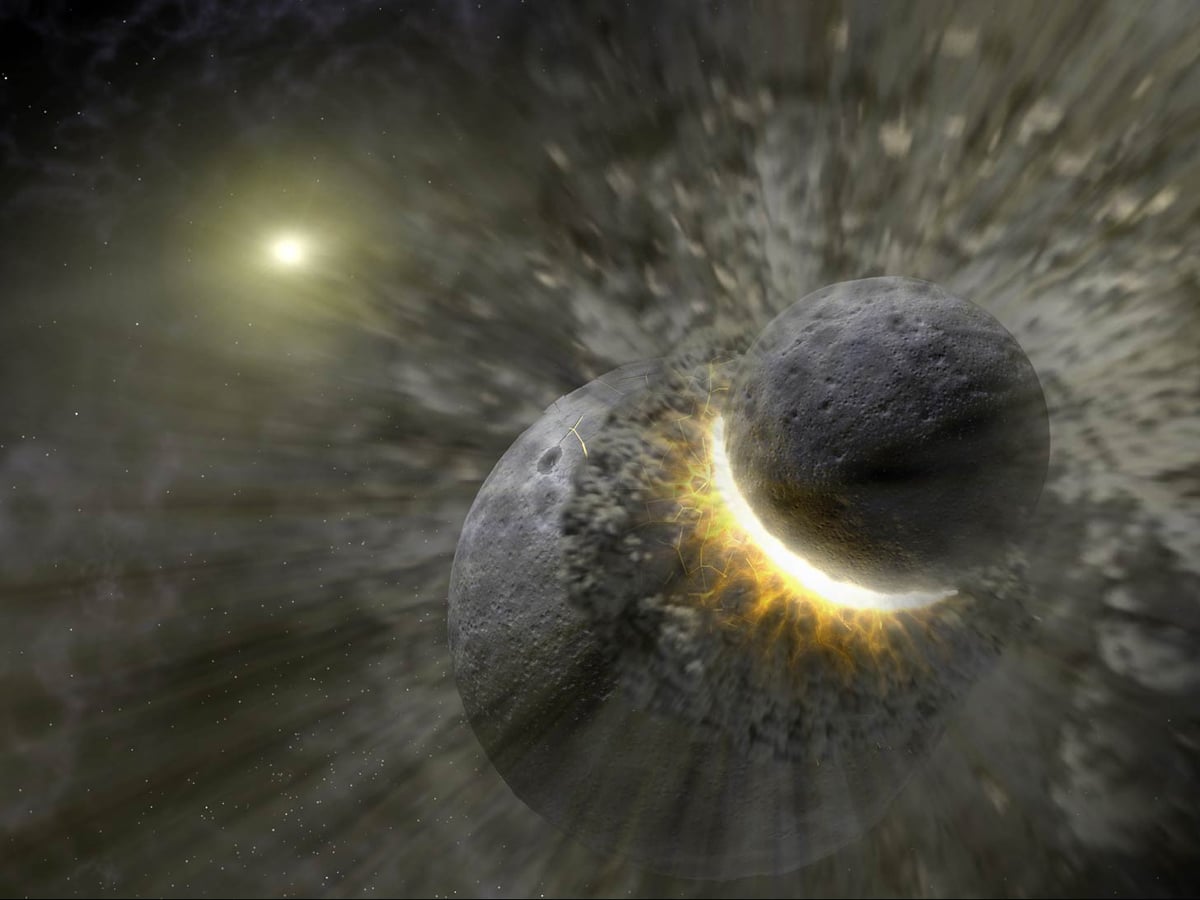
The analysis carried out by scientists from the Institute of Geology and Geophysics under the Chinese Academy of Sciences has addressed several unresolved questions about the Moon’s geological evolution. One significant inquiry relates to how large impacts, such as the one that formed the South Pole-Aitken Basin around 4.25 billion years ago, affected the Moon’s deep interior and its surface structure.
Through high-precision isotope analysis of basalt samples retrieved by the Chang’e-6 lander, researchers discovered that the impact event not only shaped the Moon’s surface but also generated extreme heat in its interior. This heat led to the loss of certain volatile elements, critical in understanding the Moon’s formation and ongoing geological processes.
Researchers noted that the high-temperature conditions influenced the behavior of moderately volatile elements such as potassium, zinc, and gallium. These elements are sensitive to high temperatures, making them valuable for understanding the conditions created by the impacts. The isotope variations detected serve as “isotopic fingerprints” that provide clues about the thermal and pressure conditions resulting from the impacts and their role in transforming the lunar crust and mantle.
Comparative Analysis with Apollo Samples
A noteworthy finding emerged from comparing the Chang’e-6 samples with those returned by the Apollo missions, which focused on the near side of the Moon. The basalts obtained from the far side exhibited a significantly higher proportion of the heavier potassium-41 isotope. To ascertain the cause of this difference, the research team explored multiple factors, including cosmic ray exposure, volcanic activity, and impactor deposition.
Ultimately, the study concluded that an early large-scale impact was responsible for altering the potassium isotope composition in the Moon’s deep mantle. This event likely created conditions that resulted in the loss of the lighter potassium-39 isotope and the enrichment of potassium-41. Additionally, the researchers found that the depletion of volatile elements may have suppressed volcanic activity on the far side of the Moon.
These findings contribute to a broader understanding of how significant impacts have influenced the geological evolution of the Moon over billions of years. They also emphasize the distinct evolutionary paths of the Moon’s near and far sides.
As lunar exploration continues, the contributions of Chinese missions and scientists play a pivotal role in enhancing our understanding of the Moon’s history and its relationship with Earth. The ongoing research sparked by the Chang’e-6 samples reinforces the importance of international collaboration in space exploration and the quest to unravel the mysteries of our celestial neighbor.