NASA’s Chandra X-ray Observatory has reached a significant milestone, amassing a total of 1.3 million X-ray detections across the cosmos. This extensive collection of data is compiled in the latest version of the Chandra Source Catalog (CSC), which now includes over 400,000 unique sources, both compact and extended. The catalog provides invaluable insights from observations made up to the end of 2020, positioning Chandra as one of the leading X-ray telescopes in the world.
The CSC serves as a comprehensive repository for X-ray data collected by Chandra, known as one of NASA’s “Great Observatories.” This vast archive facilitates collaboration among scientists utilizing various telescopes, including NASA’s James Webb and Hubble Space Telescopes. By combining Chandra’s unique X-ray data with information from other wavelengths, researchers can deepen their understanding of astrophysical phenomena.
Exploring the Galactic Center
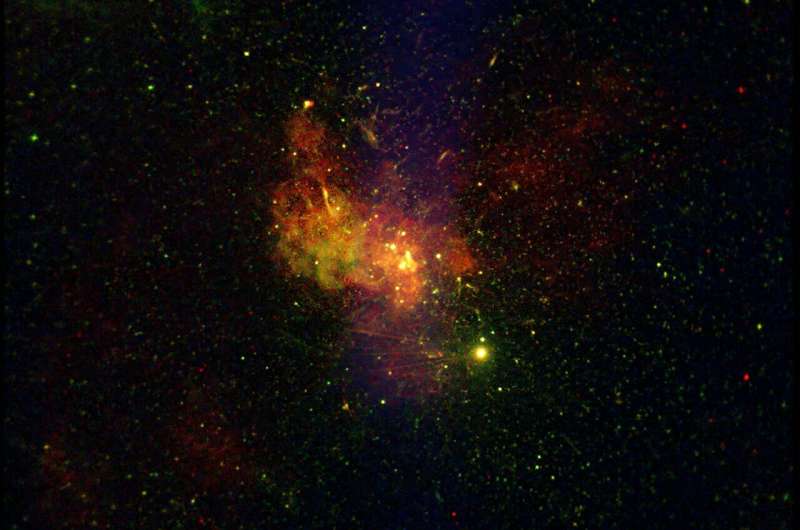
A striking example of the catalog’s value is illustrated in a new image of the Galactic Center, which is home to the supermassive black hole known as Sagittarius A*. This image, covering approximately 60 light-years, reveals more than 3,300 individual X-ray sources detected by Chandra. The image represents a culmination of 86 observations, amounting to over three million seconds of observation time.
In addition to visual representations, the Chandra Source Catalog has also been translated into sound through a recently released sonification. This innovative approach converts astronomical data into auditory experiences, showcasing over 22 years of Chandra observations, from its launch to its data collection in 2021. The sonification captures the essence of multiple X-ray sources observed over time, with different notes representing repeat sightings.
Continuing Observations and Future Prospects
The newly developed map presents the sky in a format similar to traditional world maps, with the core of the Milky Way at the center and the Galactic plane running horizontally. Each detection is represented by a circle, with its size correlating to the frequency of detections in that location. A year counter at the top of the frame indicates the timeline, dynamically updating to reflect Chandra’s ongoing operations.
As the Chandra X-ray Observatory remains fully operational, its data collection continues to expand, promising further discoveries in the future. The latest version of the Chandra Source Catalog can be accessed online, providing researchers and the public with an opportunity to explore the universe through the lens of X-ray astronomy.
For more information, visit the Chandra X-ray Center at https://cxc.cfa.harvard.edu/csc/.