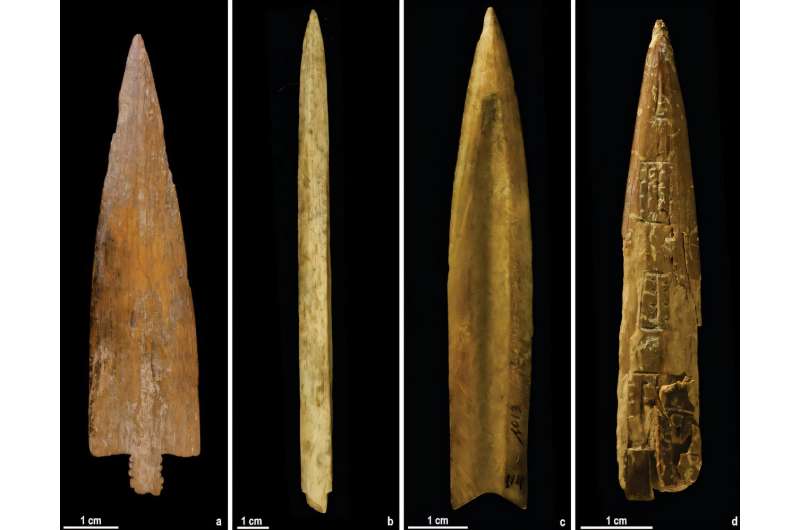
Recent research has uncovered significant insights into the organized craft production of prehistoric communities in Argentina’s Sierras de Córdoba. A study led by Dr. Matías Medina and his colleagues, Sebastián Pastor and Gisela Sario, focuses on the manufacturing techniques of bone arrow points from the Late Prehispanic Period, dating between 1220 to 330 cal BP. Their findings, published in the International Journal of Osteoarchaeology, reveal how these ancient societies created tools that were integral to their survival and social identity.
The Late Prehispanic Period in this region was characterized by communities that practiced a flexible mixed economy, combining hunting, gathering, and farming. This adaptability allowed them to occupy seasonal camps and optimize their subsistence strategies. Despite this complexity, archaeological evidence of their material culture, particularly bone tools, remained limited until now.
New Insights into Bone Tool Manufacturing
Dr. Medina highlights that prior research on bone technology in South America has been sparse. Most existing knowledge derived from simple reports that primarily served chronological purposes. “Publications dealing specifically with bone technology were, for decades, scarce, especially in South America,” he noted. The manufacturing techniques for bone arrow points had not been thoroughly analyzed, prompting the need for this recent study.
To address this gap, the research team examined 117 bone artifacts collected from the Museo Arqueológico Numba Charava. These artifacts, gathered throughout the 20th century from various sites in the southern Punilla Valley, often lacked precise provenance. The analysis indicated that the predominant raw material for these arrow points was bones from the guanaco, a species that was hunted for food. Other animal bones, such as those from pampas deer, were less frequently used.
The process of making arrow points was intricate. Bones, primarily metapodia (the long bones of the limbs), were split lengthwise to create workable blanks. These were then flattened, scraped, and whittled into the desired shape. Some points featured barbs or decorative elements, which were polished for a smooth finish, enhancing their aerodynamic qualities and durability.
Dr. Medina explained the rarity of decorative items: “Only three bone arrow points with incised decoration on the blade were reported in the archaeological literature.” The decorations, primarily simple lines and triangles, are similar to those found on spatulas and ornaments from central Argentina. The study posits that these arrow points were primarily used for warfare rather than hunting, with decorative elements serving as expressions of social identity.
Implications for Understanding Prehistoric Societies
The findings from this study carry significant implications for understanding the social dynamics and organization of tool production in prehistoric communities. The research indicates that arrowheads were crafted locally, with each point being unique, even if few were decorated. The time-consuming yet standardized production method suggests that knowledge was likely passed down through generations within nuclear families.
Dr. Medina emphasized the need for comparative studies with neighboring regions, such as the Low Paraná and Uruguay River floodplains, which are over 500 km away. These areas developed complex bone technologies due to limited stone resources and relied heavily on aquatic foraging. Understanding the differences in technological choices and resource availability could shed light on broader patterns of subsistence and social organization across ancient societies.
The study thus not only enhances the understanding of bone tool production in the Sierras de Córdoba but also opens avenues for further research into the technological adaptations of prehistoric communities in varying environmental contexts.
This research, conducted by a dedicated team and reviewed rigorously, contributes valuable insights into the material culture of ancient Argentina, demonstrating the sophistication and adaptability of its prehistoric inhabitants.
For more information, refer to the article by Matías E. Medina et al., titled “Bone Arrow Points Manufacturing in Prehispanic Sierras de Córdoba, Argentina,” published in the International Journal of Osteoarchaeology.