Lunar New Year, known as Tet, is the most significant holiday in Vietnam, serving as a time for families to reconnect and reflect. This year, Tet has highlighted the unique relationship between Vietnamese Catholicism and traditional customs, demonstrating how the faith has adapted over centuries to coexist with local practices. Introduced over four hundred years ago, Catholicism in Vietnam has evolved from a position of tension with indigenous beliefs to one of integration, especially surrounding the rituals of Tet.
Cultural Coexistence: The Evolution of Catholic Practices
Historically, the relationship between Catholicism and Vietnamese culture has been fraught with challenges, particularly regarding ancestor veneration — a core element of Tet celebrations. Early missionaries often viewed these practices as incompatible with Christian values, leading to misunderstandings and conflicts within communities. However, by the twentieth century, the Catholic Church in Vietnam began to reassess these beliefs. The Church recognized that honoring ancestors could be an expression of filial piety rather than a rival faith, allowing for a richer engagement with Tet traditions.
Within Catholic households, Tet is primarily a family-centric occasion. Homes are cleaned and adorned, and traditional foods like bánh chưng (square sticky rice cakes) are prepared, mirroring practices in non-Catholic families. Ancestral altars occupy a central place in many homes, often displayed alongside crucifixes and statues of saints. This arrangement reflects a careful balance, where Catholicism does not dismantle the traditional family structure but rather integrates within it.
The Role of Catholic Liturgy During Tet
The connection between Catholicism and Tet becomes particularly evident during church services. According to guidelines from the Vietnam Bishops’ Conference, Masses held in the first days of the lunar calendar focus on intentions such as peace for the new year, remembrance of ancestors, and blessings for daily life. Churches often embrace the festive spirit with floral decorations and traditional music, creating an atmosphere that resonates with the essence of Tet while maintaining the integrity of liturgical practices.
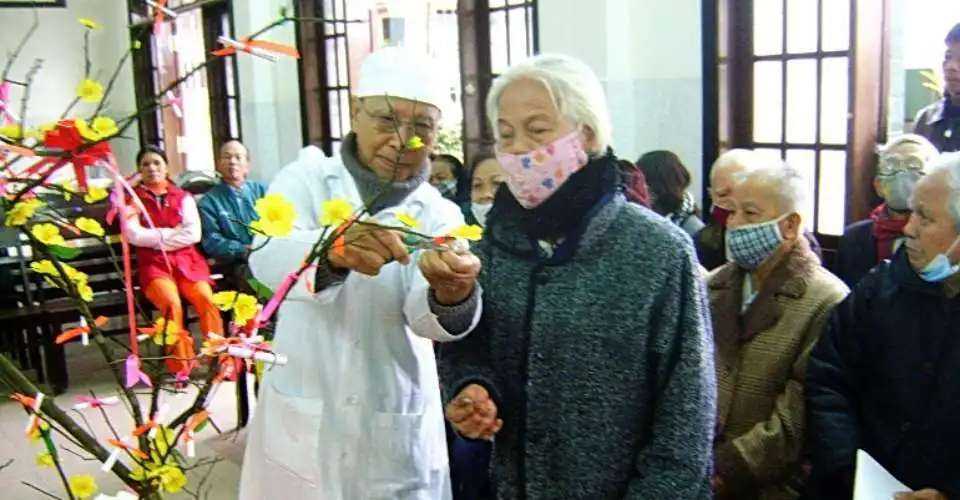
One notable custom during this period is the drawing of Scripture verses at the year’s start. Parishioners select biblical passages displayed on branches of apricot or peach blossoms, using them as spiritual guidance. This practice parallels the Vietnamese tradition of seeking New Year blessings but reframes the concept of “luck” to encompass moral integrity and compassion, channeling popular spiritual instincts toward ethical commitments.
Tet also serves as a significant time for charitable initiatives within Catholic communities. Many parishes organize food and gift distributions to support underprivileged families, reflecting both Christian teachings on charity and the Vietnamese tradition of mutual aid during the holiday. These efforts reinforce the Church’s social presence, highlighting its commitment to community support.
As Vietnam continues to navigate modern challenges, the significance of Tet evolves. For younger generations, the pressures surrounding the holiday — including financial and familial obligations — can be overwhelming. Yet, many find solace in the rituals practiced within their parish communities, where the focus shifts from extravagant celebrations to reflection and moral recalibration.
A Quiet Model of Cultural Integration
The integration of Catholicism into Tet celebrations is not without its complexities, yet it offers a compelling example of cultural adaptation. Vietnamese Catholics have managed to preserve their religious identity while embracing local customs, creating a harmonious blend of faith and tradition. As Tien Nam, a non-Catholic resident in Ninh Binh province, notes, “Catholic neighborhoods celebrate Tet in a solemn and orderly atmosphere, with far less superstition than in some non-Catholic areas.” His observations reflect a broader societal perception that Catholic communities contribute a measured, organized approach to the holiday, creating an inclusive environment that resonates beyond religious boundaries.
In summary, Tet in Vietnam is no longer merely a cyclical holiday; it is a space where faith and culture negotiate their shared future. Through this lens, the celebration of Tet offers a nuanced understanding of religious coexistence and cultural integration, marked by a quiet yet profound engagement with tradition and community values.