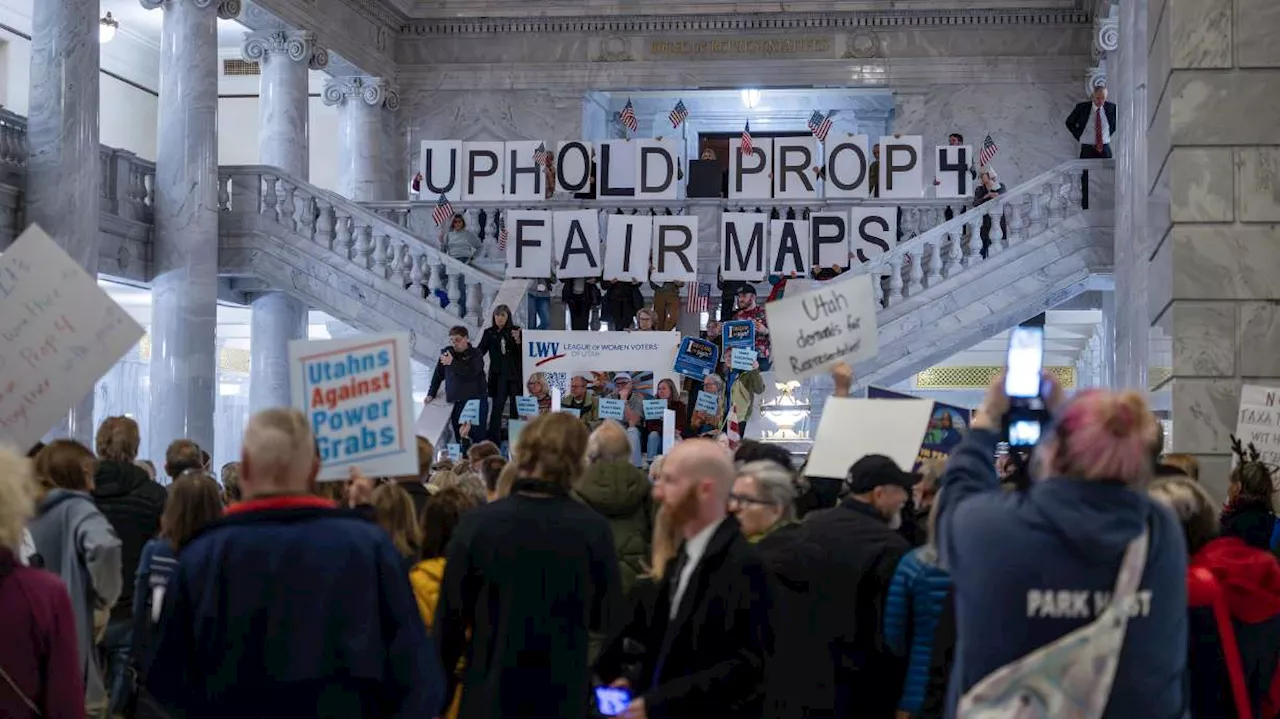
SALT LAKE CITY — The debate over who should control the drawing of congressional maps in Utah continues to escalate. State lawmakers, legal experts, and voters are navigating a complex landscape following a ruling from the Utah Supreme Court, which found that legislators overstepped their authority in amending Proposition 4, a 2018 ballot initiative. This initiative aimed to establish a nonpartisan framework for redistricting and called for an independent commission to assist in creating congressional maps.
The controversy intensified when **3rd District Judge Dianna Gibson** ruled against a map drafted by Republican lawmakers, favoring an alternative submitted by plaintiffs who accused the legislators of engaging in gerrymandering. This alternative map proposes a district in northern Salt Lake County that is expected to lean Democratic, contrasting with the current scenario where all four congressional seats in Utah are held by Republicans.
In response to the ruling, the legislature convened a special session on **March 7, 2024**, to extend the filing deadline for congressional candidates to March. This extension aims to accommodate the pending appeal of Judge Gibson’s decision as it progresses through the judicial system.
The push for a more independent approach to redistricting has encountered resistance from key Republican figures. **House Speaker Mike Schultz**, R-Hooper, recently shared a poll conducted by the conservative-leaning **Sutherland Institute**. The poll indicates that only **8%** of voters support judges selecting maps, with a significant **71%** preferring options involving elected officials or other appointed groups. The survey presented respondents with seven potential options for determining congressional district boundaries.
While the results suggest a strong preference for legislative control, the methodology has drawn scrutiny. The question did not directly reference the legislature’s role or Proposition 4, allowing for a broader interpretation of public sentiment without triggering partisan responses. **Leah Murray**, director of the **Walker Institute of Politics** at Weber State University, noted that the framing enabled more transparent feedback from voters.
As the redistricting process unfolds, the implications are significant for Utah’s political landscape. The interplay between judicial rulings and legislative authority will likely shape the state’s congressional representation for years to come. The ongoing discussions surrounding redistricting highlight the importance of public opinion in shaping political practices, as Utah residents seek a transparent and fair process in determining their electoral districts.