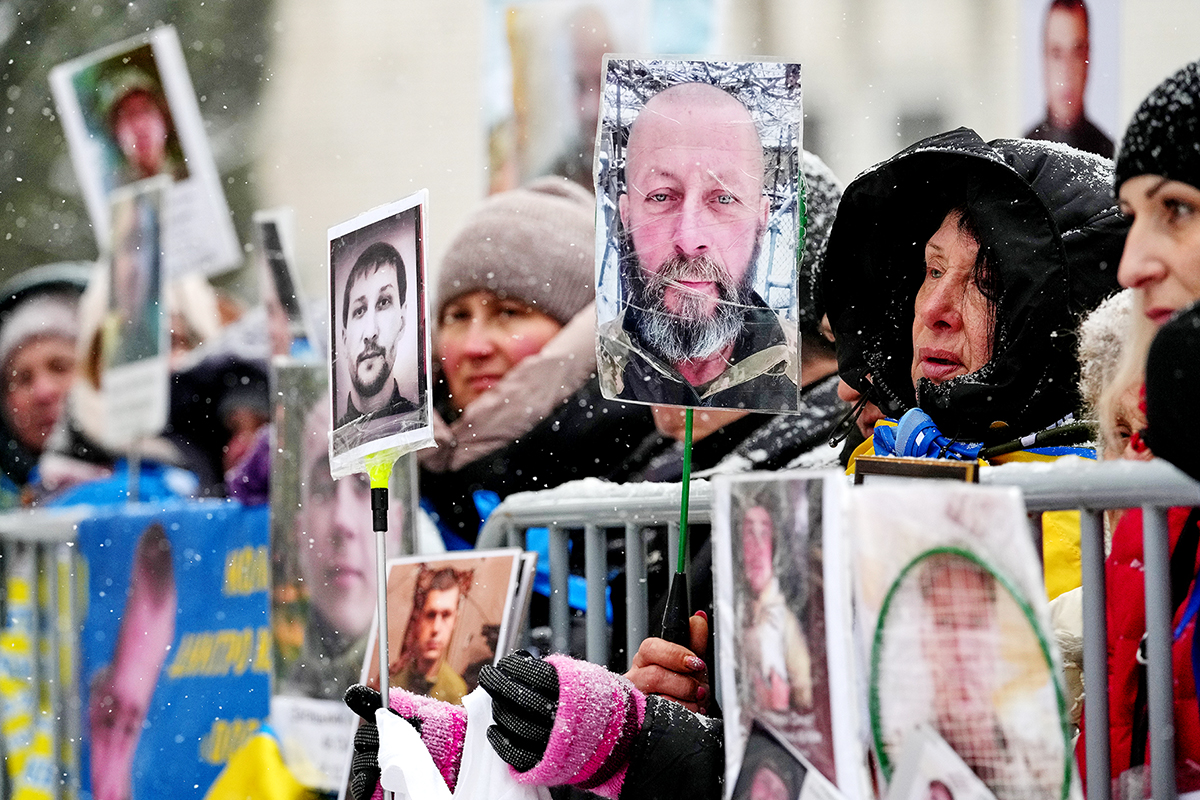
The ongoing conflict in Ukraine has transformed the lives of its citizens and soldiers, prompting deep reflections on what the end of the war might entail. As the war continues to unfold, many Ukrainians, especially those on the front lines, grapple with the reality that the outcome may not resemble the neat resolutions often depicted in films. Capt. Mykola Serga, a former entertainer turned soldier, highlighted this sentiment, stating, “The first to break were those who believed it would all end soon, just like those who thought it would never end.” His words echo the ideology of Viktor Frankl, whose book, “Man’s Search for Meaning,” has gained significant traction among soldiers seeking to maintain morale.
Since Russia’s full-scale invasion began in February 2022, ordinary life in Ukraine has been shattered. The initial shock prompted many to believe that international support would be rapid and overwhelming. However, as President Donald Trump has indicated a desire for a swift resolution—regardless of the terms—Ukrainians have come to realize that they must rely primarily on their own resilience.
The acceptance of this stark reality has shifted the national mood. As aid remains inconsistent, many have redirected their focus toward strengthening Ukraine’s own defense capabilities. During extensive travels throughout the country last year, it became apparent that the war has become an entrenched part of life for many. Despite exhaustion, Ukraine’s military stands as one of the most seasoned forces in Europe. The front lines reveal a juxtaposition of advanced technology, such as drones, alongside traditional trench warfare, illustrating a unique blend of past and present.
In August, I visited a location near the front lines, where I encountered soldiers from the Code 9.2 Assault Regiment, renowned for operating Ukrainian-developed drones capable of carrying significant payloads. One soldier, who identified himself as Legat, shared that he abandoned his master’s program in international law due to a disillusionment with the effectiveness of such principles in the face of aggression. Another soldier, Kapa, expressed a desire to enlist on his own terms rather than wait for conscription.
Their experiences demonstrate a shifting perspective on foreign aid. When asked about American support, they struggled to identify specific contributions. For them, the conflict is fundamentally a Ukrainian war, and the expectation of a swift conclusion seems increasingly unrealistic.
While visiting the village of Pokrovsk in Donetsk, I met Junior Sgt. Pavlo Vyshebaba, a former animal-rights activist and poet, who described the significant challenges faced by his mortar unit, known as the “Minotaurs.” Their strategies are designed to avoid detection by Russian drones, which pose a constant threat. Vyshebaba’s unit has also begun integrating ground robotic systems, enhancing their capabilities and morale. He noted the transformative impact of technology on the battlefield, allowing Ukrainian forces to effectively counter Russian advances.
Andriy Zagorodnyuk, a former defense minister and now a security analyst, explained Ukraine’s strategy as “strategic neutralization.” This long-term military approach aims to render Russian operations ineffective while incurring significant losses for the Kremlin. Unlike Russia, which employs a high-casualty approach, Ukraine’s fight is about preserving lives.
The grim reality is that the war is not a cinematic narrative with a clear resolution. For Ukrainians, it is an ongoing struggle that will continue until a satisfactory conclusion emerges. In Nikopol, a city close to the Zaporizhzhia nuclear plant, crane operator Yevhen Bilousov encapsulated the prevailing sentiment when he remarked that the question of when the war will end is less significant than how it will conclude.
As Ukraine navigates this protracted conflict, it remains clear that the focus is not merely on survival but on the quality and nature of the eventual peace. The war, with all its complexities, is a part of their reality—one that they face with determination and resilience.