The recent U.S. operation that led to the capture of Venezuelan President Nicolás Maduro has sparked intense debate over whether the United States is officially at war with Venezuela. Secretary of State Marco Rubio emphasized on Sunday that the operation should be viewed as a law enforcement action against drug trafficking organizations rather than an act of war. This distinction is significant as it determines the legal framework governing U.S. actions in the region.
Rubio’s comments come in the wake of a raid that has raised questions about the legality and implications of U.S. military involvement in Venezuela. He argued that framing the operation as law enforcement allows the administration to bypass the need for congressional approval for military actions, including potential airstrikes. The War Powers Resolution and the Geneva Conventions could impose specific legal constraints on actions taken during wartime, which may influence how Maduro is treated as a detainee.
In the broader context, this operation followed a series of U.S. strikes aimed at alleged “narco-terrorists” in the region, which reportedly resulted in the deaths of at least 80 individuals, including military personnel and civilians, according to a source cited by The New York Times. The U.S. has previously acknowledged its engagement in “armed conflict” with drug cartels, raising further questions about the nature of its military operations.
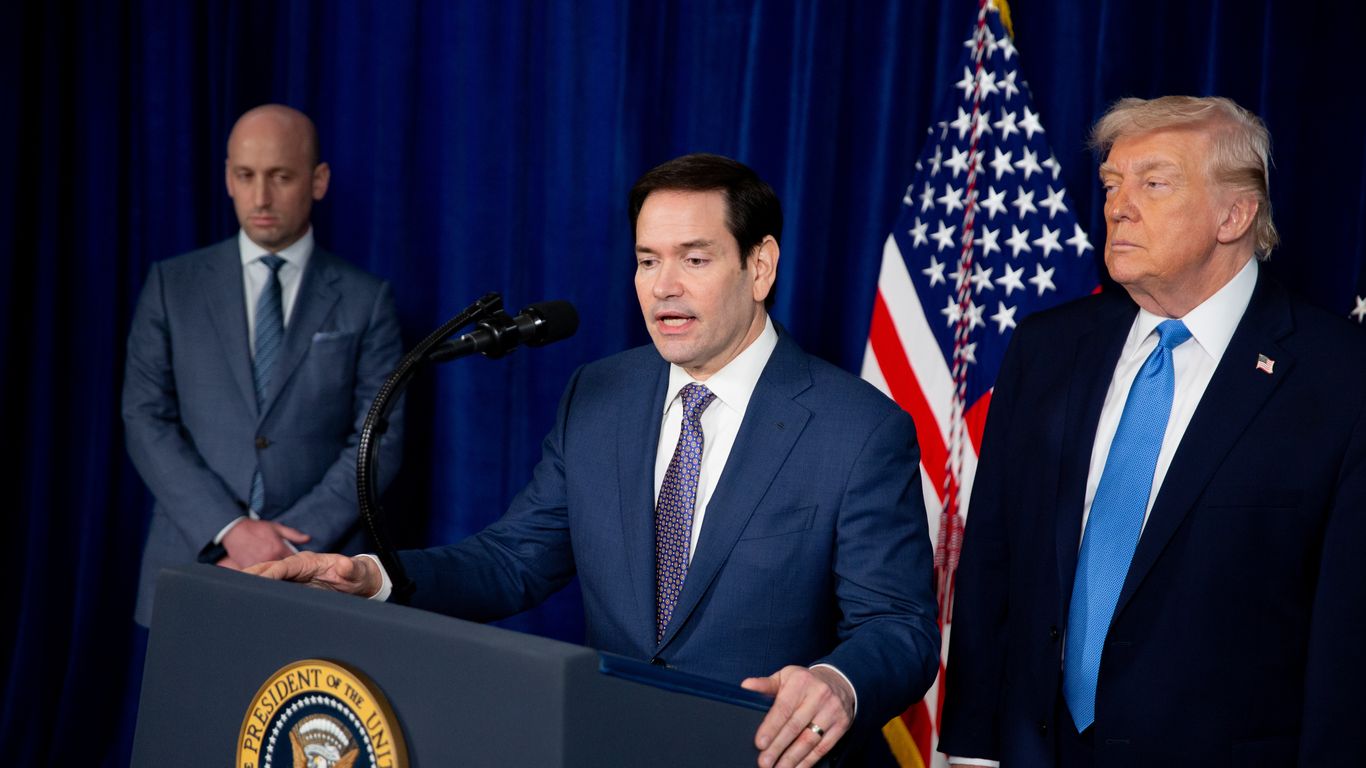
Rubio reiterated on NBC’s “Meet the Press” that there are currently no U.S. forces on the ground in Venezuela, but he did not rule out the possibility of troop deployment. He stated, “This was not an attack on Venezuela. This was a law enforcement function to capture an indicted drug trafficker.” However, his assertion conflicts with previous remarks made by White House Chief of Staff Susie Wiles, who indicated to Vanity Fair that any land strikes would require congressional approval.
Legal experts are divided on the implications of the operation. Scholars from the national security journal Just Security argue that the U.S. may have triggered an international armed conflict, which would necessitate adherence to wartime rules. This situation could affect detention standards and immigration policy for Venezuelans in the U.S. and Americans in Venezuela. Furthermore, the authors note that Venezuela might have the legal grounds to target U.S. forces in response.
Critics, including Brian Finucane of the International Crisis Group, challenge the administration’s justification for the operation, calling it “absurd.” He articulated that even if some agents of the Drug Enforcement Administration (DEA) were involved, it does not change the fundamental nature of the action under international law.
Meanwhile, Senator Tim Kaine (D-Va.) has announced plans for a bipartisan resolution aimed at blocking U.S. military action in Venezuela without congressional consent. The 1973 War Powers Resolution mandates that the president consult Congress before deploying military forces and requires reporting within 48 hours of such actions. If the operation expands, Defense Secretary Pete Hegseth assured that Congress would remain informed.
As the situation develops, the administration is expected to brief lawmakers on the operation. President Donald Trump suggested that Congress was not alerted in advance due to concerns about potential leaks, emphasizing the need for discretion in such sensitive matters.
The unfolding events highlight the complexities of U.S. military engagement in foreign conflicts and the ongoing debate regarding the balance of power between the executive branch and Congress. As the administration navigates these challenges, the legal and political ramifications of its actions in Venezuela will likely continue to be scrutinized.