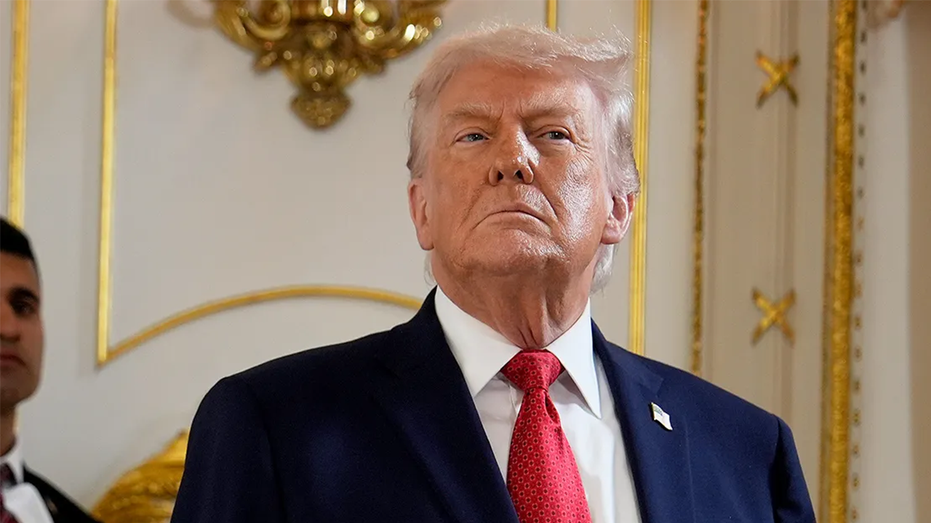
President Donald Trump has publicly urged Iraqis to reject the potential reinstatement of former Prime Minister Nouri al-Maliki, citing his history of alleged corruption and mismanagement. Trump’s comments, made on his Truth Social platform, come as Iraq prepares for a parliamentary session aimed at electing a new president, who would subsequently appoint the prime minister.
In his post, Trump warned, “I’m hearing that the Great Country of Iraq might make a very bad choice by reinstalling Nouri al-Maliki as Prime Minister.” He elaborated that during al-Maliki’s previous tenure from 2006 to 2014, Iraq experienced significant turmoil, stating, “That should not be allowed to happen again.” Trump further threatened that if al-Maliki were to be elected, the United States would reconsider its support for Iraq, emphasizing that without U.S. assistance, Iraq would struggle to achieve stability and prosperity.
The parliamentary session scheduled for October 3, 2023 was canceled due to a lack of quorum, leaving uncertainty about Iraq’s political future. Al-Maliki, who is seeking a third term, has received backing from the Coordination Framework, a coalition of Shiite parties that forms the largest bloc in parliament.
In response to Trump’s statements, al-Maliki condemned what he described as “blatant American interference in Iraq’s internal affairs,” asserting that such comments violate Iraq’s sovereignty. The U.S. State Department has expressed strong opposition to al-Maliki’s bid for power, citing his close ties to Iran, which the U.S. designates as a state-sponsor of terrorism.
Secretary of State Marco Rubio conveyed concerns to acting Prime Minister Mohammed al-Sudani during a recent meeting, emphasizing that a government aligned with Iran would not prioritize Iraq’s best interests. A spokesperson for the State Department stated, “The Secretary emphasized that a government controlled by Iran cannot successfully put Iraq’s own interests first.”
Al-Maliki’s previous administration faced severe criticism for failing to address sectarian violence and the rise of the Islamic State, which gained ground during his tenure. His inability to form an inclusive government led to increased tensions, particularly with Iraqi Kurds and Sunni Muslims.
As political tensions rise, analysts suggest that Iran is closely monitoring the situation in Iraq, particularly in light of its diminishing influence in the region following recent conflicts. The former spokesman for Iraq’s deputy prime minister, Entifadh Qanbar, indicated that Iran’s involvement in Iraqi politics remains substantial. He noted, “Even if Maliki is ultimately dropped, Iran will simply nominate another candidate who is secretly acceptable to Washington.”
Qanbar criticized the electoral process in Iraq, asserting that it is designed to favor Iranian-backed factions while marginalizing genuine opposition. He described the elections as “a soccer match with only one goal, no goalkeeper and only one team allowed on the field,” warning that the U.S. may overlook these manipulations.
Further complicating matters, an Iraqi Kurdish official reported that under al-Sudani’s leadership, Iranian proxies have increased their presence within Iraq’s government, receiving substantial financial support. The official claimed that over $3 billion annually is funneled to these groups, alongside formalized cooperation in oil blending operations.
As Iraq navigates its political landscape, the potential for a pro-Iran government raises alarms about the future of U.S.-Iraq relations. Observers hope for a resolution that prioritizes Iraq’s sovereignty and stability, rather than allowing external influences to dictate its governance.
The ongoing developments highlight the intricate balance of power within Iraq, as the country stands at a crossroads between its historical ties to the U.S. and the growing influence of Iran.