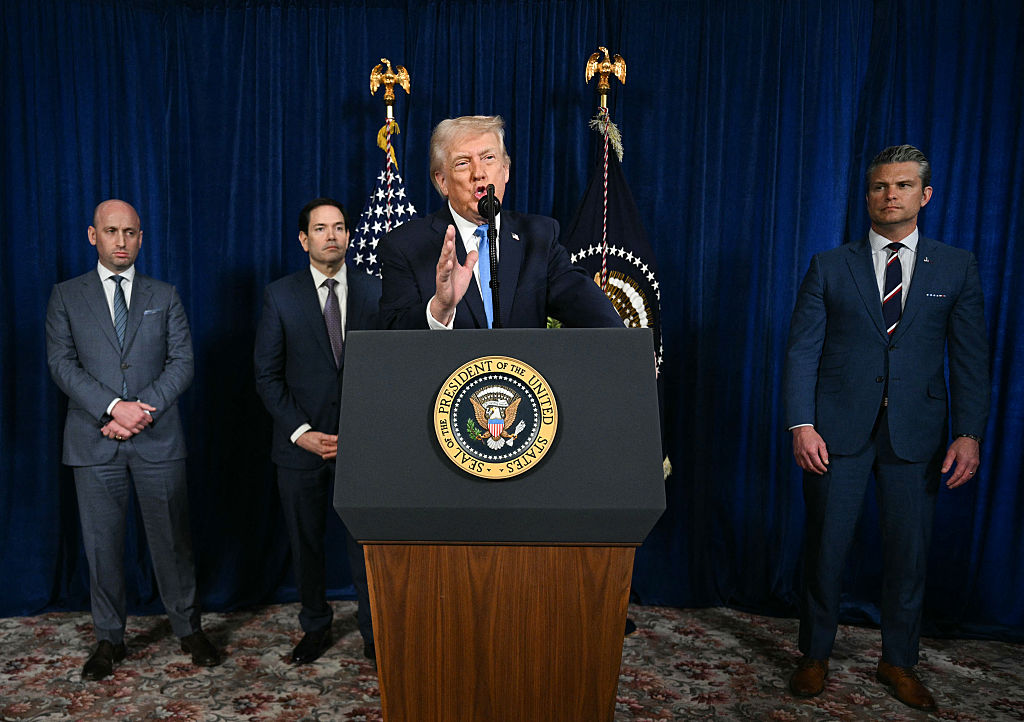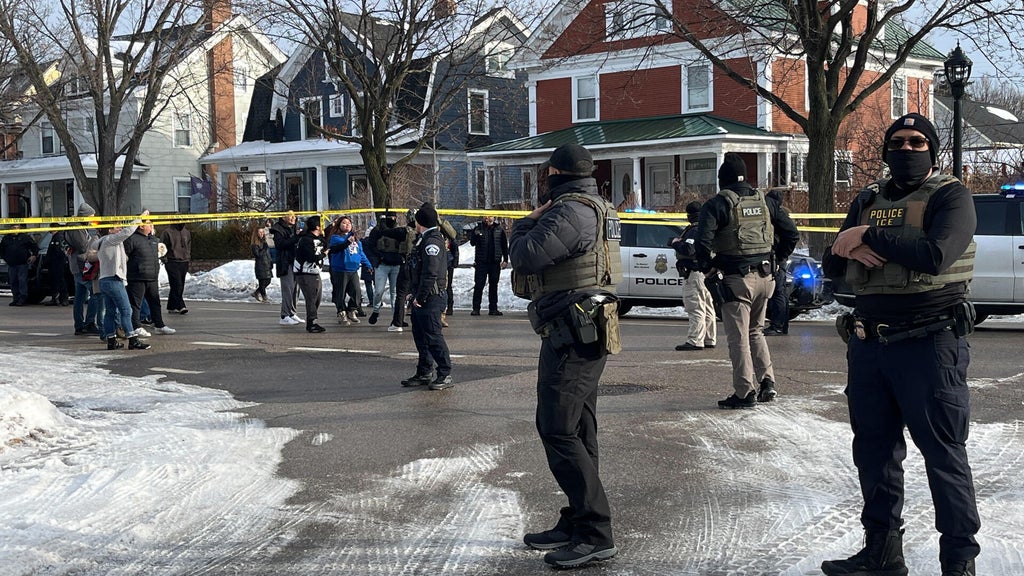
President Donald Trump has intensified his threats to deploy the U.S. military to Minnesota as protests continue in Minneapolis following the death of Renee Good earlier this month. The unrest has drawn attention to the actions of the Immigration and Customs Enforcement (ICE) agency, which has increased its presence in the city amid allegations of fraud linked to a Somali daycare scandal.
During a post on his social media platform, Truth Social, Trump criticized local leaders, particularly Rep. Ilhan Omar (D-MN). Omar has urged demonstrators to remain peaceful, warning that escalating violence could give Trump grounds to invoke the Insurrection Act, a law from 1807 that allows for military intervention in domestic disturbances. In his response, Trump repeated unfounded claims regarding Omar’s personal life, stating, “The crooked Governor and ‘Congresswoman’ Omar, who married her brother, don’t mind because it keeps the focus of attention off the $18 billion, plus, fraud that has taken place in the State!”
Protests erupted on March 2, 2024, with thousands participating in demonstrations against Good’s killing and the aggressive tactics of ICE in the area. Trump has portrayed these protests as being driven by “highly paid professional agitators and anarchists,” further polarizing the situation. His administration has deployed thousands of ICE agents to Minneapolis, a move he defends as necessary to combat crime.
In his social media remarks, Trump posed a rhetorical question to the people of Minnesota: “Do they really want murderers and drug dealers to be ensconced in their community?” He asserted that the presence of ICE is aimed at removing “some of the most violent criminals in the world” from the United States.
The protests reflect deep-seated frustrations within the community regarding police conduct and immigration enforcement. As calls for justice grow louder, the tension between local officials and the federal government continues to escalate, raising concerns about the potential for further unrest.
The situation in Minnesota highlights the ongoing national discourse surrounding immigration policy, law enforcement practices, and community relations. As protests evolve, many are watching closely to see how local and federal authorities will respond in the coming days.