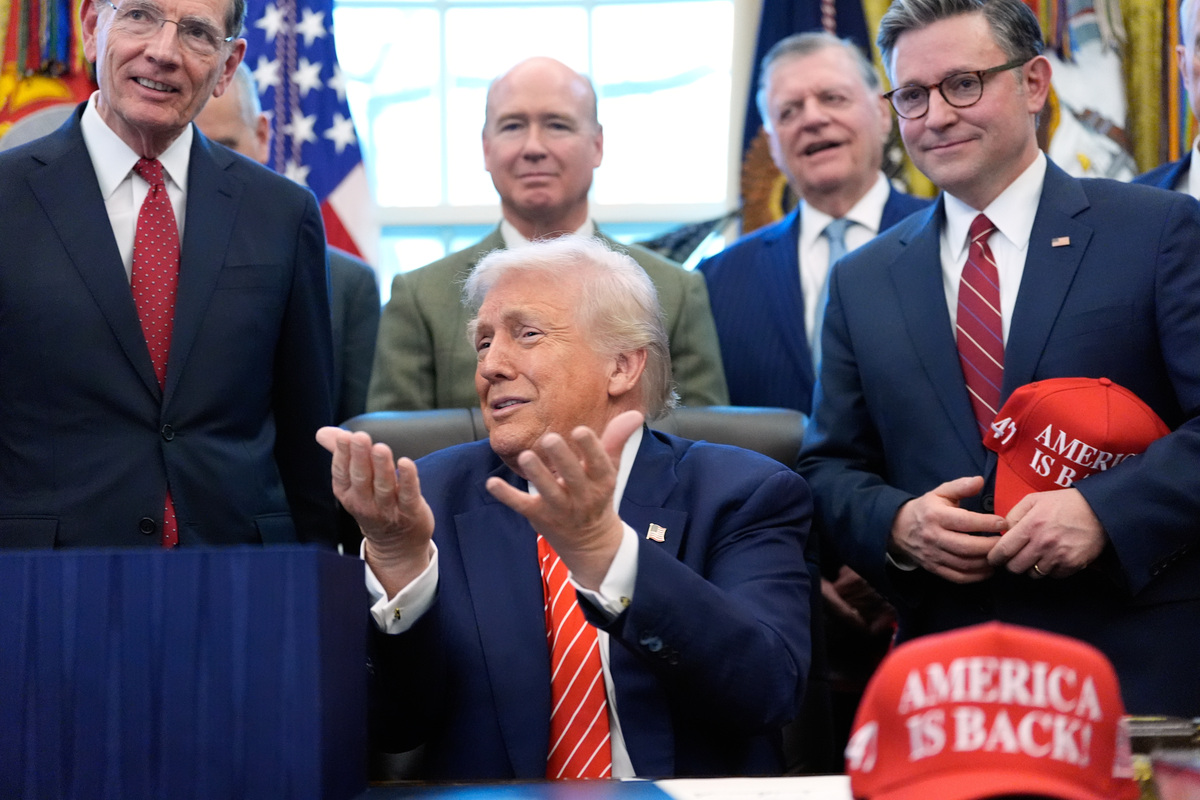
Donald Trump has drawn criticism for his interpretation of the *Monroe Doctrine*, particularly as it relates to his interest in Greenland. Some commentators argue that Trump’s actions reveal a lack of understanding regarding both the historical context of the doctrine and its implications for U.S. foreign policy.
The *Monroe Doctrine*, articulated by President **James Monroe** in **March 1823**, was a policy intended to deter European colonial influence in the Americas. It was established during a time when several Latin American nations were seeking independence from Spain and Portugal. The doctrine aimed to provide these emerging republics the opportunity to develop without external interference.
Recent discussions surrounding Trump’s interest in acquiring Greenland, an autonomous territory of **Denmark**, have raised eyebrows. Critics argue that Trump appears to treat the *Monroe Doctrine* as a legal mandate, rather than a historical policy statement. They point out that the doctrine was not a law but rather an assertion of American diplomatic stance during the early 19th century.
Many observers express skepticism about Trump’s grasp of the doctrine’s principles. For instance, there is a significant aspect that emphasizes non-interference in European matters, a nuance that Trump’s administration has seemingly overlooked. Greenland’s status as a territory administered by Denmark falls under this European umbrella, making any U.S. aspirations to acquire it particularly contentious.
Critics highlight that Trump’s approach reflects a broader trend in his administration, where decisions are often influenced by personal whims rather than informed analysis. In this context, Trump’s fixation on Greenland has been characterized as representative of a misunderstanding of both historical nuance and contemporary international relations.
The *Monroe Doctrine* originally sought to create a balance of power, implying that while the U.S. would not interfere in European affairs, it also expected similar respect from Europe regarding the Americas. This bilateral respect is a core element that Trump seems to disregard in his ambitions regarding Greenland.
Adding further complexity to the discussion, some commentators draw parallels between Trump and Monroe. Monroe, who served in various governmental roles prior to his presidency, also fought in the American Revolutionary War. In contrast, Trump has faced criticism for avoiding military service during the Vietnam War through multiple draft deferments. This juxtaposition raises questions about the qualifications and understanding of leadership between the two figures.
Moreover, Trump’s approach has been met with skepticism from those familiar with Greenland. During visits to the territory, individuals have expressed a clear desire for autonomy and a preference for remaining independent from U.S. governance. With a population of approximately **57,000**, Greenland’s residents predominantly speak **Greenlandic**, an Inuit language, along with Danish, reflecting their historical roots. English is also commonly spoken, but the sentiment remains strong that they wish to manage their affairs without external control.
In summary, Trump’s misunderstandings regarding the *Monroe Doctrine* and its implications for Greenland highlight a broader concern about his approach to foreign policy. By misapplying a historical framework meant to safeguard autonomy, he risks undermining the very principles that the doctrine was designed to uphold. The call for respecting Greenland’s autonomous status under Denmark is not only a matter of diplomatic protocol but also a reflection of the territory’s own wishes for self-determination.
The complexities surrounding this issue underscore the necessity for informed leadership in navigating international relationships, particularly in a time when global dynamics are increasingly intricate.