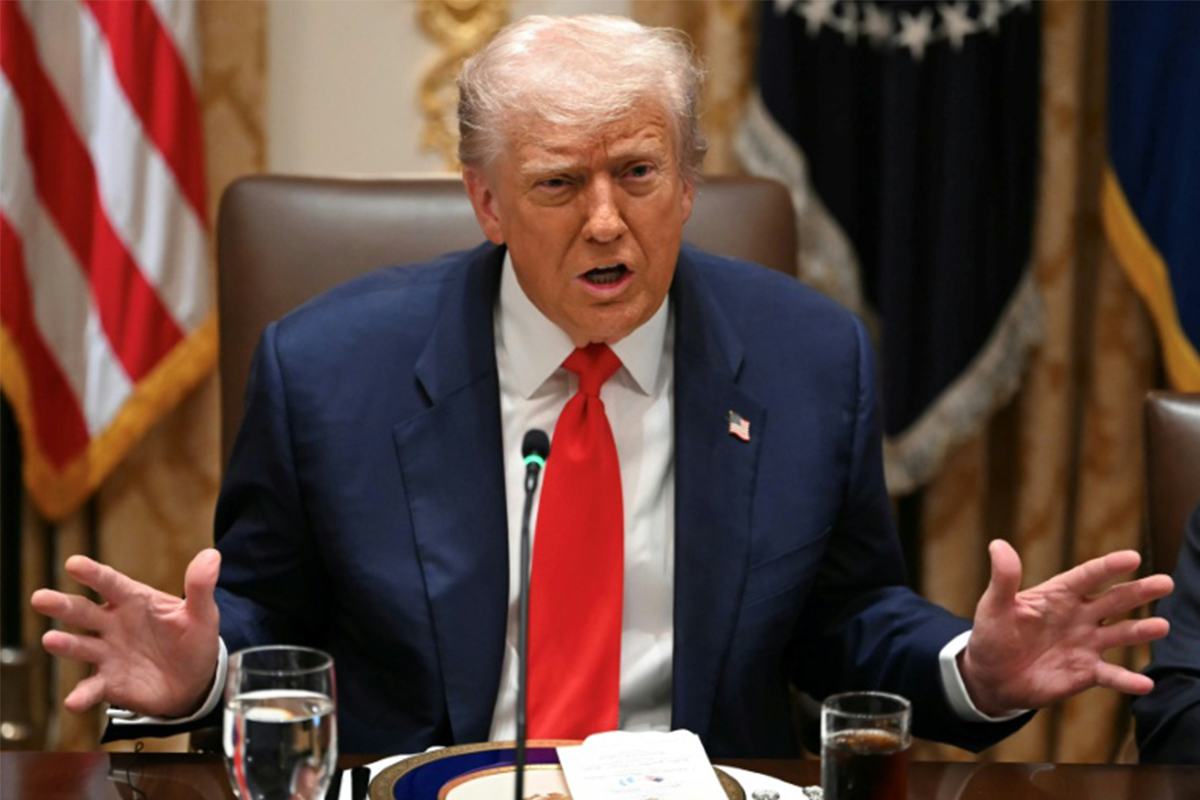
President Donald Trump convened an emergency meeting on January 24, 2025, following significant public outcry over recent Immigration and Customs Enforcement (ICE) operations in Minneapolis that resulted in the deaths of multiple individuals. The session, lasting two hours, included members of the Department of Homeland Security, notably Secretary Kristi Noem, but was marked by the conspicuous absence of senior White House adviser Stephen Miller.
The meeting was initiated amid heavy criticism regarding the federal response to the death of Alex Pretti, a 37-year-old ICU nurse. Pretti was shot by U.S. Border Patrol agents during an immigration enforcement operation in south Minneapolis. Eyewitness video footage reportedly shows Pretti intervening between an agent and a woman being restrained when he was pepper sprayed, subdued by six officers, and subsequently shot.
Earlier in January, another ICE incident in Minneapolis claimed the life of Renée Good, also aged 37, who was fatally shot by an ICE agent during a separate operation. These incidents have intensified scrutiny of federal enforcement actions, leading to calls for independent investigations into the use of force by federal agents.
Miller, known for his hardline stance on immigration policy, had publicly referred to Pretti as a “would-be assassin” and a “domestic terrorist.” His absence from the emergency meeting suggests a potential shift in the administration’s approach to crisis management, particularly in light of mounting legal pressures and public backlash.
After the meeting, Press Secretary Karoline Leavitt emphasized President Trump’s commitment to a thorough investigation. She distanced the administration from Miller’s inflammatory remarks about Pretti, stating, “I have not heard the president characterize Mr. Pretti in that way. However, I have heard the president say he wants to let the facts and the investigation lead itself.”
Present at the meeting alongside Trump, Noem, and Leavitt were Chief of Staff Susie Wiles and Communications Director Steven Cheung. The administration faces increasing legal challenges, as Minnesota and other jurisdictions have filed lawsuits contesting federal enforcement actions, further complicating Trump’s immigration agenda.
The political landscape is also shifting, with some within the Republican Party expressing discontent over the administration’s handling of these incidents. Figures such as California Governor Gavin Newsom and Pennsylvania Senator John Fetterman have called for Noem’s resignation, while others, including former Congresswoman Marjorie Taylor Greene and Senator Lisa Murkowski, have criticized ICE’s operations.
Prediction market traders are increasingly speculating that Noem may leave her position before the end of 2026, reflecting growing unrest within the political ranks over the current enforcement strategies. As the situation evolves, the administration’s response to these incidents will likely shape its immigration policy and public perception in the months to come.