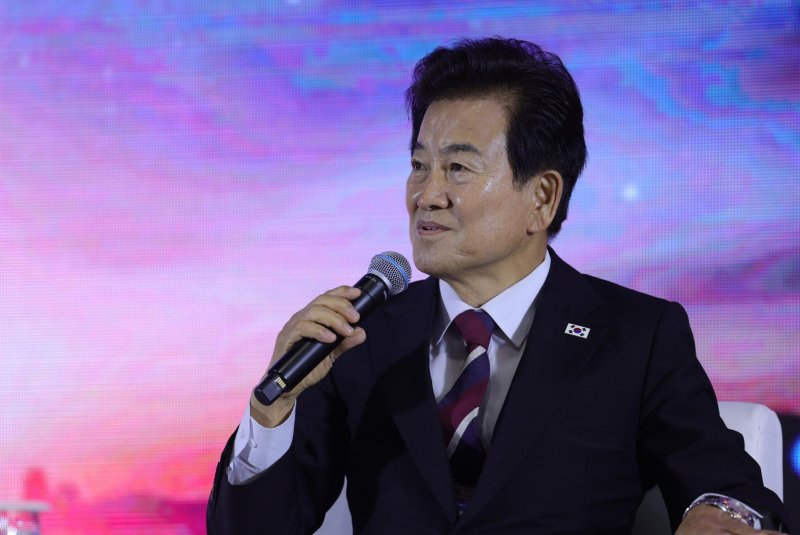
The unification policy of South Korea is increasingly under scrutiny as tensions rise on the Korean Peninsula. Cho Young-ki, secretary general of the Korea Foundation for the Advancement of the Korean Peninsula and a former professor at Korea University, asserts that the current strategy lacks direction amid North Korea’s evolving political landscape. He points to recent state media coverage highlighting Kim Jong Un’s daughter, Ju-ae, suggesting a significant shift towards what he describes as a “fourth-generation hereditary succession.”
Cho emphasizes the importance of Ju-ae’s visibility during New Year events and her visit to the Kumsusan Palace of the Sun on January 1, 2024. This palace, which houses the remains of Kim Il Sung and Kim Jong Il, is a potent symbol of the regime’s legitimacy. According to Cho, Kim’s decision to return to the palace with his daughter after a hiatus since late 2023 indicates a strategic move to elevate her status ahead of an upcoming party congress.
The implications of this potential succession concern Cho, who argues that it would entrench what he terms “extractive institutions” in North Korea. He warns that such institutions exacerbate poverty and repression, creating further obstacles to unification. In his view, South Korea’s unification strategy should pivot towards promoting “inclusive institutions” in the North, fostering political and economic frameworks that encourage broader participation and development.
In critiquing the Ministry of Unification, Cho highlights a concerning shift from a robust unification strategy to one that he perceives as appeasement. He cites a recent ministry report that outlines the dismantling of a North Korean Human Rights Center and a rebranding of “North Korean human rights” to “inter-Korean human rights cooperation.” This rephrasing, according to Cho, risks implying that the human rights situations in both Koreas are comparable while downplaying the serious abuses prevalent in the North.
Cho further critiques the ministry’s alignment with North Korea’s “two-state” narrative, which he links to Kim Jong Un’s 2023 policies. He asserts that North Korea’s ongoing focus on enhancing its nuclear capabilities indicates that it has not abandoned its coercive objectives. Cho rejects the notion that Pyongyang would refrain from using nuclear weapons, highlighting the dangers of complacent attitudes towards North Korea’s intentions.
Despite growing skepticism among the South Korean public regarding unification, Cho urges the Ministry of Unification to persist in advocating for this goal. He proposes a self-directed strategy that prioritizes South Korea’s rights and security while also addressing the needs of North Korean residents. One of the critical tools in this strategy, he argues, is the access to information within North Korea. He points out that Pyongyang’s efforts to block external information flow further underscore its impact on the regime’s control.
Cho calls for an urgent reassessment of the government’s unification policy framework, emphasizing that a shift is necessary to respond effectively to the evolving dynamics on the Korean Peninsula. As the landscape changes, the approach to unification must adapt to ensure that it remains relevant and impactful. The views expressed in this column reflect Cho’s perspective and underscore the complexities facing policymakers as they navigate the intricate relationship between the two Koreas.