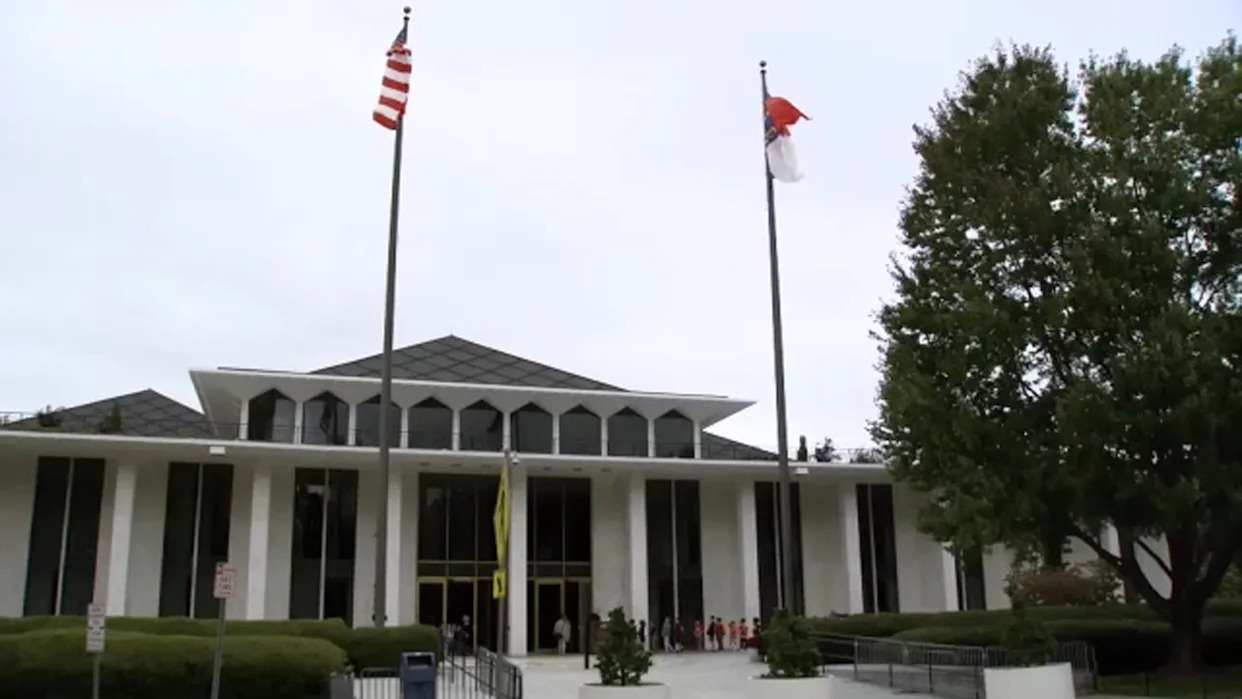
Beginning January 1, 2024, North Carolina will only officially recognize two sexes: male and female. This change is a result of House Bill 805, passed by the State Legislature last summer. According to Rep. Neal Jackson, a Republican sponsor of the bill, the legislation aligns state law with federal mandates and biological definitions. Initially, the bill aimed to protect minors and women from sexual exploitation, garnering unanimous support in the House.
“It’s just biology defining,” Jackson stated. His comments reflect a focus on preventing the exploitation of vulnerable individuals. Ashley Vaughan from the NC Values Coalition emphasized the necessity of ensuring consent for individuals depicted in pornographic material. The legislation requires online operators to verify that all individuals in such content are over the age of 18 and have provided written consent for participation and distribution. Additionally, it mandates operators to implement procedures for removing non-compliant content and gives the Attorney General’s Office the authority to pursue civil action against violators.
As the bill progressed, amendments in the Senate expanded its scope to include provisions regarding gender transition care for minors. These changes block state funding for such care and extend the statute of limitations for legal action against healthcare providers offering transition-related treatments to minors to ten years. Vaughan pointed out concerns about whether minors can genuinely consent to such medical interventions, citing the complexities of age and mental state during times of discomfort with their bodies.
Critics, including Kevin Dorman, a transgender individual and private practice owner specializing in gender-affirming voice care, argue that these regulations restrict necessary healthcare access. Dorman noted that “if we truly want to protect children, then we need to ensure that their doctors and parents have the best information available.” He highlighted that approximately three percent of North Carolina’s youth population, aged 13-17, identifies as transgender, compared to just 0.5% of adults, according to the UCLA School of Law Williams Institute.
In response, Kori Hennessey, Executive Director of the LGBT Center of Raleigh, stated, “No law will erase the history and lives of transgender and nonbinary people.” She condemned HB 805 for undermining the rights of many North Carolinians while jeopardizing the safety of others. The North Carolina Department of Health and Human Services has also proposed measures to limit access to gender-affirming care for minors. HHS Secretary Robert F. Kennedy criticized gender-affirming treatments, asserting that they cause lasting harm.
The bill also introduces changes regarding the handling of birth and death certificates, requiring the State Registrar to preserve both original and updated documents as a multi-page file. Critics warn that this could lead to inconsistencies in identification documents, complicating processes such as applying for jobs or passports. Senator Graig Meyer, a Democrat from Caswell, Orange, and Person counties, remarked that these changes could amount to harassment for affected individuals.
Additionally, the legislation allows parents to restrict their children from borrowing certain library books and excusing them from discussions or activities that conflict with their religious beliefs. It also prohibits students from sharing sleeping quarters with members of the opposite biological sex during school-authorized activities, with limited exceptions. Vaughan argued for the significance of parental rights in education, stating that such involvement is essential.
Responses to the bill have been mixed. Rep. Laura Budd, a Democrat from Mecklenburg County and co-sponsor of the original legislation, expressed disappointment over the bill’s evolution. She highlighted that the initial measure aimed to protect individuals from exploitation in the pornography industry but has since shifted focus to target transgender individuals. Budd affirmed her commitment to advocating for the rights and dignity of those in the LGBTQIA+ community.
In contrast, Governor Josh Stein vetoed HB 805, expressing support for the original bill’s intent but criticizing the General Assembly for incorporating divisive elements regarding sexual identity and gender transition. Following the veto, House Speaker Destin Hall defended the legislation, asserting that Stein favored “radical activists” over the majority of North Carolinians who support parental rights and biological realities.
Ultimately, lawmakers overrode the governor’s veto, with Democrat Rep. Nasif Majeed joining Republicans to meet the required three-fifths majority. The Senate vote, where Republicans hold a supermajority, also fell along party lines.
As this legislation takes effect, it raises significant questions about the implications for individual rights and access to healthcare in North Carolina, particularly for minors navigating complex issues of identity and consent.