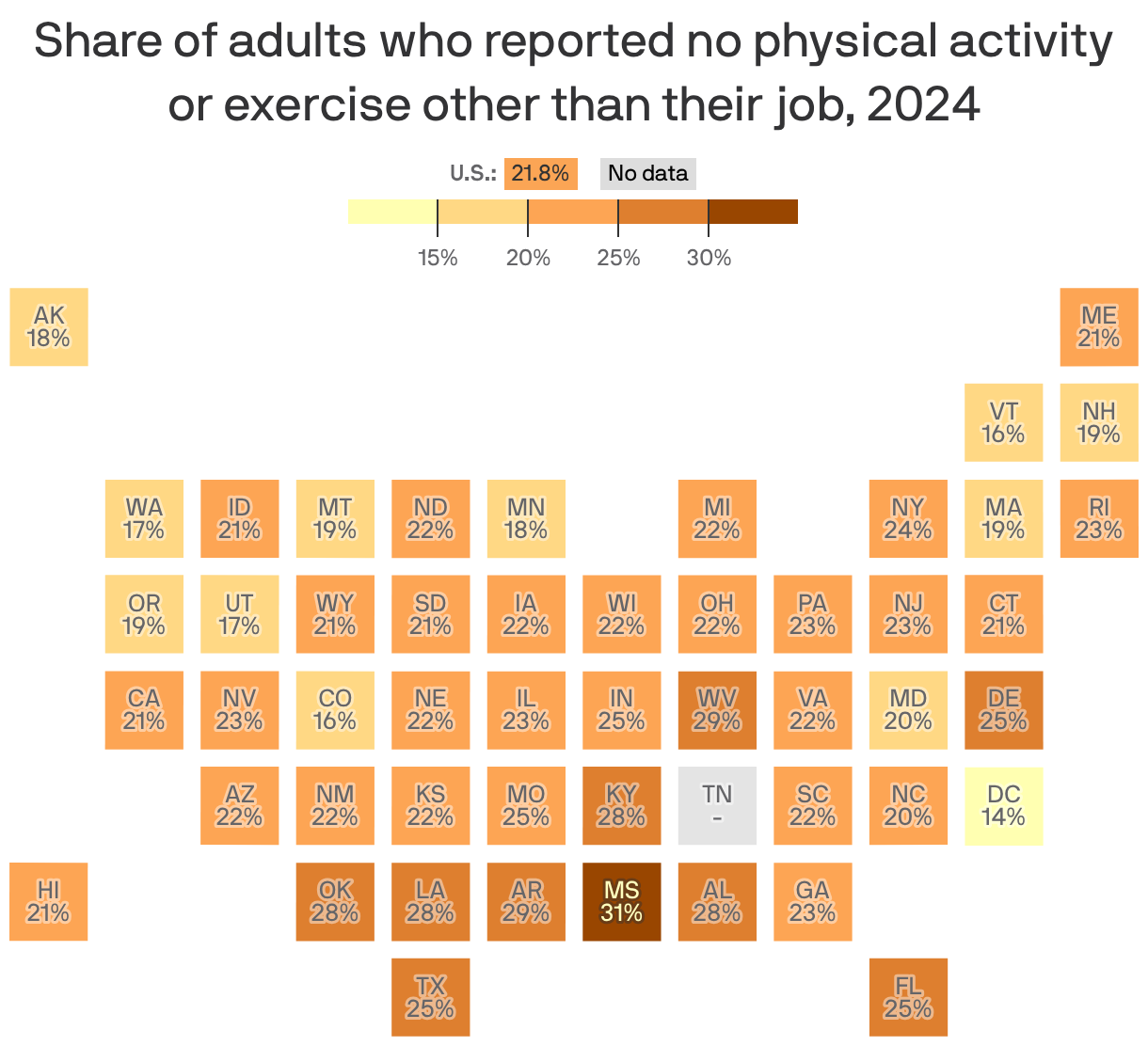
A recent report reveals that approximately one in five Americans do not engage in physical activity outside of their jobs. This finding is based on data from the 2024 U.S. Department of Health and Human Services, which the United Health Foundation has compiled in its latest “America Health Rankings” report. The implications of this data are significant, as even moderate exercise is known to offer substantial benefits for both physical and mental well-being.
Most Active and Least Active States
The report highlights stark differences across the United States regarding physical activity levels. States such as Mississippi (30.6%), West Virginia (28.7%), and Arkansas (28.5%) report the highest percentages of adults who do not partake in any physical activity other than work. In contrast, Washington, D.C. (13.9%), Colorado (15.6%), and Vermont (16%) showcase the lowest rates of inactivity among adults.
There is a notable absence of data for Tennessee, which prevents a complete picture of activity levels across all states. The trends indicate that those states with higher rates of inactivity often rank poorly in other health metrics. This correlation raises questions about the broader health context in these regions.
Understanding the Factors at Play
While the data indicates a clear association between inactivity and health outcomes, it is essential to consider other influencing factors. For instance, individuals employed in physically demanding jobs might be less inclined to engage in exercise for leisure compared to those in more sedentary positions. This phenomenon could lead to a misleading representation of physical activity levels based solely on job-related exertion.
In light of these findings, it becomes critical to address the barriers that prevent people from engaging in physical activity. Communities and policymakers may need to develop strategies that encourage exercise beyond the workplace, enhancing overall public health.
Research consistently shows that incorporating even moderate levels of exercise into daily routines can lead to improved health outcomes. As this report illustrates, understanding the dynamics of physical activity across different states can help inform future health initiatives aimed at fostering a more active population.
With such a significant portion of the population reporting inactivity, the need for targeted health education and intervention strategies becomes increasingly urgent. The data serves as a call to action for individuals, communities, and health organizations alike to prioritize physical wellness.