Members of the U.S. Congress are urging immediate legislative action to prevent the Trump administration from escalating military involvement in Venezuela. Following President Donald Trump’s threats of a “second wave” of attacks and claims that the U.S. would control the Venezuelan government indefinitely, lawmakers are demanding a War Powers Resolution to limit presidential authority in military matters.
Rep. Greg Casar (D-Texas), chair of the Congressional Progressive Caucus, emphasized the urgency of this situation, stating, “Congress should vote immediately on a War Powers Resolution to stop President Trump.” Casar criticized the administration for conducting military actions, including bombing boats in international waters, without congressional approval. He described the president’s actions as “reckless and illegal,” adding, “Enough. No new wars.”
Rep. Rashida Tlaib (D-Mich.) echoed these sentiments, condemning the actions as indicative of a “rogue state.” Tlaib highlighted the implications of the bombings and the capture of Venezuelan President Nicolás Maduro, calling them “grave violations of international law and the U.S. Constitution.” She argued that the American public does not support another regime change war.
Growing Bipartisan Concern
The outcry is not limited to progressive lawmakers. Establishment Democrats, including Sen. Adam Schiff of California, have also called for urgent congressional intervention. Schiff stated, “Without congressional approval or the buy-in of the public, Trump risks plunging a hemisphere into chaos.” He urged Congress to reassert its authority to authorize military force, emphasizing that the American people fundamentally reject being drawn into new conflicts.
Sen. Tim Kaine (D-Va.) announced plans to bring a bipartisan War Powers Resolution to the Senate floor next week. He questioned the potential consequences of unchecked presidential power, saying, “Will the president deploy our troops to protect Iranian protesters? To enforce the fragile ceasefire in Gaza? To battle terrorists in Nigeria?” His resolution seeks to ensure that the U.S. does not engage in military action against Venezuela without clear congressional authorization.
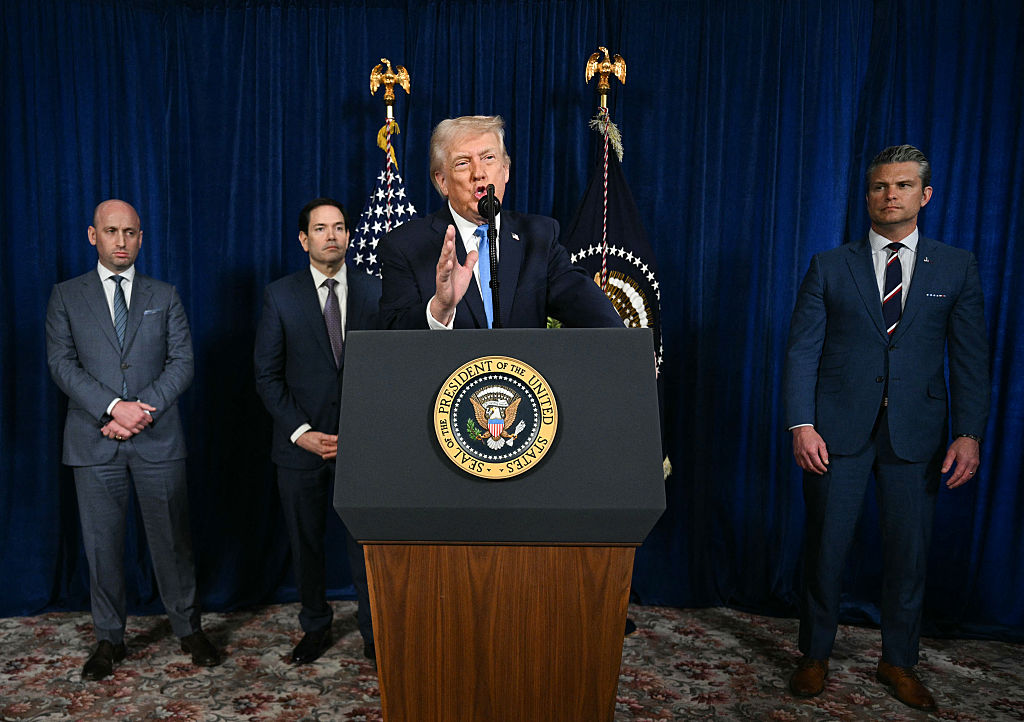
Kaine’s comments come in light of President Trump’s recent declarations indicating that his administration intends to continue its interventionist strategy in Venezuela. During a press conference, the president asserted that the U.S. “is going to run” Venezuela, suggesting a potential troop deployment and indicating a willingness to take further military action.
Political Landscape and Legislative Challenges
The response from Congress will largely depend on the support from Republican lawmakers, many of whom have expressed approval for the administration’s actions in Venezuela. House Speaker Mike Johnson (R-La.) and Senate Majority Leader John Thune (R-SD) have characterized the military operation as “decisive” and justified.
Despite some Republican concerns regarding the legality of the administration’s actions, such as those raised by Sen. Mike Lee of Utah, the momentum appears to favor the administration. Lee’s apprehensions reportedly diminished following a conversation with Secretary of State Marco Rubio. Yet, Rep. Andy Kim (D-NJ) criticized the administration for misleading Congress about its intentions, insisting that the American people overwhelmingly oppose being drawn into another war.
As the situation evolves, lawmakers are preparing to take action to ensure that the constitutional requirement for congressional approval is upheld. The push for a War Powers Resolution reflects a growing concern among legislators about the implications of unilateral military action by the executive branch. With a vote anticipated next week, Congress is poised to confront the administration’s approach to Venezuela and its broader implications for U.S. foreign policy.