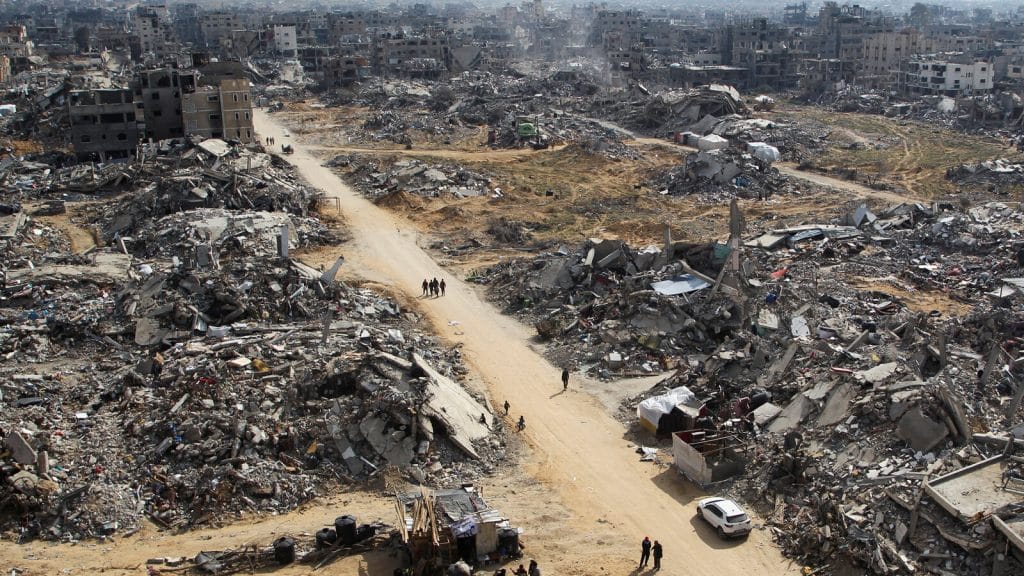
The conflict in Gaza remains severe despite a ceasefire that was established on October 10, 2023. Reports indicate that Israeli airstrikes and gunfire have resulted in the deaths of nearly 400 individuals and injuries to almost 1,000 people since the ceasefire was enacted. According to officials in Gaza, there have been approximately 800 ceasefire violations by Israel, raising concerns that the agreement may soon unravel.
In addition to ongoing military actions, Israel is obstructing essential humanitarian aid from reaching the Palestinian population. Currently, the number of aid trucks entering Gaza is significantly below what was agreed upon in the ceasefire terms. The damage inflicted by Israeli operations has been extensive, with over 80 percent of buildings damaged or destroyed, 95 percent of farmlands ruined, and sanitation systems severely compromised. The destruction has led to tragic outcomes, with at least a dozen individuals killed during heavy rains that resulted in the collapse of already weakened structures.
Ongoing Military Presence and Territorial Control
Despite the ceasefire’s stipulations for Israeli withdrawal from Gaza, the Israeli military has maintained a presence in the area, controlling approximately 58 percent of the territory. The Chief of the General Staff of the Israel Defense Forces, Herzi Halevi, has indicated that the current boundaries set by the military are being considered as the “new border line.” This move is perceived as an attempt to solidify Israel’s claims over the territory.
The situation in the West Bank is equally alarming, with violence reported at levels not seen since the occupation began in 1967. Since October 2023, over 1,000 Palestinians have lost their lives, including 277 this year alone. Palestinians in the West Bank face not only lethal violence but also daily threats from raids, beatings, arbitrary arrests, and episodes of torture in detention.
Implications of Global Politics
Critics argue that international efforts to secure a lasting peace have been inadequate. For instance, U.S. foreign policy, particularly under former President Donald Trump, has been scrutinized for promoting initiatives that many believe do not prioritize Palestinian rights. Countries like Germany have resumed arms shipments to Israel, raising ethical concerns about complicity in ongoing violence.
Regional powers, including Egypt, Jordan, Saudi Arabia, the UAE, and Turkey, have also faced criticism for their roles in the crisis. Egypt’s government, under President Abdel Fattah el-Sisi, has been accused of enforcing border closures that exacerbate the humanitarian situation in Gaza.
As the situation develops, there is a renewed call for global solidarity with Palestinians. Activism has surged, with recent demonstrations drawing hundreds of thousands in cities across Europe and North America. The labor movement is highlighted as a vital force in this struggle, as workers can influence economic operations, including arms shipments, that support military actions in the region.
The complexities surrounding the Israeli-Palestinian conflict continue to challenge international diplomacy. Without significant changes in both local governance and international support, the prospects for peace remain uncertain. The global community is urged to reassess its approach, ensuring a focus on humanitarian needs and the rights of individuals affected by the ongoing conflict.